Cristiano Ronaldo's Future in Portuguese Football Ahead of 2030 World Cup
As Portugal readies itself to co-host the 2030 World Cup, one question keeps circling every conversation about the tournament: will Cristiano Ronaldo still be on the pitch?
The head of the Portuguese Football Federation, Fernando Gomes’ successor Pedro Proenca, is not afraid to answer it bluntly. Speaking at the Bola Branca Conference, he cooled the romantic notion that Ronaldo might stretch his international career all the way to 45.
“I'll say that, physiologically, a huge surprise would have to happen for him to be in another World Cup,” Proenca admitted, cutting through the sentiment with cold reality. A sixth World Cup feels beyond even Ronaldo’s famously unrelenting standards.
The European Championship is a different matter. Proenca left that door carefully ajar. Whether Ronaldo features again at the Euros, he said, will hinge on the coach in charge at the time, the forward’s form, and “a set of technical factors” that cannot be judged years in advance. The message was clear: there will be no caps handed out on sentiment alone.
“With absolute certainty,” Proenca stressed, “those who are the best players at the time will be in the national team.”
That line sounded like a manifesto. Yet even as he spoke of meritocracy, he acknowledged a truth that goes far beyond tactics or selection. Cristiano Ronaldo and Portugal are now fused in the global imagination.
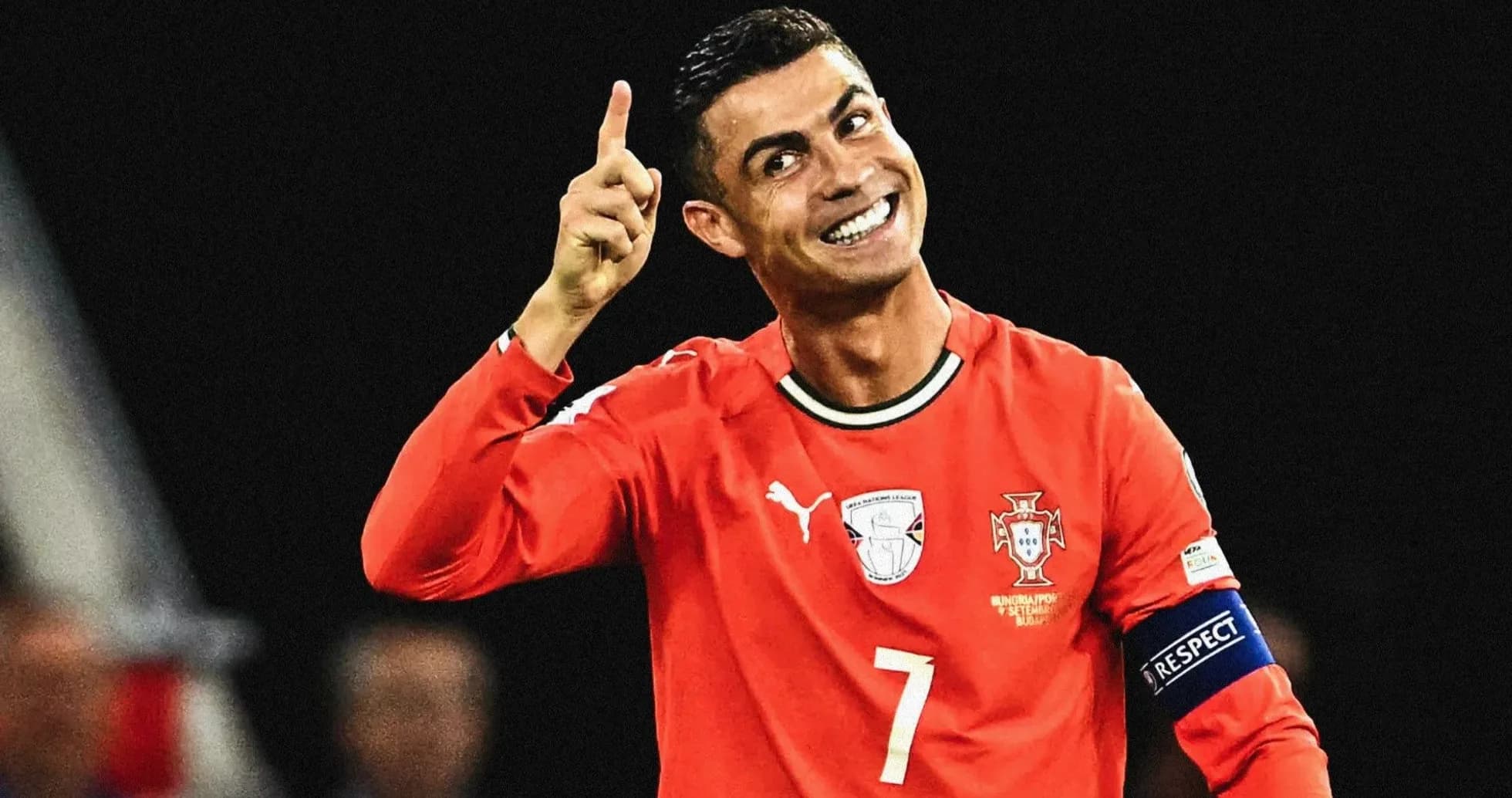
“Cristiano Ronaldo will always be inextricably linked to the national team, to the federation,” he said. In his view, the brand of the Portuguese Football Federation and the brand of Ronaldo are now intertwined, each amplifying the other. For two decades, Portugal’s modern football identity has carried his silhouette.
Proenca’s vision, though, stretches past the final whistle of Ronaldo’s playing days. On that point, he was unequivocal. Ronaldo, he insisted, will not just drift away once he stops scoring goals.
“Cristiano Ronaldo will be whatever he wants to be in Portuguese football. I dare say that,” Proenca declared. It was not flattery. It was recognition of a phenomenon.
He described Ronaldo as an “absolutely extraordinary case” in terms of notoriety, marketing power and talent development, a unique story in the history of Portuguese football. Coach, ambassador, executive, mentor, or something entirely different – the implication was simple: the door will be open, and Ronaldo will choose how he walks through it.
“Cristiano will be whatever he wants to be in Portugal and in world football,” Proenca continued, framing the forward not just as a legend of the national team but as a global asset. The federation, he added, has time to reflect on where Ronaldo will first feel happiest after retirement and how that role can help Portuguese football “maintain the position it has.”
For many supporters, the idea of a Portugal side without its greatest-ever player still feels like a looming cliff edge. Proenca pushed back hard against that anxiety. The transition, he argued, should not be treated as a national trauma.
“I say that you prepare yourself not by dramatizing it,” he explained. Ronaldo, he insisted, will remain inseparable not only from the federation but from the country itself. The bond is cultural now, not just sporting.
Behind the scenes, the FPF has been working to ensure that the institution does not live or die with one player, no matter how iconic. Proenca underlined that the federation has long been planning its present and future “in terms of revenue,” building a model that does not rely on qualifying for every major tournament or on the commercial magnetism of one or two stars.
The reality, though, is that Ronaldo’s name still unlocks doors that others cannot. Proenca did not try to deny it. He openly acknowledged that the captain remains a colossal draw for sponsors and commercial partners around the world.
“Well, we certainly know how important Cristiano is,” he said. There is, he conceded, a clear “appetite to propose contracts to the Portuguese Football Federation both with and without Cristiano.”
That distinction matters. According to Proenca, the federation’s operating revenues are “more than assured” for the cycle that will naturally come with Ronaldo’s departure. The aim is to protect the high standards of the Ronaldo era without becoming hostage to it.
Portugal, then, is bracing for life after its defining superstar while still riding the wave he created. The World Cup on home soil in 2030 will almost certainly belong to a new generation on the grass.
Off it, the shadow of Cristiano Ronaldo will still be everywhere.