Craig Gordon: Scottish Football's Relentless Keeper Retires
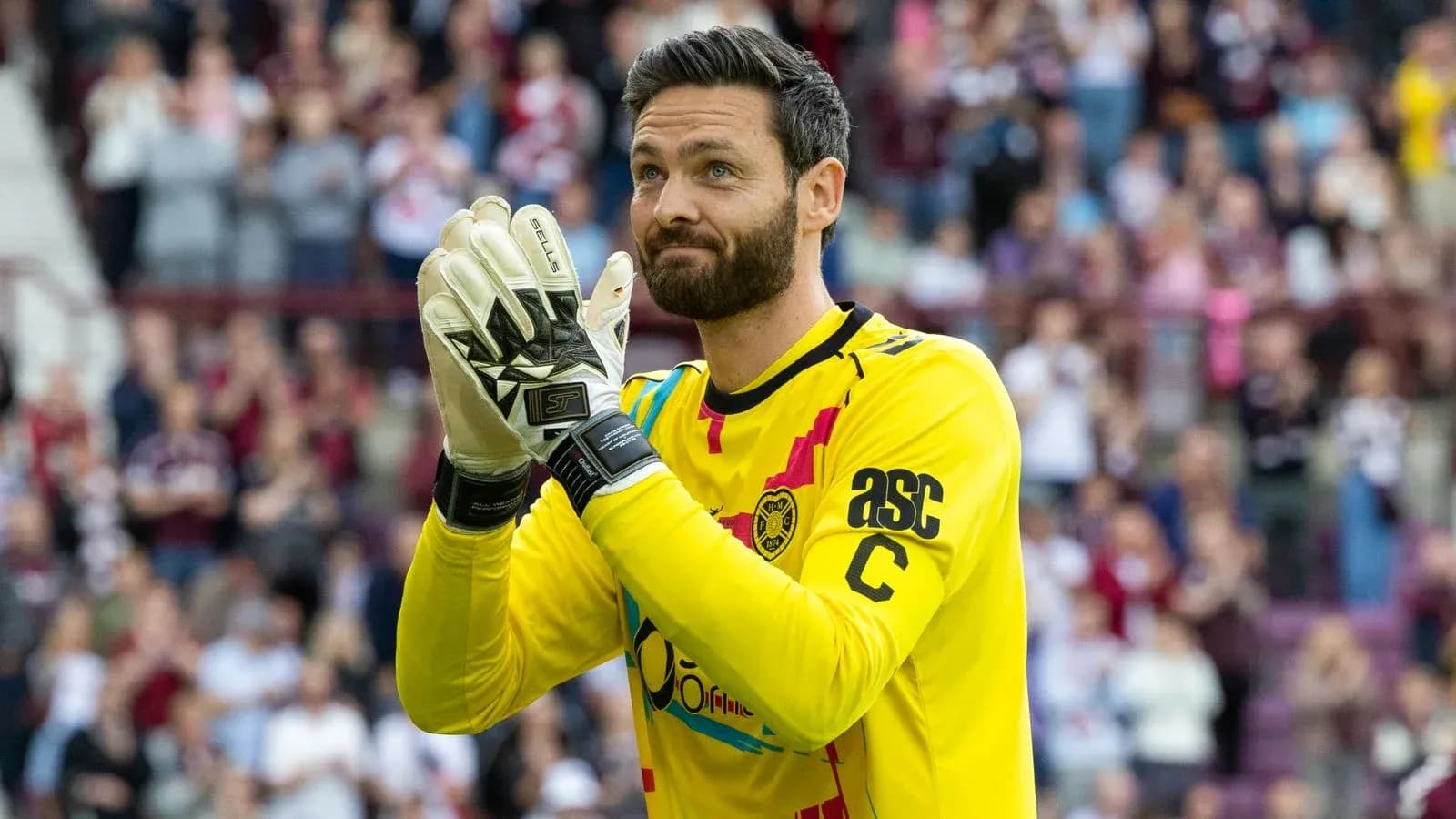
Craig Gordon never did things the easy way. Not when he broke records, not when he broke bones, and certainly not when he kept dragging a battered body back to the top. At 43, one of Scottish football’s great modern figures has finally called time on a remarkable 25-year playing career.
The Hearts and Scotland goalkeeper announced his retirement having amassed more than 760 senior appearances across Hearts, Celtic, Sunderland, Cowdenbeath and his country. The numbers are heavy. The story behind them is heavier.
From Gorgie to the World Stage
Gordon’s professional debut came in 2001 with Hearts, the club he grew up supporting. Three years later, in 2004, he pulled on the Scotland shirt for the first time, the first of 84 caps that would make him one of his country’s defining goalkeepers of the era.
By 2005/06, he had his hands on his first major trophy, lifting the Scottish Cup with Hearts. It was the opening chapter in a haul of 15 major honours, the start of a career that would take him from Tynecastle to the Premier League spotlight and back again.
Recognition followed quickly. At just 24, in 2007, he was inducted into the Hearts hall of fame, the youngest player ever to receive that honour. His name was already etched into the club’s history before he had even reached his peak.
That same year, Sunderland arrived with a statement of intent and a chequebook to match. Gordon’s £9m move to Wearside set a British record transfer fee for a goalkeeper at the time. It was a deal that underlined his standing as one of the most coveted stoppers in Europe.
He justified the hype. In 2010, a stunning, instinctive stop against Bolton Wanderers was voted the best save in Premier League history. For a while, Gordon looked untouchable.
Broken Bones, Broken Momentum
Then came the injuries. Not one or two, but a grim sequence that threatened to end his career long before he was ready.
Ankle problems. Broken arms. Knee surgery. Each setback chipped away at his time with Sunderland, until eventually the relationship ended and the long, lonely road of rehab began.
By 2012, Gordon was out of the game and fighting a career-threatening condition. At one point, walking without pain was a challenge, never mind diving at the feet of onrushing forwards. He turned to coaching, trying to stay close to the game while his body refused to cooperate.
For around two years he was absent from the professional stage. Many assumed they had seen the last of him at the highest level. Gordon refused to accept that.
The Celtic Resurrection
His recovery bordered on the improbable. From those dark days, he rebuilt himself and earned a contract with Celtic. What followed was a second career in its own right.
At Celtic Park, Gordon became a cornerstone of a dominant side. He won six Premiership titles, five League Cups and three Scottish Cups, re-establishing himself as the commanding presence he had once been in maroon and white.
The medals stacked up, but so did the minutes. He was no longer simply the comeback story; he was once again the standard.
Home Again, and Another Fight
When his Celtic contract expired, the circle closed. Gordon returned to Hearts, the club where it had all begun. Older, wiser, still fiercely competitive, he quickly reminded everyone why he had been trusted at the highest level for so long.
Then, on Christmas Eve 2022, the nightmare returned. A double leg break left his future in ruins once more, his career again hanging by a thread. At 40, many would have walked away.
He didn’t. Surgery, rehab, another long battle. Gordon came back again, returning to play for Hearts and rejoining the Scotland setup. The resilience bordered on defiance.
Last season, he contributed to Hearts’ title push, a campaign that went down to the final day of the Premiership season. He also earned a place in the Scotland squad for the World Cup at 43, an age when most goalkeepers are long retired or reduced to memory.
“I Have Lived My Dreams”
Announcing his retirement in a video released by Hearts, Gordon chose his words with the same calm assurance he once showed under a high ball.
“I’ve never wanted it to end, but end it must,” he said. “I have lived my dreams and for that, I’m so thankful.
“Everyone has dreams. Mine were probably no different to most kids – play for my club and my country. Heart of Midlothian and Scotland. Improbable? Perhaps. Impossible? Absolutely not.
“Hard work, sacrifices, setbacks. Step by step, dreams become reality. From supporting Hearts to playing for Hearts. Years of hard work can never fully prepare you. You want to do yourself proud, you want to do your family proud, you want to do the fans proud.
“I’m not much of a singer, but I improved a little after 84 renditions of the national anthem. The biggest names, at the biggest stadiums, on the biggest stages – I’ve savoured every moment of it.
“[I’m] thankful for my team-mates and coaches pushing me all the way. Thankful for my opponents for spurring me on. Thankful for the medical staff who have worked with me throughout the years. Thankful to my loved ones for their support.
“Now the gloves are finally off and I bid farewell to my playing career. You, the fans, have given me everything, and it has been a privilege to represent you.
“I hope you’ve enjoyed it as much as I have. From the bottom of my heart, thank you.”
A Career Defined by Defiance
Across 25 years, Gordon collected honours, caps and accolades. He earned a place on the Scottish FA’s international roll of honour. He became a record signing, a hall of famer, a serial winner.
Yet his legacy runs deeper than the silverware. It lies in the way he kept coming back when logic said he was finished, in the way he refused to let injury dictate the final chapter.
The gloves are off now. The story, though, is already written: one of the finest goalkeepers of his generation, and one of the most stubbornly resilient careers Scottish football has ever seen.