Colombia vs Ghana: Tactical Analysis of World Cup Round of 32
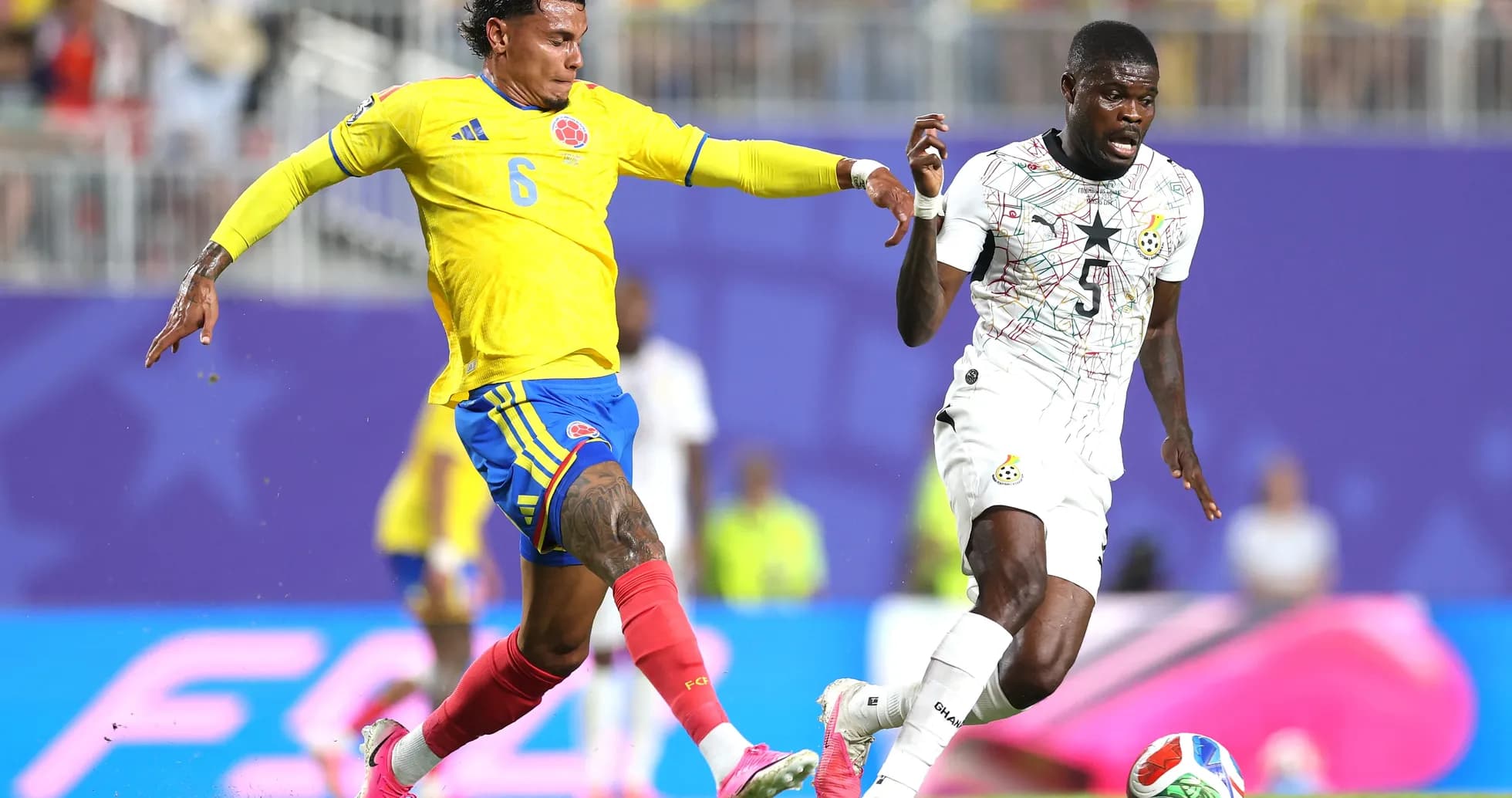
Arrowhead Stadium in Kansas City staged a World Cup Round of 32 tie that felt as much like a tactical thesis as a knockout match. Colombia, group winners from Group K, arrived with the rhythm of a side unbeaten overall in four fixtures this campaign, while Ghana, third from Group L, came in as a dangerous outsider, hardened by tight margins and a defensive structure built for tournament football. The 1–0 scoreline to Colombia, sealed within the regulation 90 minutes, was the natural extension of both teams’ seasonal identities rather than an anomaly.
Colombia's Profile
Heading into this game, Colombia’s profile was that of a controlled, low-concession machine. Overall this campaign they had played 4 matches, winning 3 and drawing 1, with no defeats. They had scored 5 goals in total and conceded just 1, giving them an overall goal difference of +4. At home in this World Cup they had played 3 fixtures, scoring 2 and conceding 0; on their travels they had played 1, scoring 3 and conceding 1. The averages underline the same story: at home, Colombia averaged 0.7 goals for and 0.0 against; away, 3.0 for and 1.0 against; overall, 1.3 scored and 0.3 conceded. This is a side that wins primarily by strangling games, not by chasing chaos.
Ghana's Journey
Ghana’s path was more precarious. Overall they had also played 4 matches, with 1 win, 1 draw and 2 defeats. They scored 2 goals and conceded 3, for an overall goal difference of −1. At home they played 1 game, scoring 1 and conceding 0; on their travels they played 3, scoring 1 and conceding 3. That translated to an average of 1.0 goal for and 0.0 against at home, but just 0.3 for and 1.0 against away, with overall averages of 0.5 scored and 0.8 conceded. Ghana were used to walking a tightrope: two clean sheets overall, but also two games where they failed to score.
Tactical Setups
From the first whistle, the shapes told the story. Nestor Lorenzo doubled down on Colombia’s tournament identity with a 4‑3‑3 that was almost textbook: C. Vargas behind a back four of D. Munoz, D. Sanchez, J. Lucumi and J. Mojica; a midfield triangle of G. Puerta, J. Lerma and J. Arias; and a front three of J. Rodriguez, J. Cordoba and L. Diaz. It was a structure designed to compress space centrally, then spring diagonally into the channels.
Carlos Queiroz responded with Ghana’s familiar 4‑1‑4‑1. L. Ati Zigi anchored a back line of M. Senaya, D. Luckassen, J. Opoku and G. Mensah, screened by T. Partey as the single pivot. Ahead of him, a mobile line of four – I. Williams, C. Yirenkyi, K. Sibo and A. Semenyo – worked behind the lone striker J. Ayew. On paper, it was the classic Queiroz blueprint: one destroyer in front of the defence, two narrow interiors, and wide players who must double as auxiliary full-backs.
Disciplinary Histories
The tactical voids in this contest were less about absences and more about structural risk. Neither side had suspensions or notable injury absentees flagged in the data, but their disciplinary histories shaped the emotional temperature. Colombia, with 6 yellow cards overall before this tie, showed a clear pattern: 33.33% of their cautions arrived between 0–15 minutes and another 33.33% between 76–90, with 16.67% in each of 46–60 and 91–105. This is a team that can start hot and finish with an edge, living on the line in the game’s bookends.
Ghana’s yellow-card curve was more evenly spread but clustered in the middle phases: 16.67% of their cautions came between 16–30 minutes, 33.33% between 46–60, and 16.67% in each of 61–75, 76–90 and 91–105. That mid-game spike between 46–60 minutes hinted at a side that often has to ramp up aggression after the break to stay in contests. In a knockout setting, that timing was always going to intersect with Colombia’s preference to turn the screw in the second half.
Key Matchups
The “Hunter vs Shield” duel was embodied by Colombia’s attacking trident against Ghana’s compact spine. L. Diaz, starting from the left, was the primary hunter, tasked with attacking the channel outside M. Senaya and forcing D. Luckassen to defend facing his own goal. J. Cordoba’s central presence pinned J. Opoku and D. Luckassen, while J. Rodriguez floated into the half-spaces, pulling T. Partey into awkward decisions: step out and leave the back four exposed, or hold and allow Rodriguez to dictate.
On the other side, Ghana’s shield was collective rather than individual. T. Partey sat almost on top of his centre-backs, while K. Sibo and C. Yirenkyi narrowed infield without the ball to create a three-man barrier. Yet C. Yirenkyi’s season profile told of a midfielder who lives on the edge: 2 yellow cards overall, 7 fouls committed and 3 drawn, and 2 successful blocks. His aggression is a double-edged sword – crucial for breaking up play, but always at risk of inviting set-piece pressure.
Midfield Battles
In the engine room, J. Lerma and G. Puerta formed Colombia’s metronome against Partey and Sibo. Lerma’s role was to step into duels early, preventing Ghana from turning defensive recoveries into transitions. Puerta, sitting slightly deeper, recycled possession and ensured Colombia’s rest defence remained intact, vital for a side that had kept 3 clean sheets at home and 3 overall before this fixture. J. Arias, nominally a midfielder, often became a fourth forward between the lines, overloading Ghana’s pivot.
For Ghana, the creative burden fell on the line of four behind Ayew. I. Williams and A. Semenyo had to stretch Colombia horizontally, but with Ghana averaging just 0.3 goals on their travels and failing to score in 2 of their 3 away matches, the structural ask was enormous: they needed to be more expansive than their season data suggested they were comfortable being.
Statistical Prognosis
The statistical prognosis before a ball was kicked pointed towards a narrow Colombian victory. Colombia’s overall average of 1.3 goals for against Ghana’s overall 0.8 goals against, combined with Colombia conceding just 0.3 goals on average, suggested that even a single Colombian goal might be decisive. Ghana’s away average of 0.3 goals for, up against a defence that had conceded only 1 goal in 4 games overall, made their attacking task look steep.
Final Outcome
The 1–0 final scoreline confirmed the underlying numbers. Colombia’s defensive solidity held true; Ghana’s difficulty in creating and finishing chances away from their comfort zone reappeared at the worst possible time. Following this result, Colombia’s unbeaten run and low-concession identity remain intact, while Ghana leave the tournament knowing that their structure and spirit were competitive – but their attacking ceiling, as the season’s statistics had warned, was never quite high enough to consistently crack elite defences.