Colombia's Tactical Control Over Ghana in World Cup Knockout Match
Colombia’s 1-0 win over Ghana at Arrowhead Stadium in this World Cup Round of 32 tie was a controlled, territorial performance built on structure rather than chaos. Nestor Lorenzo’s side imposed a 4-3-3 that dominated the ball, generated sustained pressure, and largely kept Ghana’s 4-1-4-1 penned in and shotless on target. The scoreline stayed narrow, but the underlying tactical balance was clear: Colombia’s 61% possession, 20 total shots and xG of 2.18 contrasted sharply with Ghana’s 8 shots, 0 on goal and xG of just 0.26. In essence, Colombia turned midfield superiority and wide rotations into a low-risk, high-control knockout win.
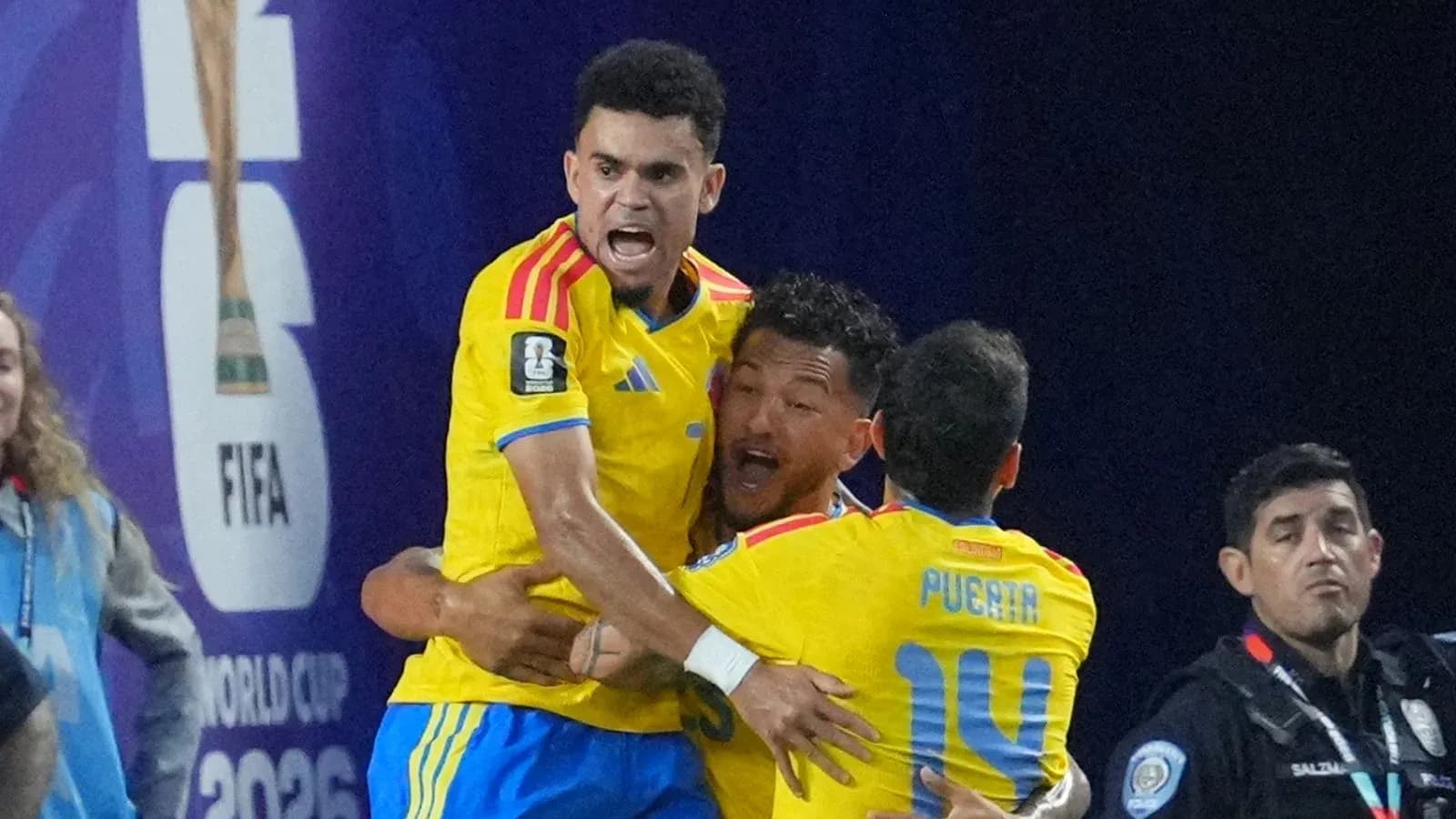
The key attacking shift came almost immediately. At 8', Jhon Córdoba (OUT) was replaced by Luis Javier Suárez (IN), giving Colombia a more mobile, pressing-oriented centre-forward profile. Within six minutes the tweak paid off: at 14', Jhon Arias finished the decisive move, assisted by Suárez, a clear sign that Lorenzo wanted his number 9 to stretch Ghana’s back line and open lanes for the advanced interiors. That early substitution also hinted at a pre-planned, opponent-specific approach rather than a reactive change.
Colombia’s Formation
Colombia’s 4-3-3 operated with Jefferson Lerma as the positional anchor and Gustavo Puerta plus Arias as the more advanced midfielders. Lerma held the central lane in front of Davinson Sánchez and Jhon Lucumí, ensuring rest defence was always in place when full-backs Daniel Muñoz and Johan Mojica pushed high. With 586 total passes and 91% accuracy (532 accurate), Colombia circulated the ball with patience, repeatedly shifting play to unbalance Ghana’s compact 4-1-4-1 mid-block.
On the left, Luis Díaz’s starting role as a high, touchline winger forced Ghana’s right-back Marvin Senaya into deep positions, which in turn limited the forward thrust of Iñaki Williams on that flank. On the right, Muñoz often formed a three-man first line in build-up with the centre-backs, allowing Mojica to advance aggressively on the opposite side and pin Ghana’s wide midfielders. This structure underpinned Colombia’s 12 shots inside the box, illustrating how their positional play consistently reached dangerous zones even if the finishing lacked ruthlessness.
James Rodríguez started as a nominal forward in the front three but functioned more as a roaming playmaker between the lines. His withdrawal at 46' (James Rodríguez OUT, Richard Ríos IN) signalled a second-half shift: Lorenzo opted for more physicality and control in midfield to protect the lead and manage transitions. Ríos’ presence alongside Lerma and Puerta gave Colombia a more balanced 4-3-3 without a pure ten, tightening the centre against Ghana’s attempts to push Thomas Partey and the advanced midfield line higher.
Ghana’s Formation
Ghana’s 4-1-4-1 under Carlos Queiroz was built around Partey as the single pivot, with Caleb Yirenkyi and Kwasi Sibo as central midfielders ahead of him and Jordan Ayew as the lone striker. In possession, the idea was to use Williams and Antoine Semenyo as outlets in the half-spaces and wide channels, but Ghana struggled to progress through Colombia’s press. With only 376 passes at 83% accuracy, Ghana rarely established sustained phases in the Colombian half and were forced into more direct, lower-percentage balls.
Defensively, Ghana’s shape was initially compact, but Colombia’s wide overloads gradually stretched it. The first key adjustment came at 13', when Marvin Senaya (OUT) was replaced by Alidu Seidu (IN). This early right-back change suggested either an issue with Senaya or a desire for a more aggressive, duelling-oriented defender against Díaz. Even so, the decisive goal arrived just one minute later, before Ghana’s new defensive balance could settle.
Second Half Adjustments
In the second half, Queiroz tried to inject verticality and dribbling threat. At 62', Iñaki Williams (OUT) made way for Abdul Fatawu Issahaku (IN), and Kwasi Sibo (OUT) was replaced by Elisha Owusu (IN), effectively adding a more direct winger while refreshing central energy. Later, at 79', Jordan Ayew (OUT) was replaced by Ernest Nuamah (IN), and Caleb Yirenkyi (OUT) by Prince Kwabena Adu (IN), moves that tilted Ghana towards a more attacking front line on paper. Yet the structural issue persisted: with only 2 shots inside the box and none on target, Ghana’s changes altered personnel but not the underlying difficulty of breaking Colombia’s block.
A crucial tactical subplot was Colombia’s management of depth and risk. Despite their attacking intent, they allowed Ghana just 8 total shots and 0 on goal. The defensive line, marshalled by Sánchez and Lucumí, held an assertive but controlled height, trusting Lerma’s screening and the counter-press from Puerta and Arias. When Díaz had a potential goal disallowed by VAR for offside at 56', it illustrated how Colombia continued to threaten in behind even while maintaining structural stability behind the ball.
Goalkeeper Dynamics
Goalkeeper dynamics were telling. Camilo Vargas (Colombia) did not register any saves, a direct reflection of how effectively Colombia protected their box and restricted shot quality. Lawrence Ati Zigi (Ghana), by contrast, made 7 saves and posted 1.92 goals prevented, almost exactly matching Colombia’s xG of 2.18 and turning what could have been a multi-goal defeat into a narrow 1-0. His interventions were the main reason Ghana remained alive into the closing stages despite being territorially outplayed.
Discipline and Tactical Rhythm
Discipline and duels also shaped the tactical rhythm. Colombia committed 14 fouls to Ghana’s 10, a sign of how aggressively they counter-pressed after losing possession. The yellow cards reflect key pressure points: Jhon Arias was booked for “Tripping” at 12', Ríos for “Tripping” at 78', while Ghana’s cautions to Yirenkyi (“Holding” at 49'), Issahaku (“Unsportsmanlike conduct” at 66') and Seidu (“Tripping” at 76') show a team increasingly stretched and forced into late or tactical interventions as they chased the game.
Statistical Overview
Statistically, Colombia’s 3 corner kicks to Ghana’s 2 and their 4 blocked shots versus Ghana’s 5 underline how much of the match was played in Ghana’s half. Colombia’s higher volume of shots and box entries, combined with superior passing metrics, matched their season profile as a possession-heavy side that relies on structured build-up and wide overloads. Ghana’s low xG and lack of shots on target contrasted with the need, in knockout football, to generate at least some sustained threat.
In the end, this was a tactical victory built on control rather than spectacle. Colombia’s 4-3-3 gave them clear superiority between the lines and on the flanks, their substitutions reinforced midfield stability at the right moments, and their rest defence ensured Vargas (Colombia) was almost a spectator. Ghana’s late attacking changes did not fundamentally alter the shot profile, and only Ati Zigi’s (Ghana) excellent goalkeeping kept the score at 1-0. From a tactical standpoint, Colombia advanced because their structure consistently translated possession into territory and chances, while Ghana’s game plan never found a reliable route through a well-organised Colombian block.