
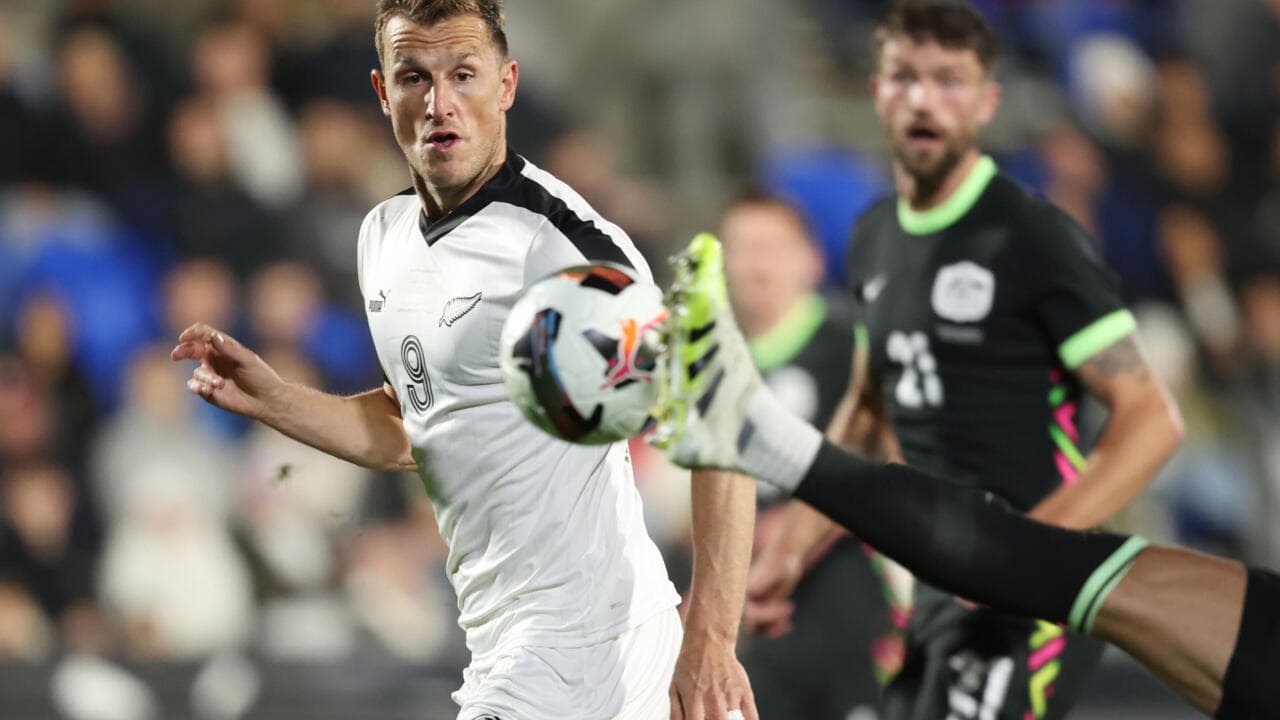
Chris Wood Leads New Zealand's World Cup Comeback
Chris Wood, the old warrior with the scarred knee and the unshakable belief, will lead New Zealand back onto football’s biggest stage after a 16-year wait.
The All Whites, ranked 85th in the world and the lowest-seeded side at this year’s tournament in the United States, Canada and Mexico, arrive as underdogs. Again. They also arrive with a centre-forward who has spent a career thriving in that role.
Wood back to lead the charge
Wood’s place was not guaranteed. A knee injury wiped out most of his Premier League season with Nottingham Forest and cast real doubt over his World Cup hopes. He only returned to action a month ago.
Now he stands at the front of Darren Bazeley’s 26-man squad, carrying both the captain’s burden and the country’s expectations.
“It’s been a long time, 16 years, since we’ve been in the World Cup,” Wood said via video link at the announcement in Auckland. He spoke like a man who has waited for this, not just watched the years pass. “I can’t wait to share the moment with this team and hopefully create some history. I hope that we can do everybody proud and show the world what we’re capable of.”
The numbers back up his importance. Forty-five goals in 88 internationals. A striker who first appeared at a World Cup as a teenager off the bench in South Africa in 2010, now returning as the focal point of a side that believes it has grown up around him.
History on their backs, giants in their path
New Zealand’s World Cup story is short but vivid.
- In 1982, their debut ended with three defeats in Spain. No points, harsh lessons.
- In 2010, they stunned the world in a quieter way. Three group games, three draws, unbeaten and yet still eliminated. They held holders Italy 1-1, shut out Slovakia in a 0-0 stalemate, then shared another 1-1 with Paraguay. No wins, but no losses, and a lingering sense of what might have been.
This time, Group G offers a different kind of mountain: Iran first in Los Angeles on June 15, then Egypt and Belgium in Vancouver on June 22 and 27. Every opponent brings pedigree. Every match will demand perfection from a team that has rarely had the luxury of depth.
Wood believes they have it now. Bazeley does too.
Experience recalled from the fifth tier
The most eye-catching name on the list is not a rising star in Europe but a veteran in England’s fifth tier.
Tommy Smith, 36 years old and now with Braintree Town, is back. The defender started all three matches in South Africa in 2010. Sixteen years on, he returns not as a guaranteed starter, but as a sounding board, a standard-setter, a reminder of what it takes to live with the world’s best for 90 minutes.
“With a squad of 26, not everybody is going to play,” Bazeley said. “So we added Tommy because his leadership is great. He’s going to be so important for the players keeping everybody on track. We’ll lean on him a lot.”
It is a calculated call. Smith’s legs may no longer be the quickest, but his presence in the dressing room, and his memory of that unbeaten campaign, gives this group a link to the last time New Zealand rattled the hierarchy.
European core, A-League heartbeat
Around Wood and Smith, Bazeley has built a squad that blends European know-how with the familiar rhythm of the A-League.
Midfield will be crucial, and the coach has placed his trust in a cluster of Europe-based players: Joe Bell of Viking FK, Marko Stamenic from Swansea City, Matt Garbett at Peterborough United and Ryan Thomas of PEC Zwolle. They are expected to control tempo, protect the back line and find Wood early and often.
Ten members of the squad come from the Australian A-League, eight of them from New Zealand’s two clubs, Auckland FC and Wellington Phoenix. That domestic core gives Bazeley continuity and chemistry, even as his key creative pieces operate offshore.
Sarpreet Singh and Alex Rufer bring Phoenix steel, while Ben Old arrives from Saint-Etienne, another nod to the growing Kiwi footprint in Europe.
New Zealand’s ticket to this World Cup came via a familiar route: dominance in the Oceania qualifiers in March. That pathway rarely offers a true measure against elite opposition. The real examination starts in North America.
The 26 who carry the flag
- Goalkeepers:
Max Crocombe (Millwall), Alex Paulsen (Lechia Gdansk), Michael Woud (Auckland FC) - Defenders:
Tyler Bindon (Nottingham Forest), Michael Boxall (Minnesota United), Liberato Cacace (Wrexham), Francis de Vries (Auckland FC), Callan Elliot (Auckland FC), Tim Payne (Wellington Phoenix), Nando Pijnaker (Auckland FC), Tommy Smith (Braintree Town), Finn Surman (Portland Timbers) - Midfielders:
Lachlan Bayliss (Newcastle Jets), Joe Bell (Viking FK), Matt Garbett (Peterborough United), Ben Old (Saint-Etienne), Alex Rufer (Wellington Phoenix), Sarpreet Singh (Wellington Phoenix), Marko Stamenic (Swansea City), Ryan Thomas (PEC Zwolle) - Forwards:
Kosta Barbarouses (Western Sydney Wanderers), Elijah Just (Motherwell), Callum McCowatt (Silkeborg IF), Jesse Randall (Auckland FC), Ben Waine (Port Vale FC), Chris Wood (Nottingham Forest)
They will arrive as the smallest name in almost every headline. That has never bothered New Zealand before.
The last time they walked away from a World Cup, they did so unbeaten and unsatisfied. Now, with Wood fit again, Smith back in the fold and a deeper supporting cast around them, the question is no longer whether they belong.
It is how much damage this unfancied group can inflict on a tournament that still underestimates them.





