Chelsea's Bompastor Navigates New Challenges in Women's Football
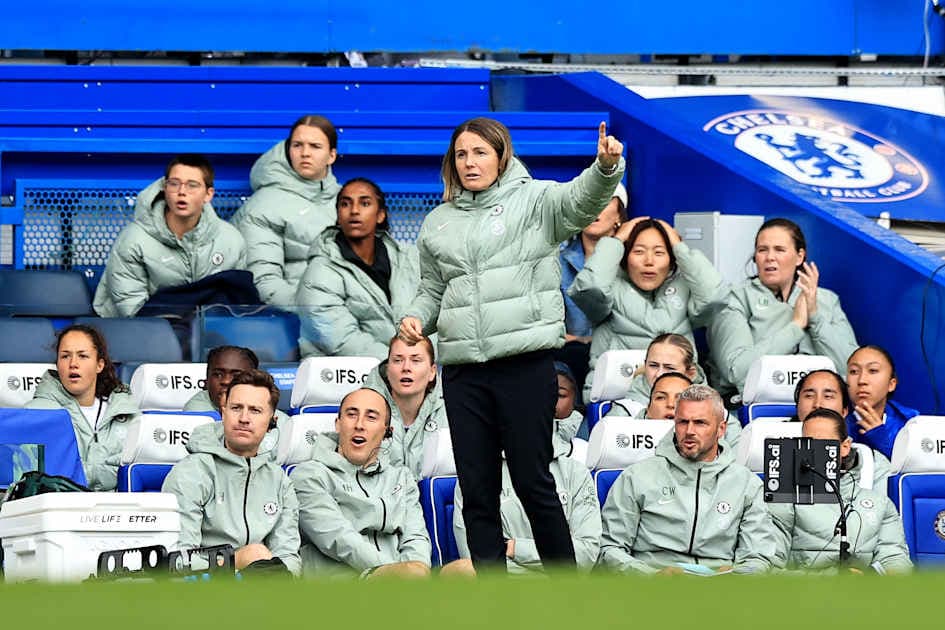
Sonia Bompastor did not ease her way into English football. She arrived at Chelsea in the summer of 2024 and promptly tore through the domestic calendar, delivering a Treble in her first season in charge. It was the kind of entrance that turns a coach into a standard-bearer overnight.
This year has felt very different.
Chelsea still have silverware on the shelf – the Women’s League Cup retained, a place secured in next season’s Women’s Champions League, and a run to the Women’s FA Cup semi-finals. On paper, it is a campaign many clubs would celebrate. At Chelsea, it has triggered something else: self‑examination.
“We have been so used to winning so many games, trophies, and titles,” Bompastor admitted. “But this season we couldn't achieve as much as we did previously.”
That is the nub of it. Chelsea are no longer sprinting alone.
From Pace-Setters to Pack Leaders
For years, Chelsea have been the reference point in the women’s game, the club others studied and tried to copy. Investment, infrastructure, recruitment, culture – they set the pace. Now, the rest are beginning to run alongside them.
“The competition is becoming bigger and bigger,” Bompastor said.
The gap, she argued, is shrinking not only in England but across Europe. More clubs are putting serious money into their women’s teams, strengthening squads, and building the kind of depth once reserved for the continent’s elite.
“Chelsea have been a club who have been showing the pathway,” she continued. “Right now, most of the clubs are catching up and making sure they can compete against us.”
That shift has forced Chelsea to look inward. Bompastor talks about “reflections within the club” – a process already under way as they try to ensure they are “in a better place for next season”. She is clear-eyed about the context: both of her seasons in charge, even the Treble-winning one, have been transitional.
The first year brought instant success. The second, by Chelsea’s towering standards, was more complicated. The trophies did not flow quite so freely, the margin for error shrank, and the sense grew that the rest of the league had finally caught their breath.
So the question hanging over Cobham is no longer how to dominate a league that cannot live with them. It is sharper, more demanding.
“How can we maintain the success in the long term at a club like Chelsea?” Bompastor asked. “That's the question we need to ask ourselves.”
A Different Landscape, Fewer Competitions
Next season brings a twist to that challenge. New rules mean Chelsea’s qualification for the Women’s Champions League automatically removes them from the League Cup in 2026/27. One domestic trophy disappears from their calendar.
On the face of it, that reduces the load. In reality, it changes the calculation.
“We have been competing in four competitions, and going into next season, there will be three competitions,” Bompastor said.
The squad has been built for volume – for the grind of four fronts, with internationals spread across every line of the pitch. Those players already log heavy minutes for club and country. Now the club must decide how best to use that depth when the fixtures thin out but the stakes rise.
You do not simply shrink a Chelsea squad. You sharpen it.
The priority is clear: equip the team with the right tools to attack an increasingly unforgiving Women’s Super League and a Champions League that no longer feels like a closed shop. The comfort of routine wins is gone. Every competition now bites.
No Easy Games Anymore
Bompastor knows the contrast better than most. At Lyon, she coached a side so dominant that the domestic league often felt like an extended training exercise.
“When I was at Lyon, 80 per cent of the games, we could play at 60 per cent, and it was enough for us to win,” she said.
She could rotate heavily, throw academy players into league matches, and still expect three points. The real battles were saved for Europe.
“That’s not the case here,” she stressed.
In England, every league fixture asks a different question. Sometimes it is a physical war. Sometimes it is the weight of history and the size of the club across the halfway line. Sometimes it is a tactical puzzle that needs solving on the fly. The common thread: there is no room to drift.
“Here, you have to compete in every league game because every match brings you a challenge in different ways,” Bompastor said. “There is no space for you to drop a little bit because when you do that, you lose or you drop points.”
That relentlessness is reshaping Chelsea’s thinking. The days of coasting through large chunks of a domestic season, conserving energy for the spring, are gone. Rotation now carries risk. A slight dip in intensity can flip a title race or a top‑three battle in a single afternoon.
So the reflections Bompastor talks about are not abstract. They cut to recruitment, physical preparation, tactical flexibility, and how to manage a squad crammed with internationals who never really stop playing.
“Our job is to reflect and to make sure we make the right decisions for the future,” she said.
Chelsea built an era by staying one step ahead of everyone else. With the pack now on their heels, the next set of decisions will decide whether they remain the benchmark – or become just another contender in a league that no longer fears their shadow.