Chris Smalling: Journey from Maidstone to Premier League Stardom
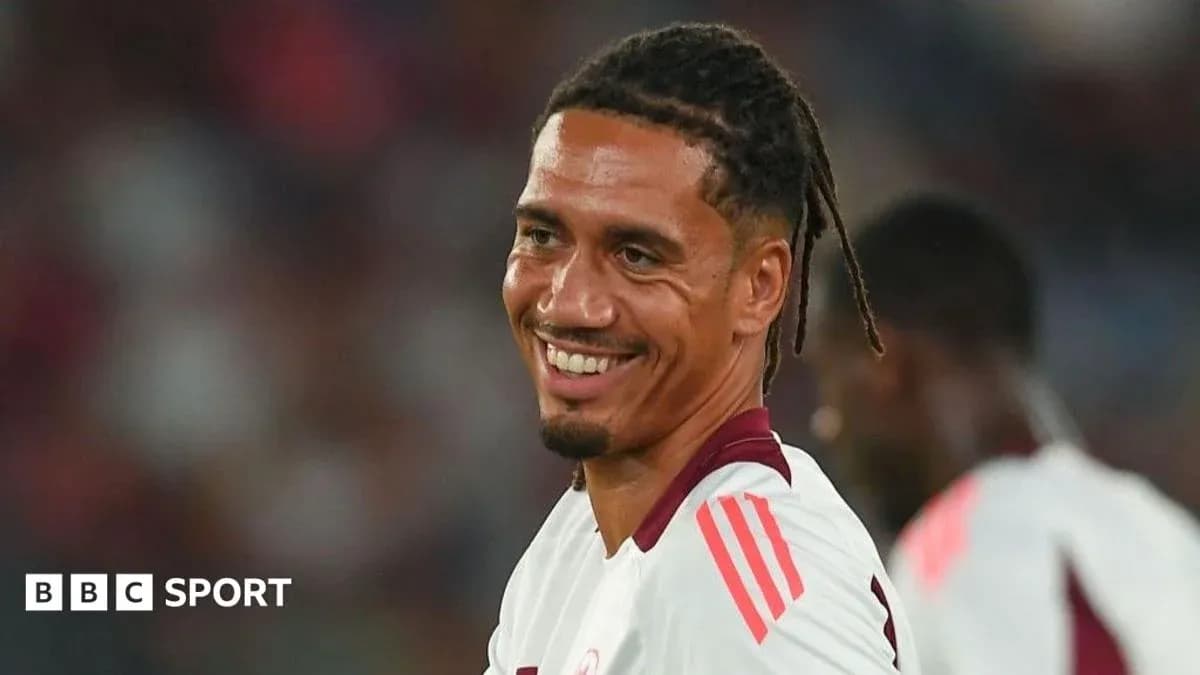
The first thing that strikes you with Chris Smalling isn’t the medals, the managers or the miles on the clock. It’s how certain he sounds about his body, his career, his next move – all at 36, back in the north west of England, waiting for the right club to call.
“I know my body now better than when I was 26,” he says. It doesn’t sound like a cliché. It sounds like a man who has done the work.
This is the defender who went from non-league Maidstone to a Champions League final in three years. From a teenager planning a degree in financial economics to 580 club appearances in three countries, 31 England caps, and trophies with Manchester United and Roma. Last season, he played every game for Al-Fayha in the Saudi Pro League. He’s proud of that. Very proud.
His career is not over. Not yet. And certainly not on his terms.
The science of staying on the pitch
Smalling talks about longevity with the precision of someone who once had a different life mapped out.
“When you get beyond 30, each year is precious in terms of enjoying playing and being passionate about football,” he says.
Training, he points out, is the smallest slice of the job now. The real work starts earlier and ends later: what he eats, how he recovers, what he takes between sessions. Clubs run pre-season blood tests and offer tailored plans. Smalling went further.
“I went one step further and kind of had genetics testing, which goes deep into everything. A lot of my supplements were changed because of that.”
Yoga, once something he watched Ryan Giggs do under Sir Alex Ferguson, is now part of a wider picture. The defender who once played on raw talent and resilience now leans on data and detail to stay available. His ever-present season in Saudi wasn’t an accident. It was a project.
Football was never Plan A
Rewind 18 years and none of this looked likely. Not even close.
“It wasn’t even plan D,” he recalls.
He was playing for Maidstone, but his life was heading towards lecture halls, not Premier League stadiums. University was lined up. Financial economics. A levels done. He was already looking at non-league clubs near Leicester so he could keep playing while he studied.
Then, very late in the summer, Fulham called.
He knew the odds. He knew it was a long shot just to get an offer. But he also knew he had to throw everything at it. Roy Hodgson watched one practice game, brought him into his office and offered him a contract.
“It wasn’t even a full week,” Smalling says. “I didn’t have any time to get my head around it. I was just in total shock.”
The safer route disappeared in an instant.
The knock on the hotel door
Hodgson would shock him again.
Smalling was 20, part of the Fulham squad travelling to Blackburn for a Premier League game on 17 January 2010. He didn’t get on the pitch in the 2-0 defeat. The important moment had already happened.
“There had been a lot of talk about other clubs but not Manchester United,” he says.
On the eve of the game, Hodgson pulled him off the team coach. Fulham had accepted a bid. Sir Alex Ferguson was on his way to the hotel. He would be there in 45 minutes.
Smalling rang his mum. Then he sat in his room trying to work out what on earth you ask the greatest manager of his generation when he walks through the door.
They ended up talking for a couple of hours.
Ferguson was calm, reassuring. Smalling, understandably, had doubts. United were stacked with centre-backs. He wanted to develop. Where would he fit in?
“He told me I would get a chance and he believed in me.”
The promise wasn’t just about minutes. It was about belonging. Sharing a dressing room and a pitch with Ferguson’s United. Being part of that environment. “Incredible,” is how Smalling describes it now.
What separates the great managers
Ask Smalling about the best managers he has worked with and he doesn’t start with tactics. He starts with people.
To many on the outside, his relationship with Jose Mourinho is reduced to one moment: the Portuguese publicly questioning his willingness to play through injury in November 2016. Smalling sees it very differently.
“For United or Roma, Jose picked me for most games because we had a good relationship and he trusted me.”
He talks about Ferguson and Mourinho in the same breath. Not because their styles are identical, but because their impact is.
“It’s very easy to influence younger players,” he says. “But the beauty of Sir Alex and Jose is that they were able to create that belief in senior players.”
Plenty of managers can deliver a rousing team talk. Few can look experienced players in the eye and convince them, utterly, that “it’s going to happen”. When the senior players buy in, he says, everyone else follows. That’s the difference at the top level.
And that broken toe?
“In that situation, I was having injections in [a] broken toe because he had created that mentality in me that I could do anything, even if, maybe, I shouldn’t.”
He reached the limit of how many injections he could take. He had to stop in a warm-up. Mourinho was disappointed.
“It gave me even more belief because it was easy to choose another centre-back but he wanted me.”
The trust mattered more than the criticism. The relationship survived and still exists. Smalling messaged Mourinho to wish him luck when he took over at Real Madrid this summer.
More than a centre-back
For all his experience, Smalling is clear on one thing: he has no intention of moving into coaching.
“I don’t think it will be my route,” he says. “I’m quite comfortable with the next stage.”
That next stage is already taking shape. He is working on an education programme for young players with the Global Institute of Sport. There are “three or four” projects like it in the pipeline, ready to expand when he finally hangs up his boots.
For now, though, everything is channelled into playing. The passion is still there. The drive is still there. And, as he points out, the physical stats still back him up.
Whoever signs him next won’t just be getting a defender with Champions League pedigree. At Al-Fayha, he pushed for standards off the pitch as well, helping to improve the gym to match what an elite modern player needs. He is proud that at every club he has left more than just performances behind.
He believes he is remembered fondly. He believes he made a positive impact on and off the pitch. The details matter to him.
No guarantees, only carrots
Looking back, turning down university was a gamble. He knows it.
“It would have been the safer route,” he admits.
That first year at Fulham, the money was modest. He was playing for the reserves, travelling as the 19th man with the first team, close to the bench but not on it. There were no guarantees of a big contract or a long career.
Then came Manchester United. A four-year deal to start with. At the end of the first year, another contract. Another a year later. Another 18 months after that.
“There was always this carrot. I never took anything for granted.”
From Maidstone to Manchester, from broken toes to genetic testing, from Hodgson’s office to a hotel room with Ferguson, Smalling has lived a career that was never supposed to happen.
Now, back in the north west, waiting for the right offer, he is trying to squeeze every last drop out of it. The question isn’t whether he has done enough. It’s which club wants to be the next chapter in a story that was never meant to get this far.