Chelsea W vs Manchester United W: Key FA WSL Clash Analysis
Stamford Bridge stages a heavyweight FA WSL clash on 16 May 2026 as third‑placed Chelsea W host fourth‑placed Manchester United W in the final stretch of the regular season. With just six points separating the sides – Chelsea on 46, United on 40 – the stakes are clear: Chelsea are protecting a Champions League qualification berth, while United are trying to keep their own hopes alive and avoid being cut adrift from the top three.
Context and stakes
In the league, Chelsea W sit 3rd with 46 points from 21 matches, a goal difference of +23 and the division’s joint‑meanest defence (20 conceded). Their recent league form reads WWWDW, underlining a strong late‑season surge.
Manchester United W are 4th on 40 points from 21 games, with a goal difference of +17. Their form line of DDLWD suggests a more stuttering run, still hard to beat but dropping points too often to truly threaten the top two.
With the league round labelled “Regular Season - 22”, this is a late‑season fixture where every point matters. For Chelsea, a home win would all but lock in Champions League qualification. For United, an away victory at Stamford Bridge would drag the Londoners back towards the pack and keep the race for Europe wide open.
Tactical snapshot: Chelsea W
Across all phases, Chelsea W have been one of the WSL’s most balanced sides. They have 14 wins, 4 draws and just 3 defeats from 21 league fixtures, scoring 43 and conceding 20. At home, they are particularly formidable: 8 wins, 0 draws, 2 defeats, with 19 goals scored and only 8 conceded.
The underlying numbers paint a clear profile:
- Goals for: 43 (1.9 per game at home, 2.2 away, 2.0 overall).
- Goals against: 20 (0.8 per game at home, 1.1 away, 1.0 overall).
- Clean sheets: 8 in total (5 at home).
- Failed to score: only 2 times in 21 matches.
Chelsea’s biggest home win in the league is 5-0, and their heaviest home defeat is 0-2, showing that when they lose, it tends not to be chaotic. Their preferred tactical base has been a back four, with 4‑1‑4‑1 (6 times) and 4‑2‑3‑1 (3 times) the most used formations, complemented occasionally by back‑three systems (3‑4‑2‑1, 3‑5‑2, 3‑4‑1‑2).
That flexibility allows them to tilt between control and aggression. In a 4‑1‑4‑1, Chelsea can protect their centre‑backs with a single pivot, freeing both advanced midfielders and wide forwards to press United’s build‑up. In a 4‑2‑3‑1, the double pivot offers more security against United’s transitions, particularly with the visitors’ strong away record.
A key attacking figure is Alyssa Paola Thompson. In the league she has:
- 6 goals and 3 assists in 19 appearances (15 starts).
- 23 shots, 13 on target.
- 21 key passes and 358 total passes at 79% accuracy.
- A rating of 7.07, placing her 5th in the league’s ratings table.
Thompson’s ability to both finish and create makes her central to Chelsea’s attacking plan. She is also active out of possession, with 16 tackles and 2 interceptions, fitting the high‑energy pressing style Chelsea can deploy at home.
Chelsea have also been reliable from the spot in the league: 1 penalty taken, 1 scored, 0 missed. There is no indication of a systemic weakness in dead‑ball pressure moments.
Discipline is relatively controlled; their yellow‑card distribution peaks in the 31‑45 minute window, suggesting an aggressive push before half‑time but no red cards recorded across the listed ranges.
Tactical snapshot: Manchester United W
Manchester United W’s season profile is that of a well‑organised, resilient side with a particularly strong away record. Across all phases they have:
- 11 wins, 7 draws, 3 defeats from 21 league games.
- 38 goals scored, 21 conceded.
- Away record: 6 wins, 3 draws, 1 defeat; 20 scored, 8 conceded.
Their away defensive average (0.8 goals conceded per game) matches Chelsea’s home defensive record, hinting at a tight contest. United have kept 7 clean sheets in total, 5 of them away from home, underlining how comfortable they are in a more controlled, counter‑punching role on their travels.
Offensively, they average 2.0 goals per away match and 1.8 overall, slightly below Chelsea’s scoring rate but still impressive. Their biggest away win is 1-5, and their heaviest away defeat is 3-0, indicating they can be devastating on the break but are not completely immune to collapse if the structure breaks.
Tactically, United are more settled than Chelsea in their shape:
- 4‑2‑3‑1 used 10 times.
- 4‑1‑4‑1 used 3 times.
- 4‑4‑2 used 2 times.
The 4‑2‑3‑1 base gives them a double pivot to screen Chelsea’s attacking midfielders while allowing their own No.10 and wide players to exploit spaces when Chelsea commit bodies forward.
Two key United attackers emerge from the data:
- Jessica Park: 4 goals, 3 assists in 21 appearances (19 starts), with 21 shots (13 on target), 17 key passes and 443 passes at 83% accuracy. Her duel numbers (115 total, 57 won) and 31 successful dribbles from 54 attempts underline a ball‑carrying midfielder who can progress play and break lines.
- Elisabeth Terland: 4 goals in 17 appearances (13 starts), 27 shots with 17 on target, plus 9 key passes. Her duel record (39 won from 78) and 5 successful dribbles from 7 attempts suggest a direct, penalty‑box‑focused attacker.
Together, they give United a dual threat: Park as the creative hub between the lines and Terland as a more vertical outlet in and around the area.
United have also converted their only league penalty (1 scored, 0 missed), and their disciplinary record includes a single red card in the 61‑75 minute range, a reminder that they can occasionally be stretched under sustained pressure.
Head‑to‑head: recent competitive meetings
The last five competitive meetings between Chelsea W and Manchester United W (excluding friendlies) show a clear Chelsea edge:
- 15 March 2026, WSL Cup Final at Ashton Gate Stadium: Chelsea W 2-0 Manchester United W – Chelsea win.
- 22 February 2026, FA Women’s Cup Round 5 at Kingsmeadow: Chelsea W 2-1 Manchester United W after extra time (1-1 after 90 minutes) – Chelsea win.
- 3 October 2025, FA WSL at Leigh Sports Village: Manchester United W 1-1 Chelsea W – Draw.
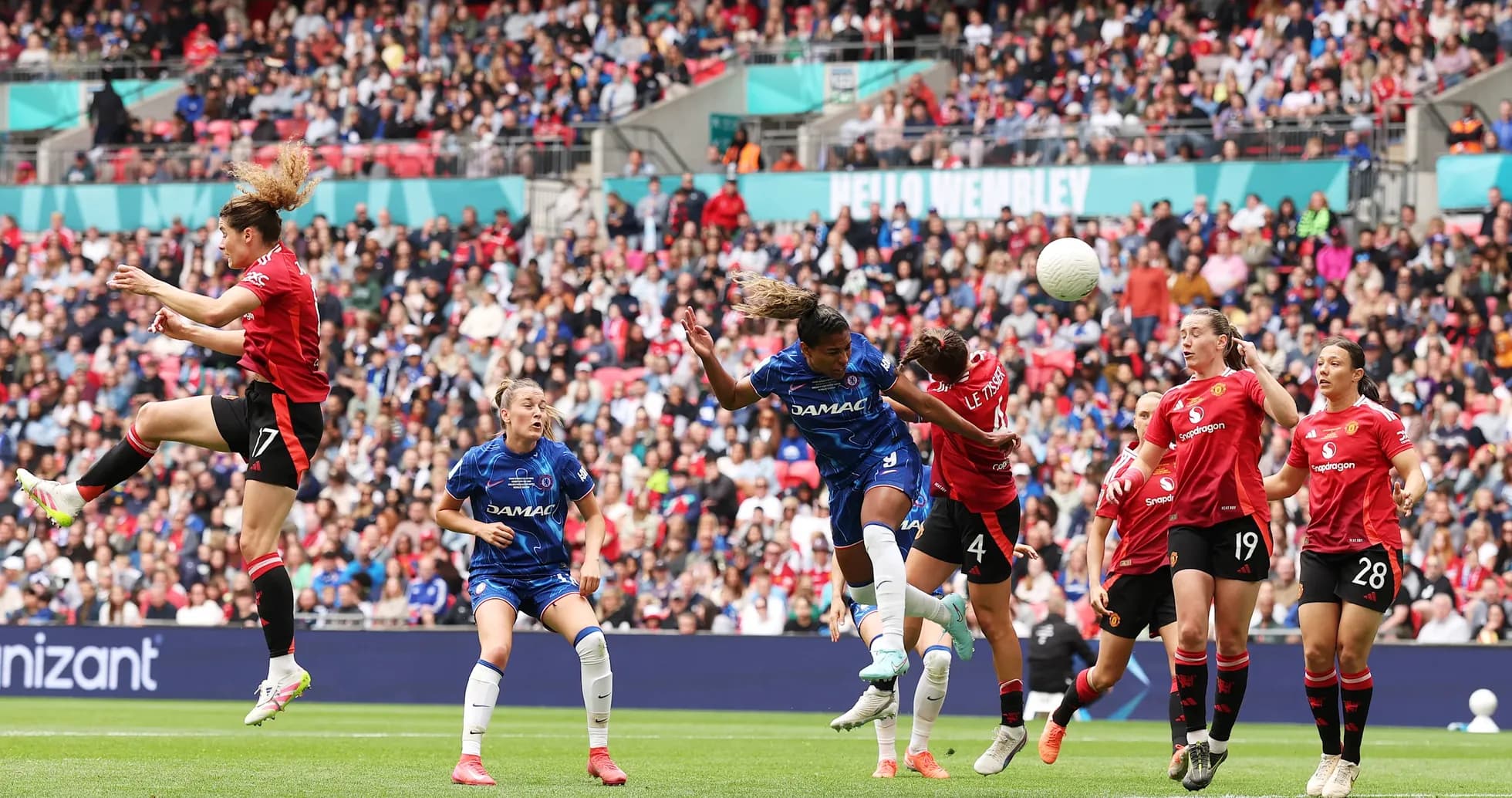
- 18 May 2025, FA Women’s Cup Final at Wembley Stadium: Chelsea W 3-0 Manchester United W – Chelsea win.
- 30 April 2025, FA WSL at Leigh Sports Village Stadium: Manchester United W 0-1 Chelsea W – Chelsea win.
Across these five matches, Chelsea have 4 wins, Manchester United have 0, and there has been 1 draw. The scores show Chelsea repeatedly shutting United out (three clean sheets) and winning both recent cup finals.
Key battles and game pattern
Given Chelsea’s home strength and United’s away resilience, this fixture is likely to hinge on:
- Chelsea’s ability to break down a compact 4‑2‑3‑1 without overexposing themselves to United’s counters.
- How effectively United can limit service into Alyssa Thompson and deny Chelsea’s wide players the chance to isolate full‑backs.
- The duel between Chelsea’s flexible midfield (in either 4‑1‑4‑1 or 4‑2‑3‑1) and United’s double pivot plus Jessica Park. If Park finds pockets between the lines, United’s transition threat increases markedly.
- Set‑pieces and discipline: both sides are generally controlled, but United’s previous red card window (61‑75) and Chelsea’s cluster of yellows before half‑time hint at phases where emotional control will matter.
The verdict
The data points towards a finely balanced contest but with Chelsea holding several structural advantages: stronger recent league form, a formidable home record, and a dominant recent head‑to‑head record that includes two finals and an away league win in 2025.
Manchester United’s outstanding away form and defensive solidity mean this is unlikely to be a one‑sided affair, and their attacking pair of Park and Terland carry enough threat to punish any Chelsea complacency.
However, with Stamford Bridge behind them, a more varied tactical toolkit, and Alyssa Thompson in productive form, Chelsea W look marginally better placed to take three points and consolidate their Champions League position, while United may need a near‑perfect away performance to overturn the weight of recent history.