
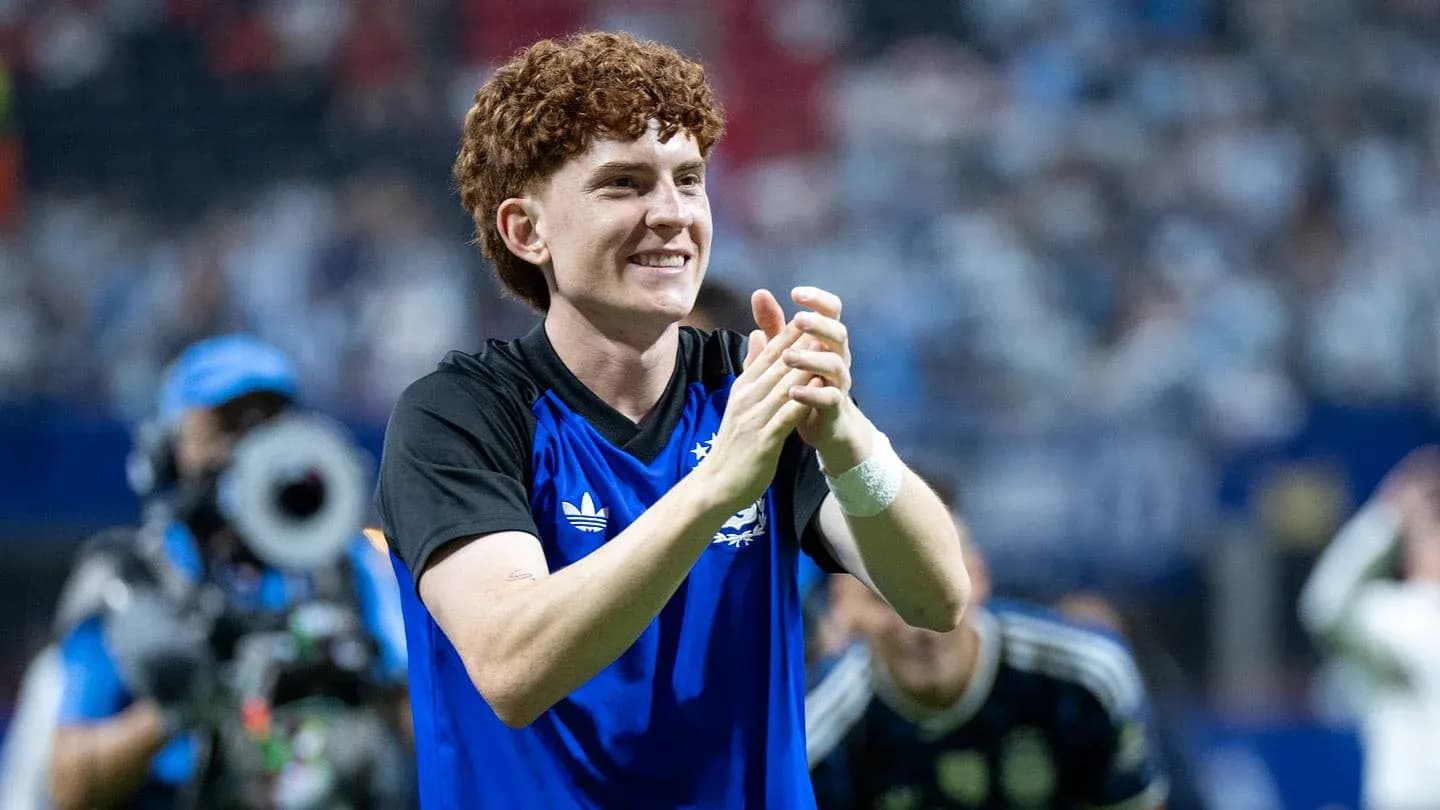
Chelsea's Barco Gamble: Recruitment's Shift Under Alonso
Chelsea finally announced Valentín Barco on Sunday, ending a transfer saga that has been running in the background for nearly four months. The Argentine arrives from Strasbourg, another piece moved along the BlueCo chessboard, but not one pushed by the new man in the dugout.
This is not a Xabi Alonso signing. That matters.
The Spaniard has been clear about what he wants in his first summer at Stamford Bridge: authority in midfield and clarity in the squad’s spine. He pushed hard for Sunderland’s Granit Xhaka. He signed Brentford’s veteran Jordan Henderson. He has specifically asked for a left back in Pep Chavarría from Rayo Vallecano.
Barco drops straight into the fault line between the manager’s vision and the club’s long-running recruitment strategy.
A Deal From the Old Regime
The groundwork for this move was laid long before Alonso walked through the door.
Back in early April, when Liam Rosenior still occupied the Chelsea hot seat, reports surfaced that Barco and the club had already shaken hands on a summer switch. Two days after Alonso’s appointment in May, Barco publicly said goodbye to Strasbourg, even though Chelsea had yet to confirm anything.
By then, the deal was effectively done. Alonso could give a thumbs-up or a raised eyebrow, but the train had already left the station.
The fingerprints on this transfer belong to co-sporting directors Paul Winstanley and Laurence Stewart, along with recruitment figures Joe Shields and Sam Jewell. It is their project, their judgement call, at a time when their influence has been openly curbed after a chaotic, high-spend era that delivered far more headlines than trophies.
Among supporters, faith in that department has eroded. Alonso’s arrival, and the suggestion that he would have greater sway over signings, felt like a course correction. Barco, then, looks suspiciously like a final echo of the old way of doing business.
The Player Behind the Narrative
Strip away the politics and one thing stands: Barco can play.
Many Premier League fans remember him as the slight, red-haired full-back who struggled over seven appearances for Brighton & Hove Albion in 2023–24. That version of Barco looked raw, miscast and overwhelmed.
Strasbourg saw something different. Used as a do-it-all midfielder from early 2025, Barco found a role that suited his instincts. He pressed, he bit into tackles, he carried the ball forward, he linked play. He was asked to both spark attacks and shield the defense. He handled it.
There was always a sense he would not stay in Alsace for long.
Cynics will argue Chelsea’s main motivation is asset control within the BlueCo network, a way to keep a promising 22-year-old in-house and bump his valuation. The accusation is hard to ignore in the current climate, but it does not erase his performances. Barco has earned another swing at a higher level.
What makes him especially attractive is his flexibility. As a teenager, he was framed as a left back who could drift into midfield, the classic inverted full-back prototype. At Strasbourg, the picture flipped: he looked like a midfielder first, a left-sided option second.
For a modern squad, that kind of dual-use profile is gold. He can cover two roles, plug gaps, change shapes mid-game. Chelsea might not need that versatility every three days this season without European football, yet the club is already looking towards 2027–28 and a return to the grind of twice-weekly matches. In that scenario, Barco’s value grows.
The question is simple and awkward: where does Alonso see him?
Chelsea’s new head coach has already targeted the very zones Barco occupies. Henderson has arrived to add experience and control in midfield. Chavarría is close as the manager’s chosen left back. Barco hovers between those two lanes, waiting to find out whether he is a core piece or a luxury spare.
Strasbourg to Stamford Bridge: A Troubled Pipeline
Barco is the third player to walk the new Strasbourg-to-Chelsea corridor. The track record is, at best, unconvincing.
Mamadou Sarr was the first. Chelsea signed the center back in the summer of 2025, used him at the Club World Cup, then sent him back to Strasbourg on loan. There, he thrived. He wore the armband regularly, led the back line and looked every inch a long-term defensive pillar.
Then came the twist. In January, Rosenior wanted a new center back at Stamford Bridge. Chelsea cut Sarr’s loan short and brought him back for an immediate reunion.
The logic never fully materialised on the pitch. Over the next five months, Sarr played fewer than 300 minutes. He drifted out of matchday squads altogether as the season closed. A captain in France; a spectator in London. The pathway looked muddled.
Emmanuel Emegha followed. His move from Strasbourg to Chelsea was confirmed in September 2025, and he finally joined up with Alonso’s squad this summer. On paper, he bolstered the striking options. In reality, his name almost instantly appeared in exit rumours.
Chelsea already have João Pedro, Nicolas Jackson and Liam Delap competing for minutes up front. Behind them lurks Dastan Satpayev, the 17-year-old who has caught the eye in preseason and will join permanently once he turns 18 later this month. Emegha, officially through the door and already the subject of transfer speculation, looks like another asset rather than a clearly defined piece of the plan.
Now comes Barco, the latest to step through that same door and straight into a cloud of questions.
Is he a midfielder Alonso builds around, or a utility man covering injuries? A left-sided understudy, or a genuine challenger? A football decision, or a financial one?
Chelsea have their man. The recruitment team have their bet. The manager has a puzzle on his hands.
The answers will not come from the announcement video. They will come when Alonso names his first big-team XI that truly matters and we see where, or if, Valentín Barco fits.





