
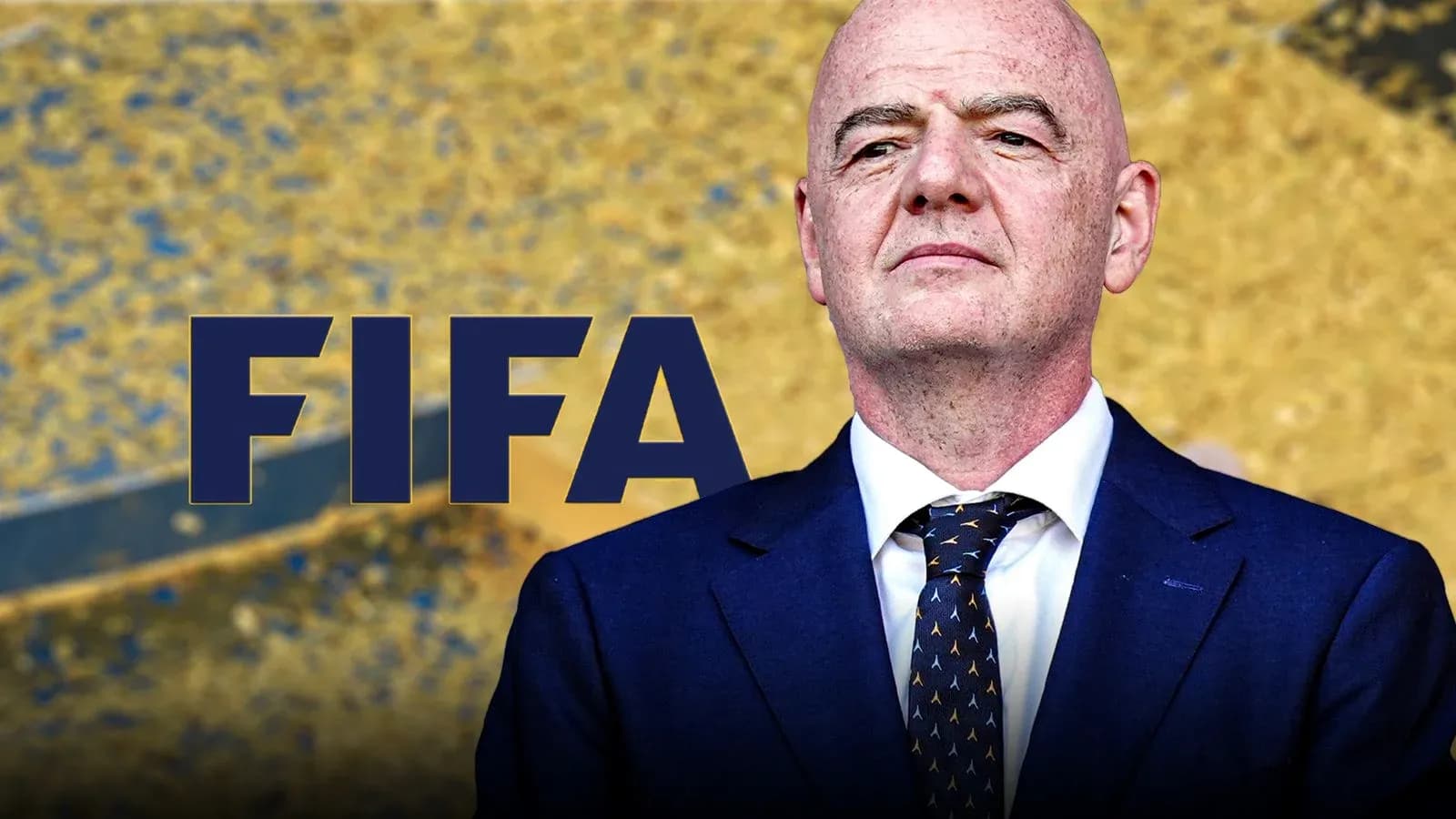
Carlos Cordeiro Resigns from FIFA Amid Power Struggle
Carlos Cordeiro has walked away from FIFA – and straight into the heart of the biggest power struggle world football has seen in years.
The senior advisor to president Gianni Infantino resigned in protest at plans to explore selling stakes in a new World Cup commercial vehicle to private investors, a move that has already triggered open revolt from three of the game’s major confederations.
“I cannot stand by while FIFA considers selling a stake in the World Cup,” Cordeiro said in an exclusive statement to Sky News, making clear he had “no involvement in this proposal” and “opposes it unequivocally”. For a former banker and ex-president of the US Soccer Federation to walk out over a commercial deal tells its own story.
“A bad deal for FIFA’s Member Associations, a bad deal for football, and a bad deal for the long-term future of the game,” he called it. No ambiguity. No soft landing.
FIFA digs in as revolt grows
Cordeiro’s exit dropped just hours after FIFA released a late-night statement from Zurich insisting “nobody is selling football”, attempting to calm the storm around its proposed FIFA Forward Enterprise (FFE) project.
The governing body stressed it would push on with a “democratic consultation” on the plan, despite the backlash. It blamed “incorrect media reports” for disrupting the process and promised every Member Association (MA) a vote “based on facts”.
The message was clear: we’re listening, but we’re not backing down.
The problem for Infantino is that the opposition is no longer a murmur. It’s a block vote.
UEFA’s 55 member associations have already declared they will not enter any FIFA competition while the proposals remain on the table. Their stance is “unanimous and unequivocal”. CONCACAF, representing 41 nations across North and Central America and the Caribbean, has also “rejected the proposal”. The Asian Football Confederation (AFC), 47 members strong and until now a key Infantino ally, has joined them in calling for an “urgent review” of FIFA’s governance.
That leaves confederations representing 143 of FIFA’s 211 member associations formally against the plan. A majority of world football, lined up against its own president.
FIFA insists FFE is designed to give national associations “meaningful ownership of the commercial opportunity of football in their respective countries” without compromising “the spirit or the governance of FIFA or football itself”. The line that jumps off the page remains: “Nobody is selling football. This is not something FIFA would ever entertain.”
Yet the structure under discussion would allow private investors to buy a minority stake in a World Cup commercial entity. At the front of that queue is a group led by Thrive Eternal, founded by Joshua Kushner, brother of Jared Kushner, the son-in-law of former US President Donald Trump.
The optics are combustible: world football’s crown jewel, tied to private equity money with political connections, in a sport still scarred by past corruption scandals.
UEFA draws a red line
UEFA’s threat could not be starker. No European national teams in any FIFA competition while the proposals survive, unless they are “abandoned in their entirety” and FIFA gives binding guarantees it will “never again open its governance or competitions to private ownership”.
Take those words literally and you begin to see the scale of the risk. A men’s or women’s World Cup without Europe is not a World Cup in any meaningful commercial sense. The huge returns being dangled in front of national associations if FFE goes ahead would evaporate overnight.
European and world leagues have also lined up against the project. Their fear is simple: once private money is inside the tent, the pressure for bigger, more frequent tournaments intensifies, squeezing domestic calendars and distorting the sport’s balance of power even further.
FIFA counters that “each MA should be allowed to review the proposal and have a say in shaping their own future”. On paper, that sounds like democracy. In practice, critics see a president trying to push through a deal that could reshape the game’s governance for a generation.
Asia turns on its long-time ally
The AFC’s intervention may prove decisive. Under president Sheikh Salman, who lost to Infantino in the 2016 FIFA presidential election, Asia has been one of the Swiss-Italian’s strongest pillars of support.
Not this time.
“The AFC believes this moment must become a catalyst for strengthening institutional reform,” its statement read. It warned that “meaningful democracy is not measured solely by the opportunity to vote” and demanded “transparent governance, timely consultation, informed deliberation and genuine participation” before decisions of “global significance” are taken.
In diplomatic language, this is a rebuke. In political terms, it edges close to inviting questions about Infantino’s future.
The AFC has called on FIFA to urgently review its governance and decision-making framework, a direct challenge to how this project has been conceived and driven.
‘He’s in a hole and he needs to stop digging’
Inside FIFA, the official line is unity. Outside, the commentary is brutal.
Sky Sports News’ Kaveh Solhekol described the overnight FIFA statement as “desperate” and “tone-deaf”, noting it did not mention Infantino by name.
“The way I read this is that this is a statement from Gianni Infantino; it’s not necessarily a FIFA statement,” he said, questioning how many inside the organisation truly back the president.
“He’s in a hole and he needs to stop digging. He needs to start reading the room. He needs to start accepting the fact his power is starting to ebb away and he needs to start by apologising to football, to football fans all around the world – and he also needs to start apologising and explain himself to the confederations and the presidents of the 211 member associations.”
Solhekol also attacked Infantino’s repeated attempts to blame the media, comparing his approach to that of Donald Trump.
“He seems to somehow think that is going to help him,” he said, pointing out that reporting by The Times and the Financial Times had been “completely and utterly accurate” and central to exposing the details that triggered this furore.
His conclusion was stark: Infantino must “change course”, “wake up” to “the mess he has created for himself” and “start saying sorry” if he wants to save his presidency.
Can Infantino survive this?
This is not the first time Infantino has been under pressure. He has navigated previous storms and kept his grip on power. But insiders now describe this as the biggest crisis of his tenure – and one of his own making.
His apparent strategy is to frame everything as a simple, neutral process: a consultation, a vote, and whatever the 211 associations decide will stand. If FFE is rejected, he can argue it was all just a discussion. A storm in a teacup.
Others see a different route. They believe his best hope lies in a public apology, a period out of the spotlight and a quieter build-up to the FIFA presidential election next March, where he could yet stand unopposed.
At present, there is little sign he is prepared to take that path. The consultation is still on. The rhetoric against the media continues. The sense of defiance lingers.
Solhekol questions whether Infantino truly grasps the depth of anger – not only over FFE, but over a series of decisions taken since he took office.
What happens next will define more than one man’s future. With Europe, Asia and CONCACAF now openly challenging the direction of travel, the battle lines around who really controls the World Cup – and what kind of game global football wants to be – have rarely been sharper.





