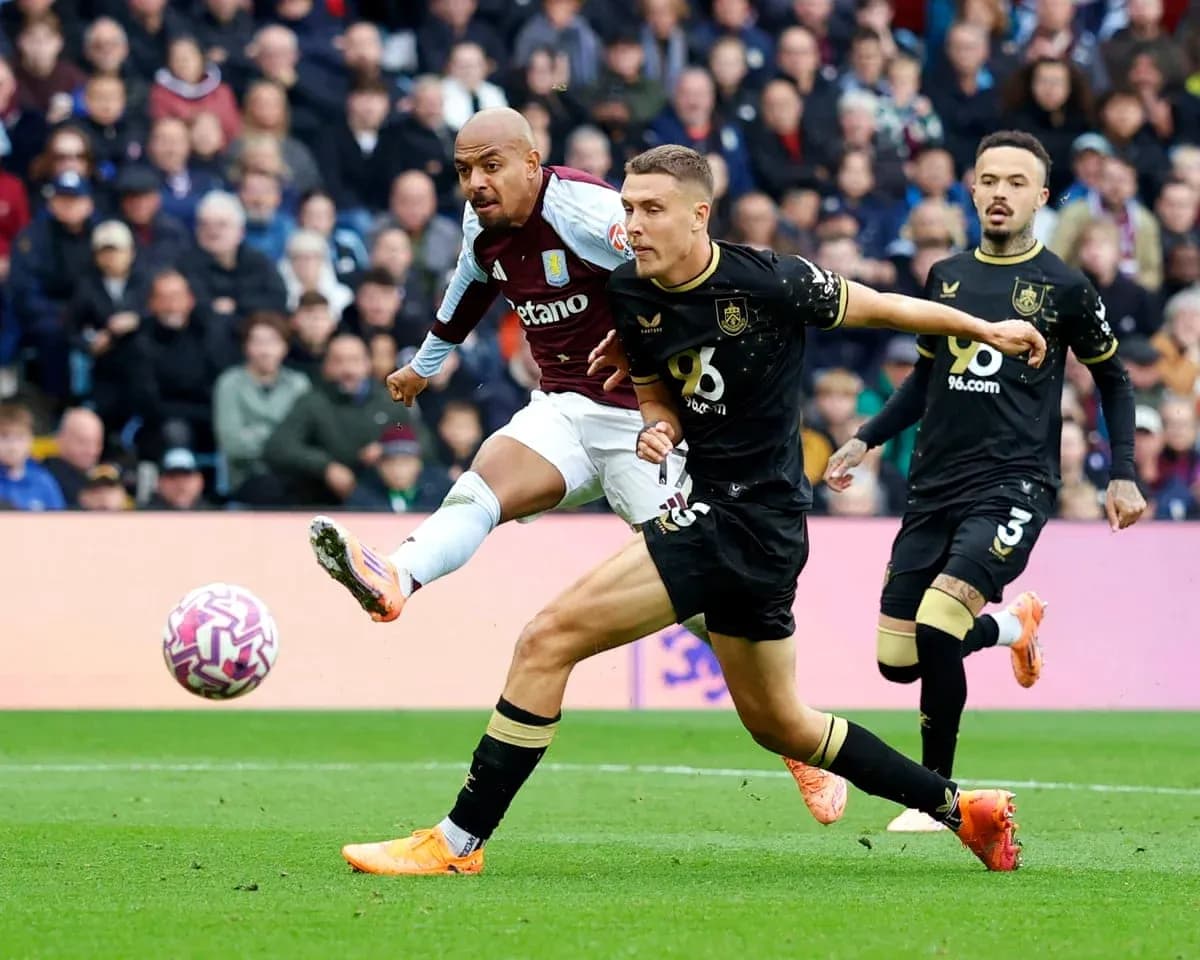
Burnley vs Aston Villa: Tactical Analysis of 2-2 Draw
Burnley 2–2 Aston Villa at Turf Moor, a result that does little to alter the trajectory of either side’s season. Burnley remain marooned in the relegation places despite a spirited comeback, while Villa’s push for a top-four finish is checked by dropped points against a team in the bottom two.
Burnley struck first inside eight minutes. Jaidon Anthony collected the ball on the left and drove infield before finishing with a solo effort, an unassisted strike that gave the hosts an ideal start at 1–0. Villa thought they had levelled in the 39th minute when Ollie Watkins found the net, but VAR intervened and the goal was ruled out for offside, a key reprieve for Burnley as the initial decision was overturned.
The visitors did restore parity before the break. On 42 minutes, John McGinn slipped a pass into Ross Barkley, who arrived from midfield and finished clinically to make it 1–1. Early in the second half, Aston Villa’s physical edge showed when Tyrone Mings was booked for roughing in the 49th minute, signalling an increasingly combative contest.
Villa then turned the game around. In the 56th minute, a long pass from goalkeeper Emiliano Martínez released Ollie Watkins, who timed his run and finished to put the visitors 2–1 up, with Martínez credited for the assist. Burnley’s response was immediate: just two minutes later, at 58 minutes, Zian Flemming met a pass from Hannibal Mejbri and converted to bring the score back to 2–2.
The game’s intensity remained high. In the 60th minute, Flemming went into the book for roughing, the second yellow card of the match. Burnley made the first change on 69 minutes, as Lyle Foster replaced Hannibal Mejbri to add fresh legs in attack.
A double substitution from Aston Villa followed in the 74th minute. Lucas Digne replaced Ian Maatsen at left-back, while Emiliano Buendía came on for Victor Lindelöf, reshaping Villa’s midfield balance. Burnley responded with their own double change on 79 minutes: Josh Laurent replaced Lesley Ugochukwu in midfield, and Zeki Amdouni came on for goalscorer Zian Flemming to provide a different threat up front.
Villa continued to rotate their attacking options. On 80 minutes, Douglas Luiz replaced Ross Barkley, and Lamare Bogarde came on for Matty Cash, further adjusting the visitors’ structure. In the 85th minute, Leon Bailey replaced John McGinn, adding pace on the flank for the closing stages.
Burnley made two late substitutions in the 87th minute to chase a winner. Jacob Bruun Larsen replaced Jaidon Anthony on the wing, and James Ward-Prowse came on for Florentino Luís in central midfield, giving Burnley more set-piece and passing quality. Neither side, however, could find a decisive goal in the final minutes, and the match finished level.
Fixture Statistics & Tactical Audit
- xG (Expected Goals): Burnley 1.77 vs Aston Villa 1.42
- Possession: Burnley 34% vs Aston Villa 66%
- Shots on Target: Burnley 6 vs Aston Villa 7
- Goalkeeper Saves: Burnley 5 vs Aston Villa 4
- Blocked Shots: Burnley 5 vs Aston Villa 5
The numbers point to a broadly balanced contest in chance quality despite Villa’s dominance of the ball. Aston Villa controlled territory and tempo with 66% possession and 510 passes at 86% accuracy, but their xG of 1.42 suggests they did not consistently turn that control into clear-cut opportunities. Burnley, with only 34% possession and 255 passes at 73% accuracy, were more direct yet efficient in the final third, generating 1.77 xG and matching Villa for blocked shots, indicating sustained spells of pressure when they did attack. The 2–2 scoreline aligns closely with the underlying chance profile, reflecting a game where Burnley’s vertical play and Villa’s structured build-up produced a fair share of opportunities at both ends.
Standings Update & Seasonal Impact
Burnley started the day 19th on 21 points, with 37 goals scored and 73 conceded (goal difference -36) from 36 matches. The draw adds one point, moving them to 22 points, while the two goals scored and two conceded take them to 39 goals for and 75 against, leaving their goal difference unchanged at -36. They remain deep in the relegation zone, still requiring a late surge and favours elsewhere to have any realistic chance of survival.
Aston Villa began in 5th place on 59 points, with 50 goals for and 46 against (goal difference +4) from 36 matches. This draw moves them to 60 points, with their tally now 52 scored and 48 conceded, keeping their goal difference at +4. While they stay in the European positions, dropping two points against a relegation-threatened side could prove costly in the race for Champions League qualification, tightening the gap to rivals above and behind them in the table.
Lineups & Personnel
Burnley Actual XI
- GK: Max Weiss
- DF: Kyle Walker, Axel Tuanzebe, Maxime Estève, Lucas Pires
- MF: Florentino Luís, Lesley Ugochukwu, Loum Tchaouna, Hannibal Mejbri, Jaidon Anthony
- FW: Zian Flemming
Aston Villa Actual XI
- GK: Emiliano Martínez
- DF: Matty Cash, Ezri Konsa, Tyrone Mings, Ian Maatsen
- MF: Victor Lindelöf, Youri Tielemans, John McGinn, Ross Barkley, Morgan Rogers
- FW: Ollie Watkins
Expert's Post-Match Verdict
From a tactical perspective, this was a contest of contrasting approaches that ultimately cancelled each other out. Aston Villa’s possession-heavy game, anchored by Youri Tielemans and Ross Barkley, gave them control between the lines and allowed them to build patiently from the back (66% possession, 510 passes at 86%). However, their inability to consistently break Burnley’s compact shape into truly high-value chances (1.42 xG from 18 shots) meant their territorial dominance did not translate into a decisive advantage.
Burnley, by contrast, leaned into a more direct, transition-focused plan. With Zian Flemming as a focal point and wide runners like Jaidon Anthony and Loum Tchaouna, they were prepared to concede the ball and attack quickly when it was turned over. That strategy yielded comparable, if not better, chance quality (1.77 xG from 15 shots), underlining the effectiveness of their vertical attacks rather than sustained possession. Their ability to respond rapidly after falling behind, scoring just two minutes after Watkins’ goal, highlighted both their resilience and the clarity of their counter-attacking blueprint.
For Mike Jackson, the draw showcases a side that can trouble stronger opponents when they compress space and break with purpose, but the single point does little to solve the wider relegation problem. For Unai Emery, the match underlines a recurring issue: control without sufficient cutting edge. Villa’s structure created a platform, yet the failure to convert superiority into a win against a struggling Burnley side could be a pivotal missed opportunity in their pursuit of Champions League football.