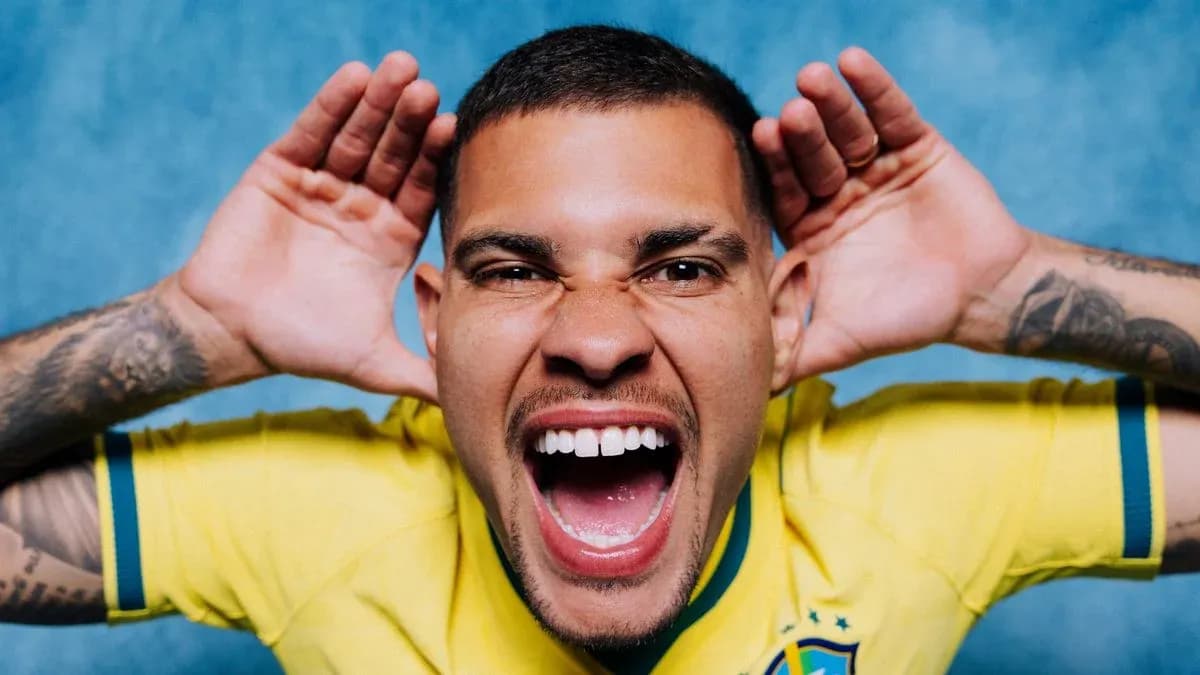
Bruno Guimaraes: The Journey to Arsenal
Bruno Guimaraes knows all about waiting by the phone.
Six and a half years ago in Curitiba, he barely slept as he stared at the screen, willing it to light up with a Spanish number. He had dominated the Athletico Paranaense midfield, lifted trophies, won admirers. A £26million move to Atletico Madrid was supposed to be the reward. A new life. A new league. A new status.
He even said his goodbyes.
After a 1-0 home win over Santos, Guimaraes fought back tears as he waved to the Furacão supporters, convinced he was off to La Liga. Christmas came and went. The January window opened. The deal, though, stalled. Atletico hesitated. The silence grew louder.
While they dithered, the market moved. Benfica stepped forward with an offer. Athletico’s president, Mario Celso Petraglia, then revealed another heavyweight had joined the table: Arsenal.
Edu, Arsenal’s technical director, had been tracking Guimaraes’ rise closely. He had watched him drive Athletico to four trophies, including the Copa do Brasil and Copa Sudamericana, and saw a midfielder with bite, vision and personality. Arsenal made a direct approach to his representatives, but the numbers didn’t stretch far enough. They wanted him. They just couldn’t quite afford him.
That hesitation opened the door to Lyon and a persuasive voice from Guimaraes’ childhood.
Juninho Pernambucano, a hero to the young midfielder after his title-winning days with Vasco da Gama and iconic spell at Lyon, stepped in with a simple, powerful pitch: sign for Lyon and you can become one of the best midfielders in world football. For a hungry 22-year-old, those words carried more weight than any signing-on fee.
Guimaraes, an ardent Vasco supporter who as recently as July 26 had been in the stands for a 1-1 draw with Mirassol, listened. A £17.1m agreement followed. When he signed his long-term contract in France, he didn’t hide his frustration with Atletico Madrid’s silence. “Nobody called me,” he said. The club that once led the chase had simply drifted away. They would come to regret it.
Arsenal, too, would feel that sting.
Two years later, Guimaraes was on the move again. This time, the medical took place back in Brazil while he was away with the national team. The setting underlined his new stature: no longer a prospect waiting by the phone, but a fully-fledged international being courted from Europe’s richest league.
Newcastle United moved decisively. Arsenal were there again, hovering, interested, but unable to go the distance. After spending the previous summer on Martin Odegaard and Albert Sambi Lokonga, they could not match the financial muscle of the Magpies’ new era.
The consequences were brutal and immediate.
A few months on, Guimaraes scored and ran the game in Newcastle’s 2-0 win over Arsenal, a defeat that saw Mikel Arteta’s side lose their grip on Champions League qualification with one match to spare. That night on Tyneside felt like a reckoning. Arsenal had admired him twice and missed him twice. He made them pay for it.
Since then, he has relished the contest. No Premier League opponent has felt his presence more. Guimaraes has won 71 duels against Arsenal, more than against any other side in the division. He has harried them, outmuscled them, annoyed them. He has consistently taken the fight to a club that always wanted him but never quite got him over the line.
Underneath that edge lies a story of rejection and resolve that began far from the bright lights of Europe.
Growing up in Rio de Janeiro, Guimaraes adored futsal. He wanted the ball, the court, the crowd, the noise. What he got instead were closed doors. Fluminense said no. Botafogo said no. The pathway that seems so smooth for some was jagged and unforgiving for him.
His father, Dick, refused to let it end there. Every weekend, he drove 269 miles from Rio to Osasco to watch his son play for Audax in Sao Paulo. The miles piled up. So did the lessons. Dick’s love came with conditions. If Bruno lost, dinner was a ham and cheese sandwich with juice. If he won, he could eat whatever he wanted. It was harsh, simple and unforgettable.
Those journeys, those small rewards, those tough nights are literally etched into him now, carried on his back in ink and memory. They shaped a player who only ever wants to be where he is truly valued.
That principle runs through the smallest details of his story. Even his shirt number means something.
Guimaraes is set to wear No.39 at Arsenal, the same number that once sat on the roof of his father’s taxi in Rio. Dick used that cab to ferry his son to youth matches, another moving piece in a childhood built on sacrifice. The number is not just a choice; it is a tribute.
At London Colney, that shirt has already been quietly prepared for him. Young academy midfielder Louie Copley, who recently suffered a serious knee injury against Real Betis, had been wearing 39 in training and matches. On the club’s website, he now appears as No.38. A subtle change, but a telling one. The 39 is waiting.
This time, Arsenal refused to repeat history.
After fluffing their lines twice, Arteta was not going to let a third chance slip. Negotiations dragged. The saga tested patience. The price climbed to £75m. Through it all, the direction never really changed. Arsenal wanted Guimaraes. Guimaraes, at last, felt truly wanted by Arsenal.
The boy who once sat up all night for a call that never came now walks into north London as one of the most expensive midfielders in the club’s history, carrying his father’s taxi number on his back and a long memory of those who hesitated.
Third time, finally, he is a Gunner.