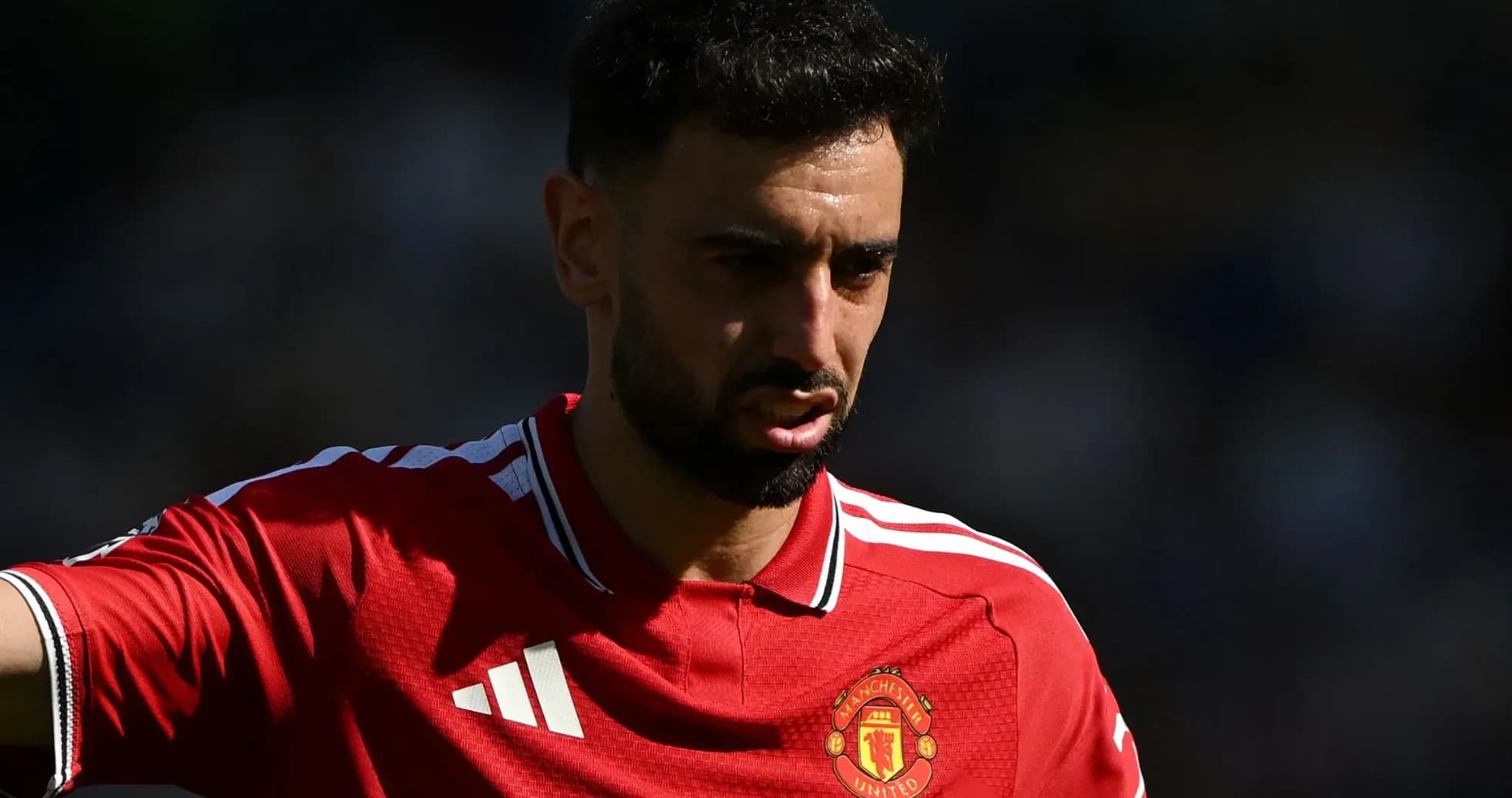
Bruno Fernandes Faces Contract Decision at Manchester United
Manchester United know exactly what is at stake.
Their captain, their creator-in-chief, their on‑field conscience is walking into the final year of his contract. There is a 12‑month option tucked away in the small print, a safety net the club can trigger, but nobody at Old Trafford wants this story to drift. Not with a new season looming and the 2026-27 campaign already on the horizon.
Bruno Fernandes is back from World Cup duty with Portugal and back in training. United’s ideal scenario is simple: tie down the captain and announce it before the serious football starts again. No distractions. No saga. Just clarity around the man who has carried so much of their attacking burden.
Last season underlined his importance in bold ink. Fernandes delivered 21 assists in the Premier League, ripping a page out of the record books and taking a mark that had belonged to Thierry Henry and Kevin De Bruyne. In a side still trying to rediscover its identity, he was the constant supply line, the one who kept finding a way.
He turns 32 in early September. In modern contract meetings, that number matters. At Old Trafford, it is supposed to trigger caution: shorter deals, stricter wage structures, a harder line with anyone on the wrong side of 30. United’s hierarchy have been telling themselves they must be more ruthless in this phase of a rebuild.
Then you look at the player.
Fernandes has been at the so‑called Theatre of Dreams since January 2020 and has barely stopped performing. Five Player of the Year awards. 327 appearances. 107 goals. Captain since 2023. FA Cup and Carabao Cup medals already in the bag. He is not a squad piece; he is the reference point.
The market has noticed. Saudi Pro League clubs tried to tempt him away and, at one stage, United looked open to the conversation. That door has slammed shut for now, and the mood has shifted from listening to offers to fending them off. The club know they cannot afford to lose their talisman for anything resembling a cut‑price fee or, worse, for nothing at all.
Michael Owen is in no doubt about what must happen next. The former United striker, now working as a British ambassador for Casino.org, told GOAL that this is one of those moments when the rulebook has to bend.
“If I was Manchester United, I would absolutely do everything,” he said, acknowledging the usual internal guidelines on age and contract length before dismissing them in this case. Some players, he argued, matter too much to be treated like a spreadsheet entry.
“If I was Manchester United, I wouldn't be able to bear going into the season without him. He's just that important. Forget his age, forget everything else. He’s just a must if Manchester United are going to continue their progression.”
That is the crux of it. United talk about progression. About building. About closing the gap at the top. It is hard to imagine any of that happening without the No. 8 driving games from midfield, barking instructions, dragging standards up around him.
Not everyone is ready to crown him a club legend just yet, though.
Mikael Silvestre, who knows the demands of Old Trafford from his own successful spell there, sees a slightly different picture. Speaking to GOAL, the Frenchman praised Fernandes for rejecting Saudi interest and staying through a turbulent period.
“He's a key player and I was happy that he decided not to go to Saudi and stay with United, stick with the club in a difficult moment in the transition,” Silvestre said. “He's been here for a number of years, but despite the adversity, he delivered and he was the best player of the league last season. So it's very important that he stays and continues to help the team progress.”
Then came the caveat. The one that always surfaces at a club built on trophies, not just talent.
Silvestre pointed to Steven Gerrard, a Liverpool great without a Premier League title but with a Champions League to his name, as a reference point. Status, he argued, is not only about numbers or loyalty; it is about the silverware that defines eras.
“I would say that he needs to have a title, whether it's the league or the Champions League, to become something really special for the supporters, for the history of the club,” Silvestre said. “It's something to be part of a club in a successful time, but you have to win titles.”
That is the uncomfortable truth in the background of these negotiations. Fernandes has already left a deep footprint at Manchester United. His influence is obvious, his statistics compelling, his leadership increasingly central. Yet the final judgement at Old Trafford always comes with medals.
So the club stand at a crossroads: stick rigidly to the age policy and risk destabilising the dressing room by unsettling its captain, or “break the rules”, as Owen put it, and bet big on a 32‑year‑old who still plays like a man in his prime.
One way or another, United must decide quickly. Because while the 12‑month clause buys time on paper, the real clock is ticking on something far bigger: whether Bruno Fernandes will be remembered as the man who carried a team through transition, or the captain who finally lifted it back to the summit.