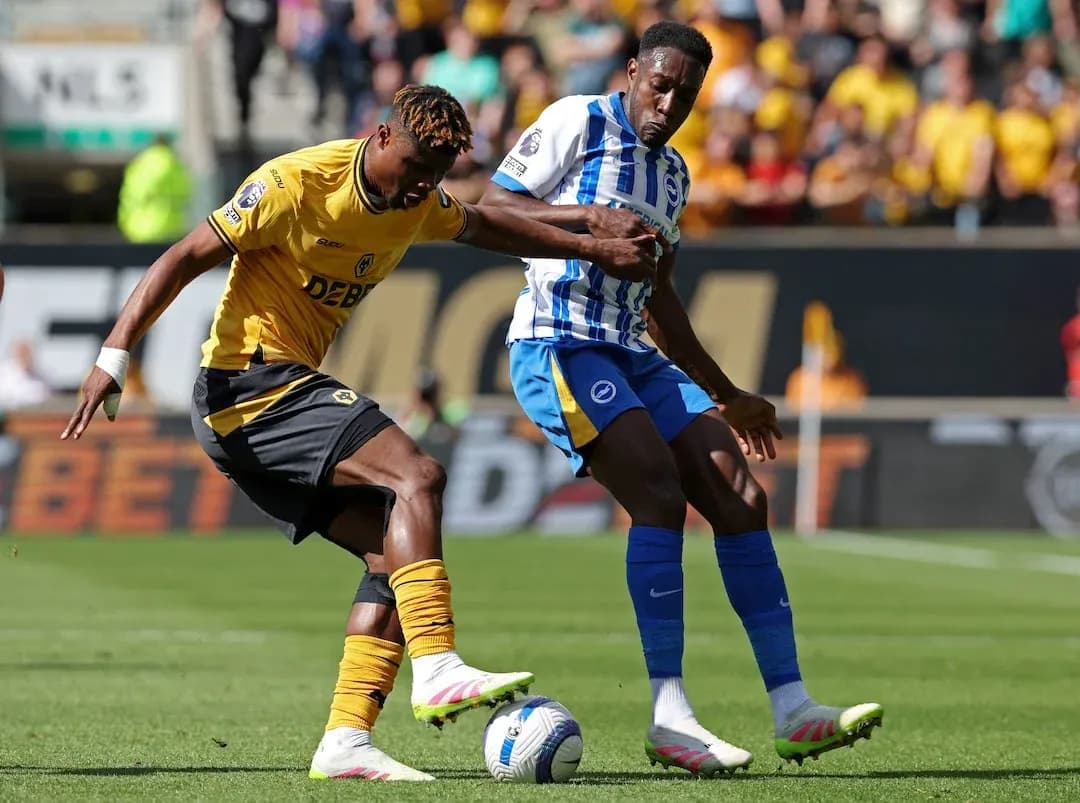
Brighton vs Wolves: Crucial Late-Season Clash at Amex Stadium
Brighton vs Wolves at the Amex Stadium in Regular Season - 36 is a late-season fixture with very different pressures: Brighton sit 8th in the league phase on 50 points with a +7 goal difference (49 scored, 42 conceded), chasing a strong top-half – and potentially European – finish, while Wolves are 20th on 18 points with a -38 goal difference (25 scored, 63 conceded) and are formally in the “Relegation - Championship” zone. For Brighton this is a high-leverage opportunity to consolidate upward momentum; for Wolves it is a last-hope survival swing, where anything short of a win leaves them effectively resigned to relegation.
Head-to-Head Tactical Summary
The recent head-to-head pattern is tight but tilts slightly towards Brighton in terms of control, with Wolves still capable of frustrating them. In the most recent meeting on 5 October 2025 at Molineux Stadium in the Premier League (Regular Season - 7), Wolves led 1-0 at half-time and the game finished 1-1, underlining Wolves’ ability to make Brighton chase a result away from home. On 10 May 2025, also at Molineux in the Premier League (Regular Season - 36), Brighton won 2-0 after leading 1-0 at half-time, showing how they can manage game state once in front. At the American Express Stadium on 26 October 2024 in the Premier League (Regular Season - 9), Brighton led 1-0 at half-time but Wolves recovered to a 2-2 draw, evidence that Wolves can exploit space when Brighton’s home structure loosens. In cup competitions, Brighton edged Wolves 3-2 at the American Express Stadium on 18 September 2024 in the League Cup 3rd Round, having led 2-1 at half-time, highlighting an open, chance-heavy dynamic when rotations are involved. Conversely, on 28 February 2024 in the FA Cup 5th Round at Molineux, Wolves won 1-0 after a 1-0 half-time lead, reinforcing their capacity to protect a narrow advantage in knockout tension. Overall, the matchup history suggests Brighton generally create more and control more phases, but Wolves repeatedly find ways to keep margins small and punish lapses.
Global Season Picture
- League Phase Performance: In the league phase, Brighton’s 8th place is built on 50 points from 35 games, with 49 goals for and 42 against, reflecting a positive but not dominant balance. Their home record (8 wins, 6 draws, 3 losses, 27 scored, 17 conceded) underlines a relatively solid base at the Amex. Wolves, in 20th with 18 points from 35 matches, have scored 25 and conceded 63 in the league phase, indicating a very weak attack and fragile defense. Away from home they have yet to win (0 wins, 5 draws, 12 losses, 7 scored, 30 conceded), making them one of the least effective away sides in the division.
- All-Competition Metrics: Across all phases of the competition, Brighton’s statistical profile is consistent with a proactive, possession-oriented side: they average 1.4 goals scored and 1.2 conceded per match (49 for, 42 against over 35 games), with 9 clean sheets and only 7 games where they failed to score. Their most common setup is a 4-2-3-1 used 30 times, supporting a structured build-up and layered attacking zones. Card distribution shows a lot of intensity just after the interval (24 yellow cards in minutes 46–60, 28.24%), pointing to aggressive pressing phases immediately after half-time. Wolves across all phases average only 0.7 goals for and 1.8 against per game (25 scored, 63 conceded over 35), with 18 matches failing to score and just 4 clean sheets, a sign of a blunt attack and regularly exposed back line. Their tactical identity has been unstable, cycling through multiple formations (3-4-2-1 in 10 games, 3-5-2 in 9, 3-4-3 in 5, plus several others), which reflects searching for solutions rather than a settled system. Their yellow cards cluster heavily between minutes 46–60 (21, 28.00%) and 61–90 (30 combined, 40.00%), suggesting late defensive strain and reactive challenges as games slip away.
- Form Trajectory: In the league phase, Brighton’s recent form string “LWDWW” indicates three wins, one draw and one loss in their last five, a clear upward curve at the business end of the year. It signals resilience after setbacks and the capacity to stack results. Wolves’ form “DLLLD” reflects a run of four losses and one draw, with no wins, confirming a downward spiral. Momentum is firmly with Brighton, while Wolves arrive in damage-limitation mode, more hoping for a disruption than projecting improvement.
Tactical Efficiency
Across all phases of the competition, Brighton’s attacking efficiency is underpinned by consistent chance creation: 1.4 goals per match, with their best wins at 3-0 at home and 1-3 away, and only 7 blanks in 35 fixtures. This points to a broadly reliable attack that tends to translate possession and xG into actual goals. Defensively they concede 1.2 per game, with 9 clean sheets, so they are not watertight but broadly stable, especially at home (1.0 conceded on average). Wolves’ attack, at 0.7 goals per game and 18 matches without scoring, is among the least efficient in the league context, frequently failing to convert limited xG into goals. Their defense at 1.8 goals conceded per game, with heavy defeats up to 4-0 away and 0-4 at home, reflects a low defensive index: they concede a high volume of chances and rarely suppress opponent quality over 90 minutes.
When mapped to a notional attack/defense index, Brighton profile as a high-medium attack and medium defense: they regularly generate enough to win games and, while occasionally exposed (biggest losses 3-4 at home and 4-2 away), they more often keep games under control. Wolves sit in a low attack and low-defense quadrant: they rarely create enough to win on merit and are often reliant on opponent wastefulness or set-piece moments. The comparison between the sides suggests that over a large sample Brighton’s offensive edge and structural stability should dominate Wolves’ low-efficiency attack and stretched back line, particularly at the Amex where Brighton’s scoring rate rises and Wolves’ already-poor away attack drops to 0.4 goals per game.
The Verdict: Seasonal Impact
In league-phase terms, a Brighton win would likely lock in a strong top-half finish and keep outside hopes of European qualification alive going into the final rounds, reinforcing the club’s trajectory as an established upper-mid-table side with upside. It would also deepen Wolves’ relegation reality: with only 18 points and no away wins, another defeat would all but mathematically confirm their drop, shifting internal focus to rebuilding for the Championship. A draw would be mildly disappointing for Brighton, slowing their late surge and potentially capping their ceiling to a mid-table finish, while giving Wolves a marginal lifeline but not enough to materially change their relegation probability given the gap and their form. A Wolves win, against all underlying indicators, would be season-altering at the bottom: it would inject belief, slightly close the points gap, and give evidence that their low attack index can be spiked in high-pressure games. For Brighton, such a result would be a significant setback, likely ending any realistic European push and raising questions about game management against low-block, desperate opponents. Overall, the structural and statistical balance makes this fixture far more consequential for Wolves’ survival narrative than for Brighton’s status, but for Brighton it remains a key test of whether they can convert a strong data profile into concrete end-of-year positioning.