Barcelona Clinches La Liga Title Against Real Madrid
At Camp Nou, the title party came wrapped in something far heavier than confetti.
Barcelona clinched La Liga in the most poetic way possible, beating Real Madrid in El Clásico to make the mathematics irrelevant and the celebrations inevitable. The stands roared, the flags snapped in the night air, and the trophy felt as if it had finally come home.
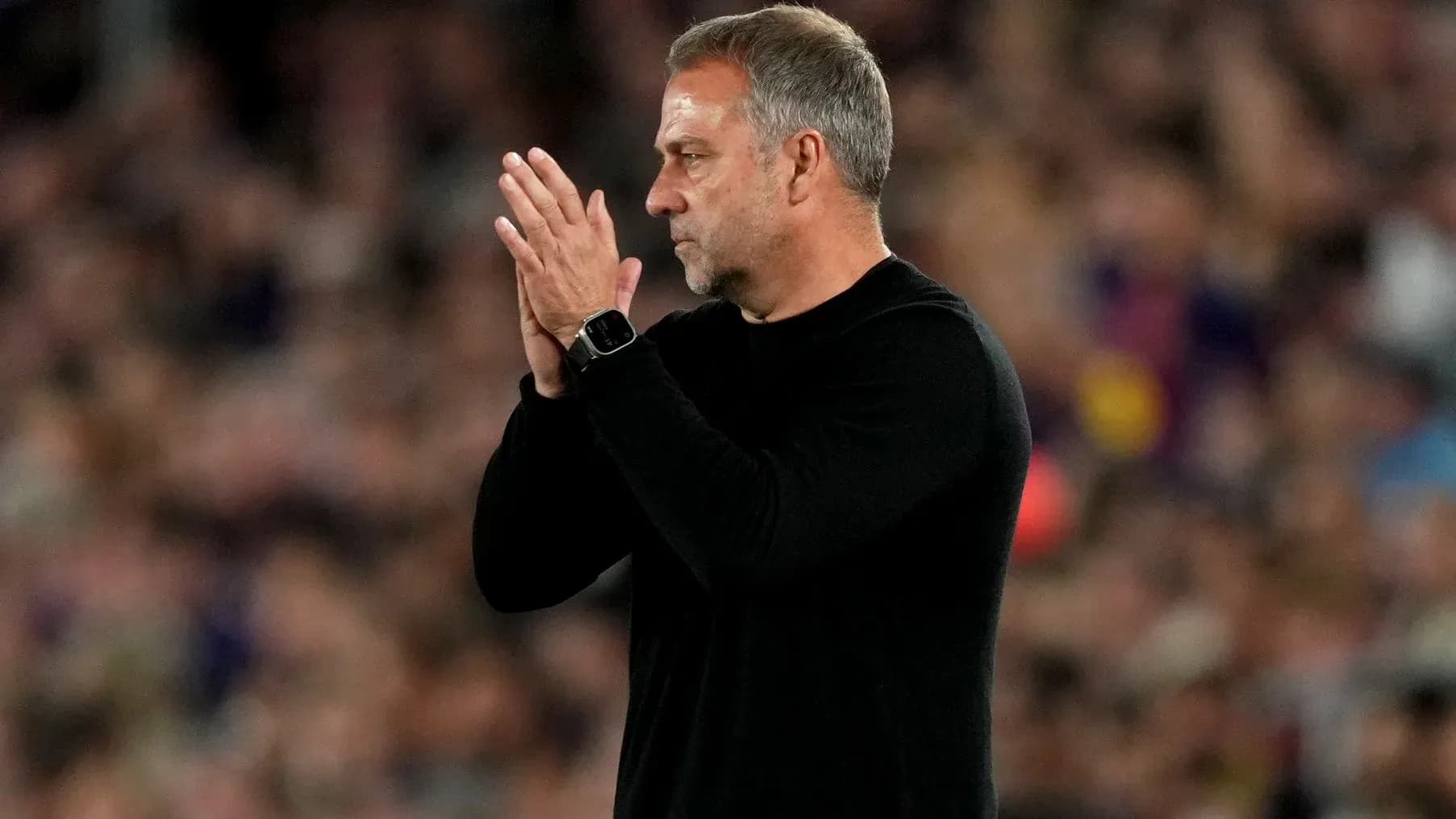
On the touchline, though, Hansi Flick lived a very different night.
Hours before kick-off, the Barcelona coach learned that his father had died. He still took his place in the technical area, still barked instructions, still rode every tackle and every transition. When the final whistle blew and the title was confirmed, the German’s face carried the conflict of a man pulled between professional triumph and personal grief.
“It was a tough match and I’ll never forget this day,” Flick said, voice heavy, as he faced the cameras. He made a point of thanking “the squad, the president, the vice-president, Deco and everyone who has supported us,” before turning back to what had carried this Barça side over the line. “In the end, the most important thing is that I’m very proud to have such a good team. Thank you for that determination to fight for the full 90 minutes. We must celebrate this. Visca Barça and Visca Catalunya.”
A title, a statement, and a target
Winning La Liga is one thing. Winning it in an El Clásico is something Barcelona supporters will dine out on for years.
“It’s fantastic to have won La Liga in El Clasico against Madrid. It wasn’t easy; they’re a great team. I’m very proud of my players,” Flick said, the satisfaction clear despite the strain of the day.
The title, though, is not the end point in his mind. The former Bayern Munich boss has never hidden his appetite for the biggest stages, and he used the moment of domestic coronation to set the bar even higher.
“And now we want to reach 100 points,” he declared, a challenge thrown straight at a squad already running on the adrenaline of a champion. “That said, the players deserve a celebration now. And next year we’re going to try to win the Champions League.”
No hedging. No soft landing. A league wrapped up against Madrid, a 100-point target, and a public promise to go after Europe’s biggest prize. It was as much a message to the dressing room as to the rest of the continent: Barcelona intend to be back among the elite, not just in name.
Built from the back
This title did not arrive on the back of chaos and 4–3 thrillers. It came from structure, from discipline, from a defensive line that grew as the season wore on and, on this decisive night, shut out Real Madrid.
Barcelona’s clean sheet against Los Blancos felt like a neat summary of Flick’s work. He has turned a fragile back line into a platform, even as injuries forced him to shuffle pieces and trust youth.
“Injuries haven’t made it easy for us, but even so, we’ve been fantastic,” he explained. “We’ve played very well in this final stretch of the league. We’ve done well in defence. [Pau] Cubarsi, Gerard Martin, Eric [Garcia]… They’ve been fantastic.”
Names that were once afterthoughts or academy curiosities have become central to the story. Pau Cubarsi stepping into pressure as if born for it. Gerard Martin and Eric Garcia answering every call. Flick leaned into that depth, using the bench aggressively once his squad finally cleared the worst of the fitness problems.
“And I’ve been able to make use of the bench because there were so many players available,” he said. “It might take a few weeks… but we’re happy. We played and defended very well against a great team. I’m proud – what can I say? The atmosphere in this dressing room is fabulous. I’m happy in Barcelona.”
The line hung there for a moment. A coach who has already lived the intensity of Bayern and the German national team declaring he is “happy in Barcelona” on the night he conquers Spain with them. It sounded less like a throwaway remark and more like a man settling into a club that matches his ambition.
A squad bound by more than tactics
Flick’s Barcelona is not just a tactical project; it is a cultural one. From his first days in Catalonia, he spoke openly about managing egos, about creating a collective that values the group over the individual highlight reel.
“It’s not easy. You have to manage things,” he reflected. “At the start of the season, I spoke about egos, but then what I saw in training gave me a very good feeling.”
That foundation mattered when the coach faced the hardest conversation of his season. Before the game, his mother called to tell him that his father had passed away. Flick chose not to carry that alone.
“My mum called to tell me that my dad had passed away. I have a good relationship with the players, and I wanted to tell them,” he said. “It’s not easy to speak on a day like today. But the players’ reaction has been spectacular. I’m very proud because everyone feels part of this and is connected. It’s difficult for me to talk about this today, but I’m happy. Thank you.”
In that moment, the distance between coach and squad narrowed to almost nothing. The title celebrations became more than a sporting achievement; they became a shared act of support for the man who had guided them there.
The images from Camp Nou told the story: players embracing Flick, staff rallying around him, a champion team circling its manager as he tried to process the most bittersweet night of his career.
Barcelona now stand at a crossroads that feels familiar yet charged with something new. La Liga is back in their hands. The defence looks solid. The young core is growing. And their coach, grieving yet resolute, has already drawn a line in the sand for next season.
They have reclaimed Spain. Now comes the real question: can this Barcelona, forged in both joy and sorrow, carry that edge into Europe’s hardest nights?