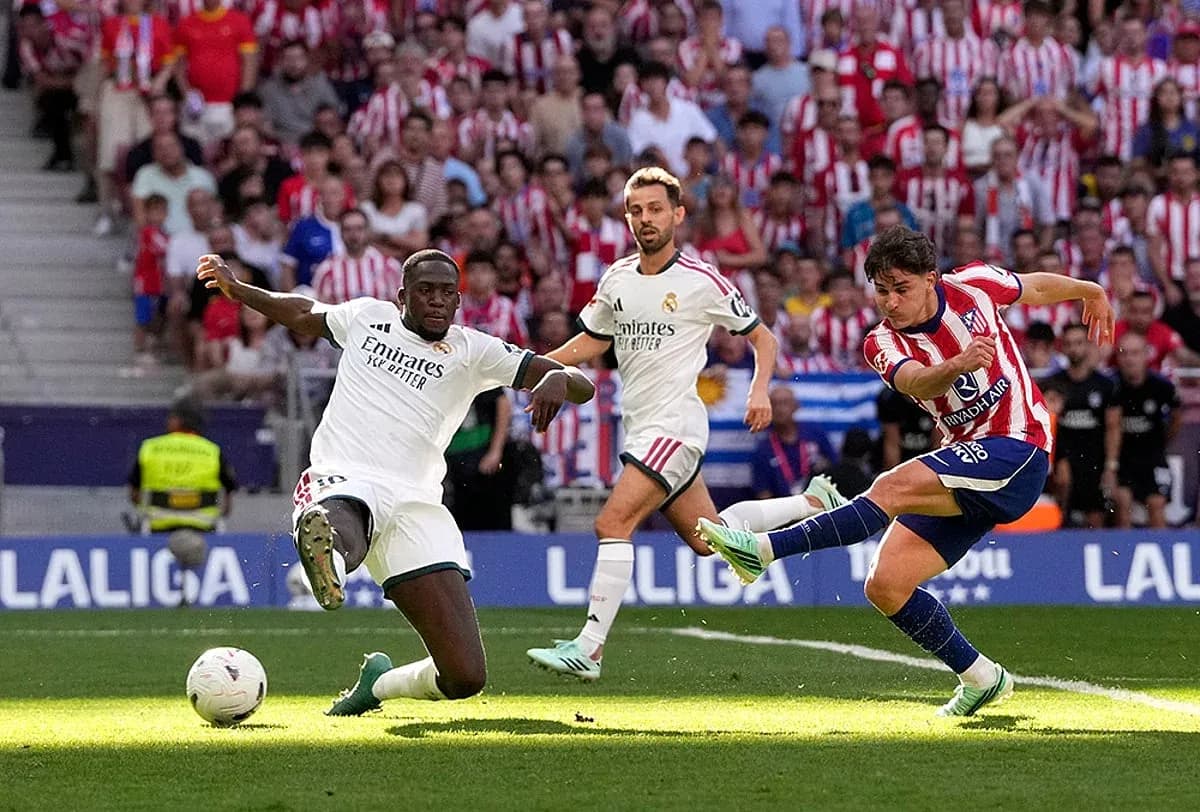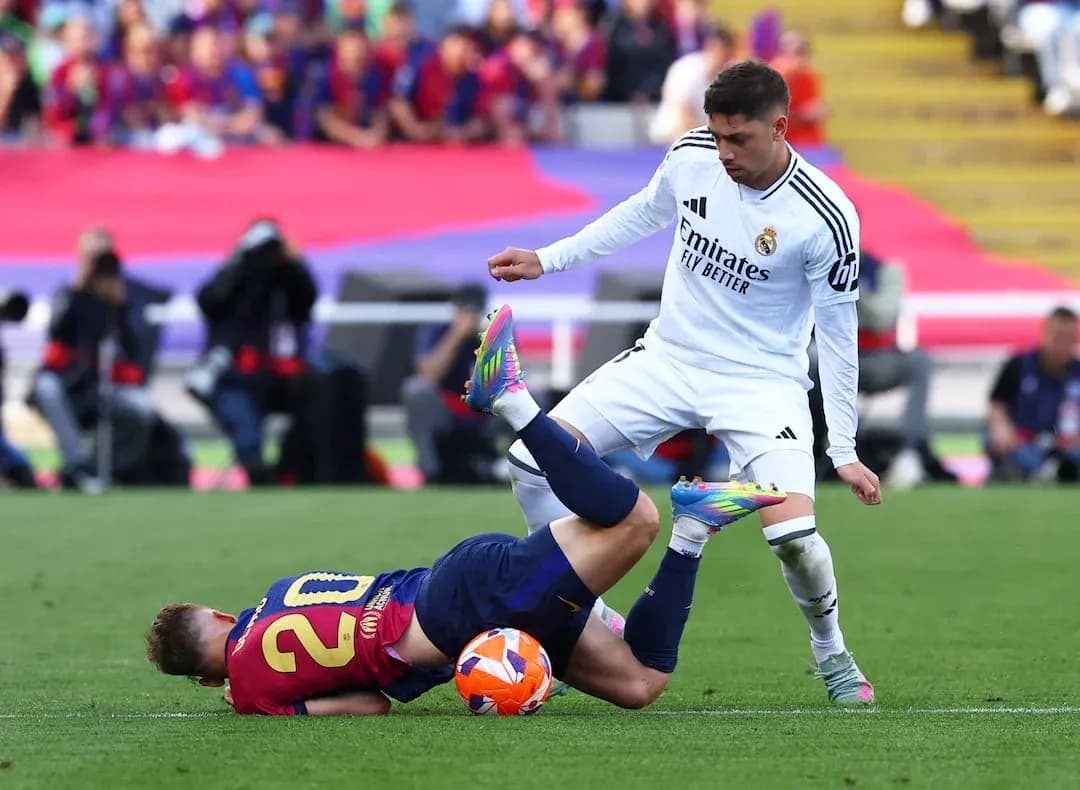
Barcelona Controls Clásico with 2-0 Victory Over Real Madrid
Barcelona’s 2-0 home win over Real Madrid at Camp Nou in La Liga’s Regular Season - 35 was defined by an aggressive, front-loaded game plan and a disciplined defensive structure. Hansi Flick’s side built a decisive early lead through Marcus Rashford and Ferran Torres, then managed the tempo with control and compactness. Alvaro Arbeloa’s Real Madrid saw more territory as the game wore on, but lacked incision in the final third and were repeatedly funneled into low-quality shooting positions. Across 90 minutes, Barcelona’s superior structure without the ball and their precision in possession underpinned a controlled clásico victory.
I. Executive Summary
The first half effectively decided the contest. Barcelona, in a 4-2-3-1, used their attacking midfield line to overload Madrid’s double pivot and press the first phase, forcing early turnovers and creating transition situations. Rashford’s 9' opener and Torres’s 18' strike capitalized on this early pressure. After the break, Flick shifted the emphasis from vertical aggression to risk management, tightening central zones and trusting his back four plus double pivot to absorb Madrid’s attempts to play through Jude Bellingham and Vinicius Júnior. With Barcelona finishing 2-0 ahead and limiting Madrid to one shot on target, the tactical balance clearly favored the hosts.
II. Scoring Sequence & Disciplinary Log
Barcelona struck first at 9', when Marcus Rashford (Barcelona) converted a “Normal Goal” to punish Madrid’s early structural looseness in rest defense. The pattern reflected Barcelona’s intent: quick progression into the space around Madrid’s pivots and behind the full-backs.
At 18', Ferran Torres (Barcelona) added the second, again a “Normal Goal”, this time assisted by Dani Olmo. The combination between Olmo in the central attacking pocket and Torres as the lone forward highlighted how Flick’s 4-2-3-1 morphed into a 4-4-2/3-2-5 in possession, with Olmo stepping up to link and Torres exploiting the gaps between center-backs and full-backs. The half-time score was Barcelona 2-0 Real Madrid.
Disciplinary log (chronological, with reasons verbatim):
- 40' Eduardo Camavinga (Real Madrid) — Foul
- 52' Dani Olmo (Barcelona) — Argument
- 52' Raúl Asencio (Real Madrid) — Foul
- 55' Jude Bellingham (Real Madrid) — Unallowed field entering
- 81' Raphinha (Barcelona) — Argument
- 81' Trent Alexander-Arnold (Real Madrid) — Argument
Totals locked: Barcelona: 2 yellow cards, Real Madrid: 4 yellow cards, Total: 6.
III. Tactical Breakdown & Personnel
Flick’s 4-2-3-1 was built on a technically secure double pivot of Pablo Gavi and Pedri, with Marcus Rashford (right half-space), Dani Olmo (central), and Fermín López (left) behind Ferran Torres. The back four of João Cancelo, Gerard Martín, Pau Cubarsí, and Eric García protected Joan García in goal.
In possession, Barcelona’s structure was asymmetrical. Cancelo often tucked inside to form a situational three with Cubarsí and Eric García, freeing Martín to advance on the opposite flank. This created a 3-2 base (Cancelo–Cubarsí–Eric García behind Gavi–Pedri) that allowed Rashford and Fermín to hold wide-interior positions, while Olmo floated between Madrid’s lines. The early goals came from exploiting Madrid’s stretched distances between their back line and Aurélien Tchouaméni–Eduardo Camavinga.
Out of possession, Barcelona’s defensive index was strong: they conceded only 8 total shots and 1 shot on goal, with Joan García required to make just 1 save. The front four pressed selectively, curving runs to block passes into Bellingham and force Madrid wide, where Barcelona’s full-backs could engage aggressively with cover from the near-side pivot. This kept Madrid’s xG to 0.79 despite 7 shots inside the box, reflecting how most of those efforts were contested or from poor angles.
Madrid mirrored the 4-2-3-1, with Thibaut Courtois behind a back four of Trent Alexander-Arnold, Raúl Asencio, Antonio Rüdiger, and Fran García; Camavinga and Tchouaméni as the double pivot; Brahim Díaz, Jude Bellingham, and Vinicius Júnior supporting Gonzalo García. However, Arbeloa’s side struggled to connect their structure. The double pivot was frequently outnumbered and pressed by Barcelona’s three attacking midfielders plus Ferran Torres, forcing longer, lower-percentage passes toward Vinicius and Gonzalo García.
The substitutions underlined the shift in game-state management. At 64', Frenkie de Jong (IN) came on for Dani Olmo (OUT), and Raphinha (IN) came on for Marcus Rashford (OUT), giving Barcelona fresh legs and more control in midfield and on the wing. At 70', Thiago Pitarch (IN) replaced Eduardo Camavinga (OUT), a move aimed at refreshing Madrid’s midfield energy. At 77', Robert Lewandowski (IN) came on for Ferran Torres (OUT), and Marc Bernal (IN) replaced Gavi (OUT), adding physical presence up front and an extra stabilizer in midfield. Madrid responded at 79' with Franco Mastantuono (IN) for Brahim Díaz (OUT) and César Palacios (IN) for Gonzalo García (OUT), effectively reconfiguring their attacking line. Finally, at 88', Alejandro Balde (IN) came on for Fermín (OUT), turning Barcelona’s left flank into a more defensive channel to close the game.
Discipline shaped the rhythm. Camavinga’s 40' “Foul” yellow constrained his ability to press and tackle aggressively. The cluster of “Argument” cards at 52' and 81' (Dani Olmo, Raphinha, Trent Alexander-Arnold) plus Bellingham’s 55' “Unallowed field entering” hinted at Madrid’s growing frustration as Barcelona controlled the scoreline and tempo.
IV. The Statistical Verdict
Barcelona’s statistical profile matched the tactical impression of control. They recorded 57% possession and completed 527 passes, 484 accurate (92%), reflecting a high overall form in circulation and retention. Their attacking output — 10 total shots, 7 on goal, 0.99 xG — shows a focused approach: most of their 9 shots inside the box came from well-constructed attacks rather than speculative efforts.
Defensively, their index was excellent. Allowing only 1 shot on target and requiring Joan García to make just 1 save, while still conceding 0.79 xG, suggests that Madrid’s few clear looks were relatively dangerous but rare. The negative “goals prevented” figure of -0.53 for both keepers underlines that finishing quality, rather than goalkeeping heroics, determined the scoreline.
Real Madrid, with 43% possession and 394 passes, 342 accurate (87%), were competent but second-best in structured buildup. Their 8 total shots (1 on goal), 7 inside the box, and 0.79 xG reveal a side that reached advanced zones but struggled to generate clean, uncontested finishes. Courtois’s 5 saves highlight Barcelona’s superior chance creation. Combined with the 4-2 yellow card split against Madrid, the data and tactics converge on the same conclusion: Barcelona imposed their game early, then managed space, rhythm, and emotion to see out a controlled 2-0 clásico win.