Australia's World Cup Triumph: From Lay-Up to Powerhouse
Mike Grella wanted a lay-up. He may have created a monster instead.
In the days leading up to a potentially decisive World Cup group clash with the USA in Seattle, the former American international has become the unwitting face of Australian motivation. His now-infamous pre-tournament spray about the Socceroos – “they have no shot of doing anything at the World Cup… there’s no shot Australia can compete with the US” – has aged like milk in the Vancouver sun.
Australia didn’t just “do something”. They detonated the narrative.
From punchline to problem
Popovic’s side walked into Vancouver on Sunday as an afterthought and walked out with a 2-0 win over Turkiye, their fifth World Cup victory in history and one of their most assured. It was not a fluke. It was a statement.
Nestory Irankunda lit the fuse before half-time, Connor Metcalfe smashed the door shut after it, and Patrick Beach – a goalkeeper most Australians would have strolled past on the street without a second glance 24 hours earlier – turned into an overnight national figure.
Grella’s words, once just loud American studio chatter, now echo around every replay of Irankunda’s breakaway and Beach’s flying saves.
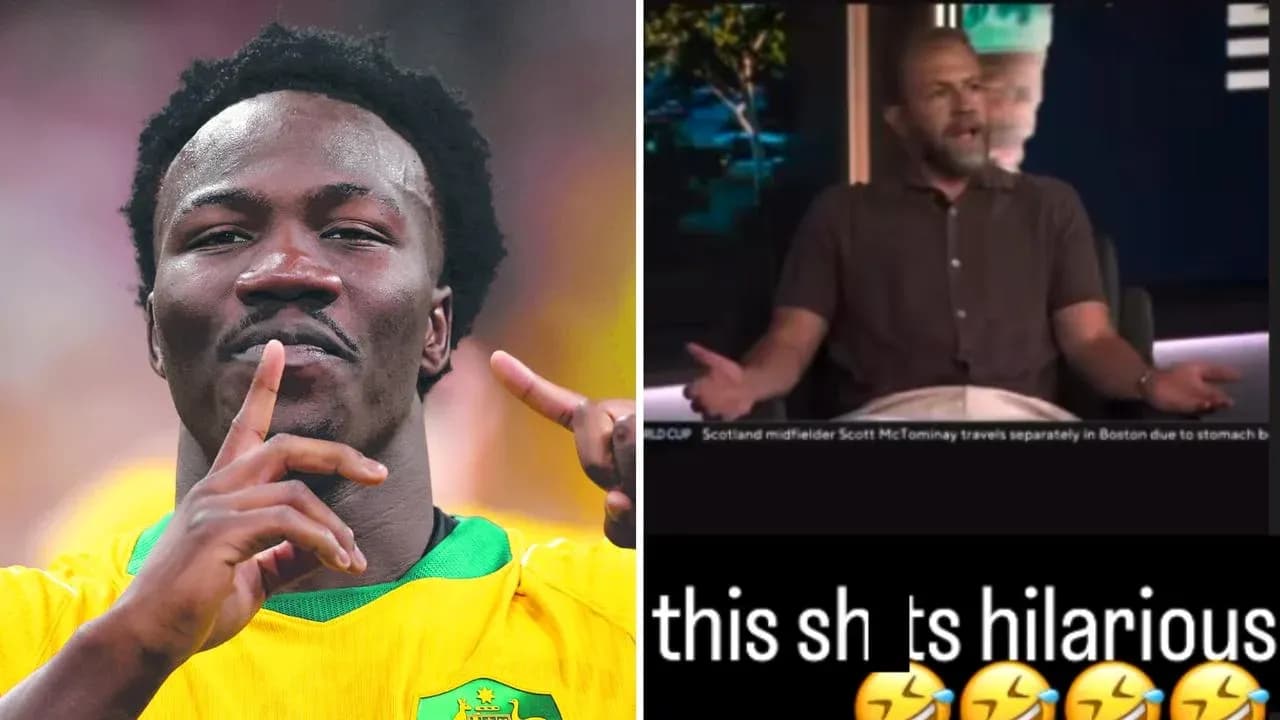
The former Leeds and Columbus Crew winger had dismissed Australia as a “lay up” for the USA on CBS Sports Golazo, doubling down with: “I look at their team and I don’t recognise any players in the team… they are the weakest team in the group.”
Those clips are now content gold in Australia. Former AFL player Dan Gorringe gleefully reposted them with a blunt promise – “we’re gona f*** you up” – prompting Grella to re-share and laugh it off, insisting “Yo this sh*t’s hilarious” and tossing in crying-laughing emojis.
If he wasn’t rattled before, he might be now.
A refugee kid, a World Cup and a global spotlight
The win did more than flip a scoreline. It changed how the world talks about this Australia side.
In England, where Irankunda plays for Watford, the reaction was instant and emotional. The BBC’s Chris McKenna framed it as the latest chapter in a remarkable story: from refugee to World Cup star, a 20-year-old who spent last season learning his trade and, as McKenna noted, had been at Bayern Munich a year ago, working under the gaze of Harry Kane.
The Sun splashed the Socceroos and Irankunda front and centre on their website with the headline: “Watford star born in refugee camp scores historic World Cup goal”, bumping Scotland’s earlier win down the page.
FourFourTwo went straight for the big comparison, asking “The new Michael Owen?” as they highlighted the eerie resemblance between Irankunda’s goal and Owen’s iconic solo strike against Argentina in 1998.
In Vancouver, the ITV panel had an unmistakable Australian accent. Ange Postecoglou, the former Socceroos and Tottenham boss, watched Irankunda torch Turkiye’s back line and could barely hide his admiration.
“It doesn’t matter what level of football you play at, in the park or World Cup, that is fantastic speed,” he told ITV, before calling it a “massive moment” and warning that “sometimes in World Cups, you just need a good couple of weeks and your whole world can change. Let’s hope that is the start for him.”
It might be the start of something bigger for Tony Popovic’s entire squad.
Numbers, nerves and a shifting balance
The Athletic’s projections now give Australia an 85 per cent chance of getting out of the group. That number alone would have been laughed off when Grella first teed off on CBS. It is not being laughed off now.
Even in the US studio where those barbs first flew, the mood has shifted. Former midfielder Benny Feilhaber joked on CBS Sports Golazo that “Grella’s going to be hired as their motivational speaker at this point. He willed them to three points yesterday.”
Former defender Jimmy Conrad added the line that should be pinned to every US dressing-room wall: “Everybody keeps discounting Australia and that seems to be not the right thing to do… So, thanks Grella. We appreciate that.”
The more detailed tactical appreciation has, tellingly, come from outside the US bubble. The Athletic’s senior football writer Simon Hughes, who was in Vancouver, broke down how Popovic outfoxed Turkiye and why the win was no smash-and-grab.
“They were street wise,” Hughes said, praising Australia’s willingness to lean into “some of the darker arts in the game” when needed. In his post-match column, he urged readers to “never underestimate true Australian grit”.
On CBS, he expanded on that theme: “Australia, what really impressed me about them, was they really understood what their limitations were and they got the maximum out of what they could do… I think they deserved to win. The game isn’t always defined by who had the most shots and the most possession.”
He felt Australia “always had control of what was going on”, with Beach stepping in at key moments – exactly what a goalkeeper is there to do, as he pointed out. The crowd sensed it too.
“I really felt in Vancouver yesterday that they really had the fans behind them,” Hughes said. “Australia really, really believed they could effect this game and make an imprint on this tournament. I think they’re going to be quite difficult to stop. The US, if they underestimate them, might have a few problems.”
‘Haram Ball’, giants at the back and a new favourite second team
Scroll through social media and a pattern appears. Neutral fans have found their second team.
Some compare Popovic’s low-block resilience to Arsenal’s title-winning years. Others, with a wink, call it “Haram Ball” – a tongue-in-cheek label for ultra-defensive, “anti-football” tactics. The jokes fly, but the respect is real.
People are hooked by the contrast: the brick wall at the back and the lightning up front.
Comedian and football obsessive Trevor Noah nailed it on the Men in Blazers podcast. “Australia has giants at the back. You don’t just swing the ball in and hope for the best against Australia,” he said. “If there’s one thing the Socceroos know how to do, it’s compact their defence, make sure that nothing gets in. You score by keeping it on the floor against these boys and they didn’t pick that up.”
Then he turned to the other end of the pitch.
“Their new attack up top is completely different to what we’ve seen in years before from like the (Tim) Cahill and Harry Kewell days. This was fast. It was like a lightning quick counter-attack and can I tell you, that boy (Jordan) Bos, number five. Yo, yo, I want to see which team he’s (playing for next)... that man is silky on the ball!”
The old stereotype of Australia as a team of battlers who lump it long and scrap for second balls looks badly outdated. The grit is still there. The pace and flair are new.
A team that looks like its country
Off the pitch, the Socceroos have tapped into something deeper. A pre-tournament video, now circulating widely again after the Turkiye upset, shows players talking about their backgrounds and how this squad reflects modern Australia, anchored by the line: “our diversity is our strength”.
It has landed. In a World Cup often drenched in corporate gloss, a team that openly embraces its multicultural roots and plays like every game is personal tends to stick in the memory.
So here we are. An Australian side written off as a “lay up” now carries the weight of an 85 per cent progression chance, a viral highlight reel, and a growing global fan club. A US pundit’s throwaway studio line has become locker-room wallpaper in the opposition camp.
On Saturday morning in Seattle, at 5am AEST, the noise stops and the football takes over.
The only question left is whether the USA still think Australia “have no shot” – or whether Mike Grella’s words are about to haunt them on their own turf.