Atletico Madrid Dominates Real Sociedad 3-0 at Reale Arena
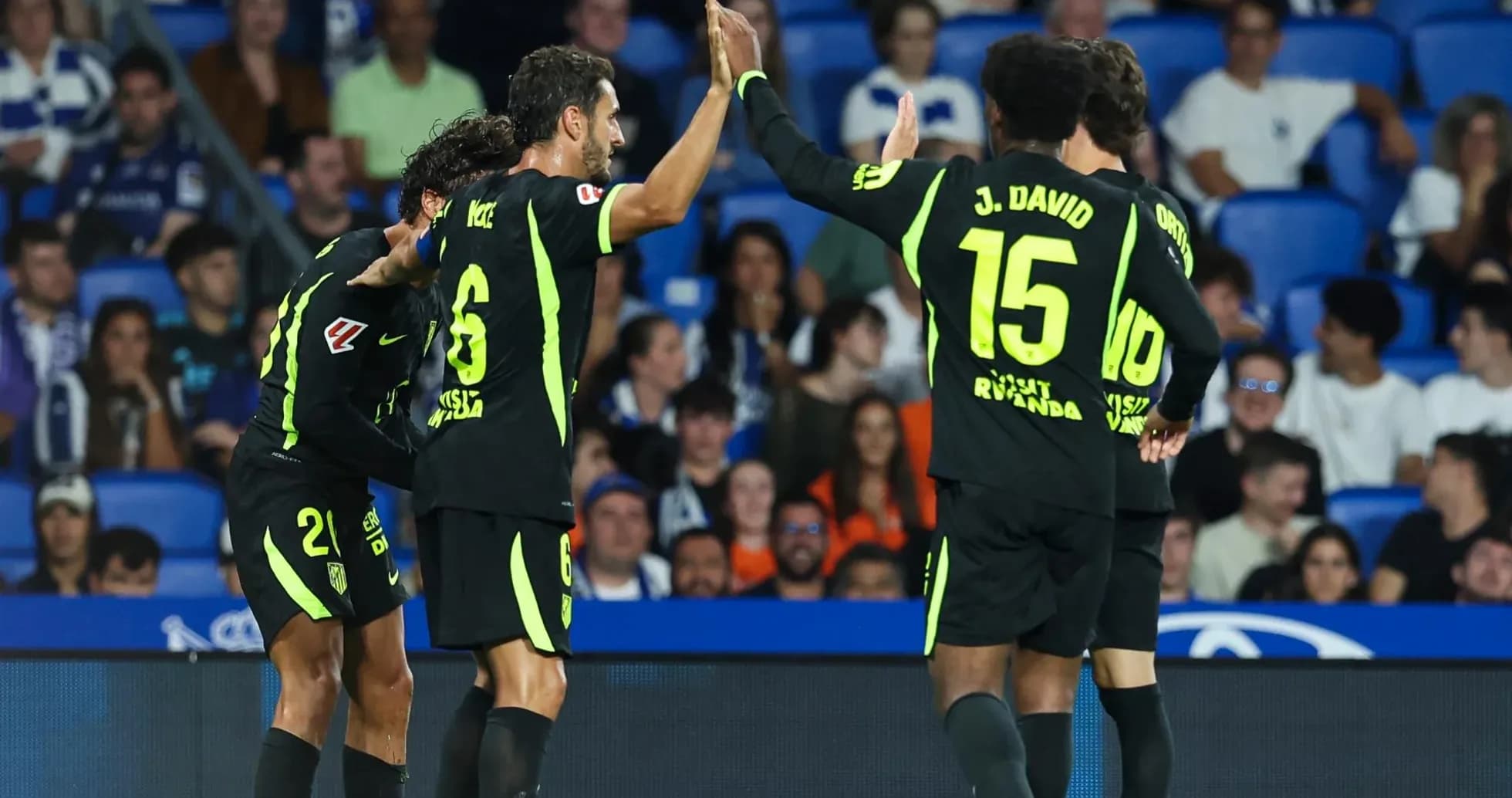
Under the Basque evening lights at Reale Arena, this was billed as a measuring stick for both projects: Real Sociedad trying to reassert themselves as a top-half force, Atletico Madrid intent on proving their revamped, more fluid side can still grind and dominate away from home. By the final whistle, the scoreboard read 0–3, and the contrast between the two squads – in structure, personality and tactical clarity – was stark.
I. The Big Picture – Form, Identity, and the 90-Minute Story
Heading into this game, Real Sociedad were 12th in La Liga with 7 points from 6 matches. Overall they had scored 6 and conceded 11, giving them a goal difference of -5, the profile of a side caught between transition and stability. At home, they had managed just 2 goals in 3 league outings, averaging 0.7 goals for and 1.3 against, a fragile foundation for a possession-oriented team.
Atletico Madrid arrived in San Sebastian in a stronger place: 5th in the table with 10 points from 5 games, 10 goals scored and 6 conceded overall – a goal difference of +4. On their travels, they had been efficient and dangerous: 6 away goals in 3 matches, averaging 2.0 goals for and 1.3 against. This was a side already comfortable in its skin.
The formations told their own story. Pellegrino Matarazzo leaned again on his preferred 4-2-3-1: Álex Remiro behind a back four of J. Aramburu, Luken Beitia, M. Sarr and Sergio Gómez; a double pivot of Y. Herrera and Carlos Soler; Barrenetxea, L. Sučić and Gonçalo Guedes supporting Mikel Oyarzabal. It is a shape designed for high technical control, but it demands precision in rest defence and discipline from the full-backs.
Diego Simeone, meanwhile, chose a 3-4-2-1, a more flexible, modern evolution of his classic compact block. J. Oblak was protected by a back three of Marc Pubill, C. Romero and D. Hancko. Across midfield, G. Simeone and Álex Grimaldo worked the flanks, with Marcos Llorente and M. Hjulmand inside. Ahead of them, Lee Kang-In and Álex Baena floated between lines, feeding A. Lookman as the lone forward. It was a line-up built for verticality, pressing triggers and quick punishment of turnovers.
II. Tactical Voids – Absences and Discipline
Real Sociedad entered this fixture already carrying scars. Jon Martín’s suspension for a red card removed a young but increasingly important defender from Matarazzo’s rotation, while the absences of A. Odriozola and I. Zubeldia due to injury further thinned the defensive options. For a team that had already conceded 11 goals in 6 matches overall, losing three defensive pieces narrowed the margin for error.
This context forced a heavy load onto Luken Beitia and M. Sarr at centre-back, with Aramburu again asked to play every minute in a demanding right-back role. Aramburu’s season profile – 21 tackles, 15 interceptions and 95 duels contested – underlines his value, but also hints at how often Sociedad’s defensive line is exposed.
Discipline has been a recurring thread in their campaign. Overall, Real Sociedad’s yellow cards are spread across the match, but there is a clear cluster between 16–75 minutes, where 64.29% of their cautions arrive. The single red card this season came in the 61–75 minute window, underlining a tendency to lose control as fatigue and pressure rise. Y. Herrera and Aramburu, both among the league leaders for yellow cards with 3 each, again walked the tightrope in a game that demanded aggression but punished mistimed challenges.
Atletico, by contrast, came in with a more stable core despite injuries to J. Alvarez, P. Barrios and A. Sorloth. Simeone could still name a back three anchored by Hancko, whose campaign has been outstanding: 361 completed passes at 90% accuracy, 3 successful blocks and 8 interceptions, plus 2 assists from the back. Even Robin Le Normand – suspended earlier in the season after a red card and a penalty conceded – was available on the bench, a reminder of the depth in defensive options.
Atletico’s own disciplinary pattern shows 22.22% of their yellows arriving late in each half (31–45 and 46–60 minutes) and a single red card in the 76–90 window. But crucially, their structure tends to protect them; the fouls are often tactical, not desperate.
III. Key Matchups – Hunter vs Shield, Engine Room Battles
The most intriguing attacking fulcrum for Atletico was Álex Baena. Heading into this match, he had 3 goals and 1 assist in La Liga, from just 8 shots and 10 key passes, operating as a high-impact, high-efficiency creator. His movement between lines directly targeted the axis of Herrera and Soler – a double pivot more comfortable building than breaking.
Herrera’s season numbers – 9 tackles, 1 block, 1 interception and 51 duels contested – show a player willing to compete, but he is also the league’s leading yellow-card recipient. Against Baena’s drifting runs and Lee Kang-In’s ability to find half-spaces, Herrera risked being pulled into exactly the kind of late, card-drawing challenges that have defined his campaign.
On the flanks, the duel between Aramburu and the combination of Grimaldo and G. Simeone was decisive. Aramburu’s 24 fouls committed and 3 yellow cards underline his aggressive front-foot style; Grimaldo’s role as an advanced left-sided midfielder, combined with G. Simeone’s relentless running and 2 goals plus 1 assist this season, tested both his positioning and composure. G. Simeone, with 52 duels contested and 11 tackles, is as much a pressing forward as a winger, ideal for harassing Sociedad’s attempts to build from the back.
For Real Sociedad, the attacking hope lay in L. Sučić and Oyarzabal. Sučić arrived as their leading scorer with 2 goals from 13 shots, plus 5 successful dribbles and 3 blocked shots defensively – a true two-way midfielder. His ability to step into the half-space and shoot from range was meant to unsettle Atletico’s back three, particularly Romero, the least experienced of the trio.
Oyarzabal, with 2 assists, 6 key passes and 8 fouls drawn, remains the emotional reference point. As the nominal striker in the 4-2-3-1, he was tasked with pinning Hancko while also drifting to link play. But up against a defender who has won 21 of 30 duels this season, his influence was always going to depend on the quality and speed of service from Barrenetxea and Guedes.
IV. Statistical Prognosis – Why 0–3 Felt Inevitable
When you place the season profiles side by side, the 0–3 outcome feels less like a shock and more like the logical extension of trends.
Real Sociedad’s overall averages – 1.0 goals for and 1.8 against per game – paint a team that must overperform in both boxes just to draw level. At home, their attack is even blunter, with just 2 goals in 3 matches and 3 games already this season where they have failed to score. The defensive record – 11 goals conceded in 6 matches overall, including a heaviest home loss of 0–3 – suggests that when the dam breaks, it does so completely.
Atletico, by contrast, are ruthlessly consistent: 2.0 goals scored per game both at home and on their travels, and only 1.2 conceded overall. They have already produced a 3–0 away win this season and a 2–0 home victory, underlining their capacity to control the scoreboard. They have also failed to score only once in five matches, and they carry a perfect penalty record this campaign, converting their single spot-kick.
Overlay the tactical shapes and you see the critical intersection. Sociedad’s 4-2-3-1, with full-backs encouraged to advance, leaves space behind Aramburu and Sergio Gómez – precisely where Atletico’s wing-backs and inside forwards thrive. Atletico’s 3-4-2-1, meanwhile, always had a spare centre-back against Oyarzabal, allowing Hancko to step out and compress space on Sučić or Guedes without leaving Lookman isolated.
Without their suspended and injured defensive leaders, Sociedad lacked both the physical presence and the organisational voice to withstand Atletico’s vertical surges once the first goal went in. Their historical tendency to collect cards between 16–75 minutes fed into Atletico’s rhythm, breaking up Sociedad’s attempts to build sustained pressure and gifting Simeone’s side more restarts and transitions.
Following this result, the narrative is clear. Atletico Madrid look every inch a top-four contender with a modernised, multi-threat attack and a defensive platform led by Hancko and Oblak. Real Sociedad, meanwhile, remain a talented but unbalanced side, reliant on the flashes of Sučić and Oyarzabal, but undermined by defensive absences, disciplinary strain and a home record that no longer intimidates. The 0–3 at Reale Arena was not just a scoreline; it was a snapshot of where these two squads truly are in their evolution.