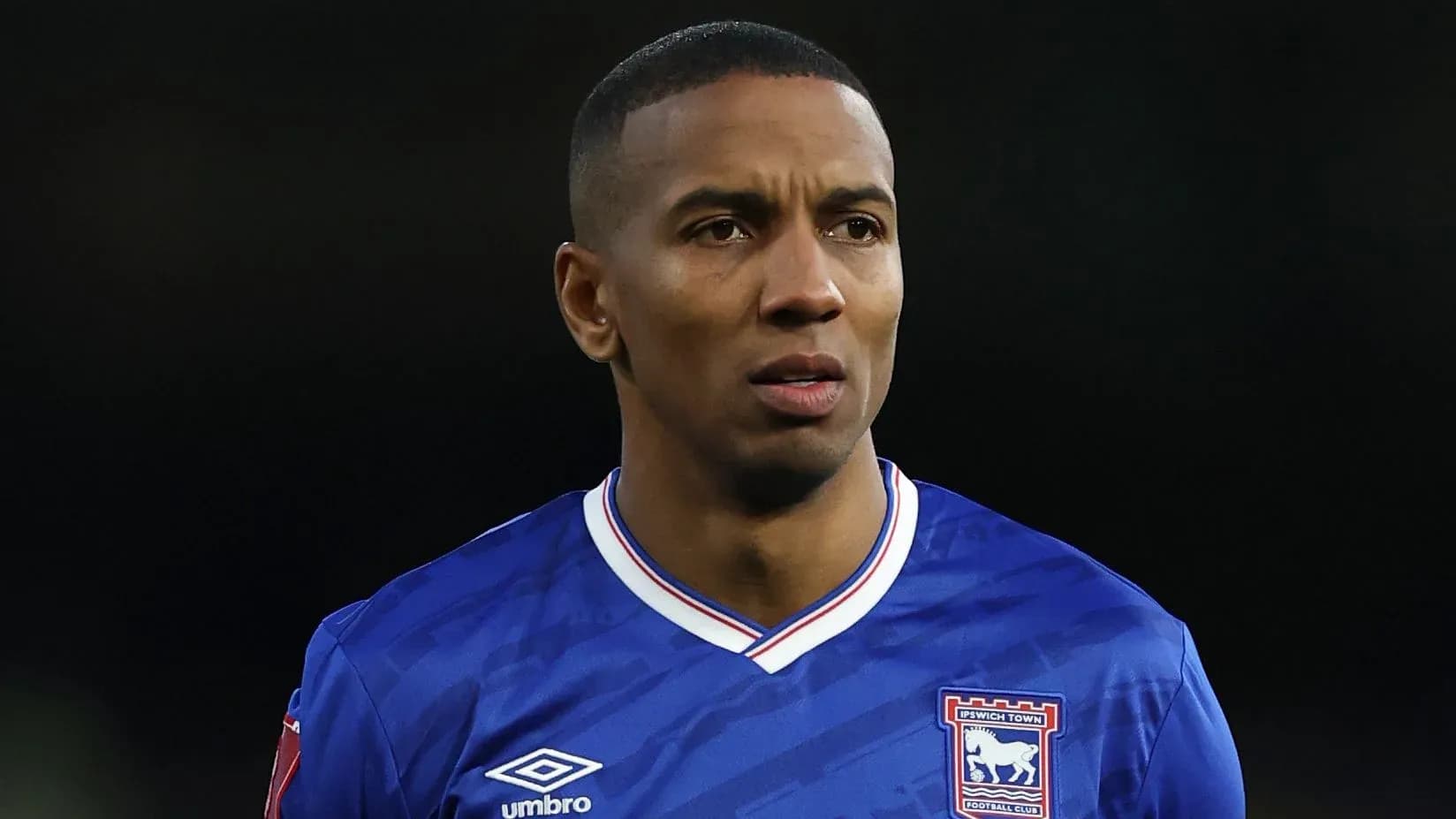
Ashley Young's Journey: From Defender to Hip Replacement
Ashley Young spent 23 years outrunning problems. Defenders, doubts, even the ticking clock of a long career. In the end, it was his own body that finally caught up with him.
The former Manchester United and England stalwart has revealed he now needs a hip replacement, a brutal reality check arriving just weeks after he officially retired from professional football at 41. His final act came at Ipswich Town, where he added one last chapter to a remarkable career by helping the Tractor Boys back to the Premier League.
On the High Performance Podcast, Young laid bare the moment he knew the fight was changing.
He spoke about a training-ground fall in November that left him needing an injection in his hip. For a player who had built his identity on resilience and availability, that was the first alarm bell.
“I have always said to myself: ‘If my body is saying you need injections, there is a problem, you need to think about retiring,’” he admitted.
The specialist told him then that a hip replacement would probably be needed in about 10 years’ time. It sounded distant enough to park. So he pushed on.
By January, he was due another injection, the one that was supposed to drag him through to the end of the season. Young, still wired like the winger who tore down the flanks at Old Trafford, tried to bargain with the pain.
“I know it is painful, but I want to make sure I do everything I can possibly do to help the team,” he told the specialist.
Then came the moment every veteran dreads.
About a week before the scheduled injection, in what should have been a routine training session at Ipswich, he went down again on the same hip. This time, he knew. “This is worse, I know it is a lot worse,” he recalled.
The damage escalated quickly. Young, who managed 15 appearances across all competitions in Ipswich’s promotion campaign as they finished second in the Championship, suddenly found himself unable to do the most basic part of his job: train.
From January, the pain was so severe he could barely move freely, let alone prepare properly for matches. For two to three months, training simply wasn’t an option. The body that had carried him through title races, European nights and international tournaments was now refusing to cooperate.
Most players would have quietly slipped away at that point. Young went the other way.
“I saw the specialist again and said ‘I’m not going out like this,’” he revealed.
The line says everything about him. Pride, stubbornness, refusal to accept that the end would be dictated in a medical room rather than on the grass.
He even challenged the finality of the diagnosis.
“I asked him ‘are you telling me I can’t play football again, you can say it if you want, trust me if I get an opportunity to be back on the pitch, I’ll be back on the pitch’.”
He never did make it onto the pitch for Ipswich’s final game. The fairytale cameo, the symbolic last run in front of a jubilant crowd, never came. Yet Young still found a way to leave on his terms.
The hip that was screaming for rest had to endure one last surge of defiance.
“The last two months of the season I was training every day and he was like ‘it is not possible, you shouldn’t be training’,” Young said. The specialist warned him. The numbers, the scans, the medical logic all pointed one way. Young went the other.
He threw himself into the dressing room, the training ground, the daily rhythm of a squad chasing history. If he couldn’t contribute 90 minutes, he would give everything in the 90 minutes before that.
It ended not with a final cross or a last-ditch tackle, but with promotion on the final day and a sense of completion.
“It would have been incredible to come onto the pitch for the last game of the season,” he admitted, “but for me to train like I did that week and for us to be promoted on the last day of the season, it was fitting.”
No lap of honour with boots on. No scripted goodbye. Just a veteran pro, body broken but pride intact, walking away knowing he had emptied the tank.
The hip will soon be replaced. The career won’t be.