
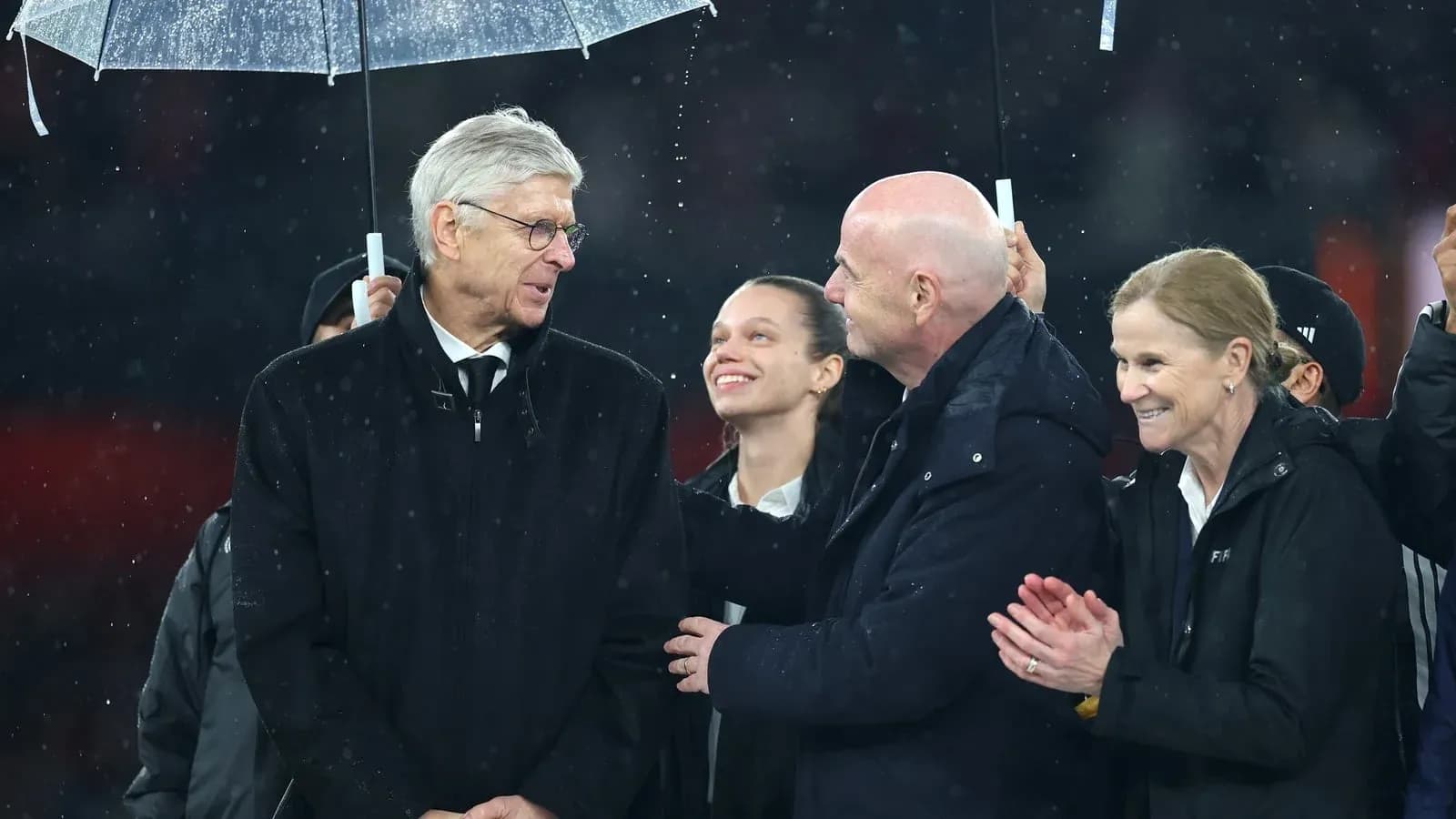
Arsene Wenger Supports Infantino's World Cup Investment U-turn
Arsene Wenger has thrown his weight firmly behind Gianni Infantino’s decision to abandon a controversial plan to sell a stake in a new World Cup company to private investors, calling the U-turn “absolutely necessary and beyond question”.
The former Arsenal manager, now FIFA’s Chief of Global Football Development, broke his silence on Tuesday, a week after reports first surfaced of Infantino’s proposal to create FIFA Forward Enterprise (FFE) and offload 20 per cent of it to private equity.
That idea detonated across the game. Three continental confederations rejected it outright, while UEFA went further, threatening to boycott the World Cup and other FIFA competitions if the project was not scrapped. The pressure told. Infantino stepped back.
Wenger, who has become one of the most influential technical voices inside FIFA, made it clear he stood nowhere near the drawing board on this one.
“The recent events at FIFA deserve some clarity from my side,” the Frenchman said in a statement, underlining his role and distance from the commercial push.
“At FIFA, I am the Chief of Global Football Development. Together with my team, I oversee the data analysis of the game, the FIFA online training centre, the development of youth education through 60 academies across 60 countries where they are most needed, and youth competitions around the world. In addition, I am a technical adviser to IFAB.”
Then came the key line.
“I was not involved in this strategic plan and first became aware of the project through media reports,” he said, before nailing his colours to the mast over the decision to retreat.
“The decision to withdraw the project was absolutely necessary and beyond question, because I firmly believe in an independent FIFA that serves our game with commitment, transparency, and integrity.”
Unlike Carlos Cordeiro, Infantino’s senior adviser who chose to resign over the affair, Wenger gave no indication he plans to walk away. Instead, he has positioned himself as a standard-bearer for what he considers FIFA’s core duty: to protect the game, not parcel it up.
From youth academies in 60 countries to the technical laws of the sport through IFAB, Wenger’s remit sits at the heart of football’s future. His message on Tuesday was just as central: if FIFA is to lead that future, it must do so on its own terms, not those of private equity.





