Arsenal’s Title Celebration: A Day of Joy and Danger in North London
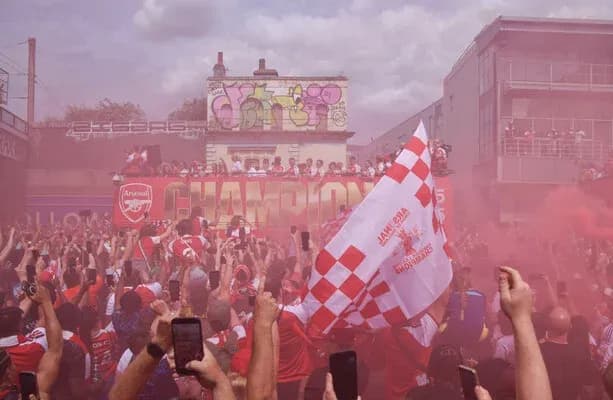
The red flares went up long before the bus turned the corner. By mid-afternoon around the Emirates Stadium, north London had become a moving sea of Arsenal shirts, flags and camera phones, the air thick with smoke and song as the Premier League champions rolled past.
It was a day the club had waited years to stage again. It was also a day that pushed the city’s emergency services to the edge.
Joy on the streets, danger in the sky
Supporters clung to anything that gave them a better view. Trees. Rooftops. Traffic lights. Balcony rails. As the open-top bus crawled along its route, people seemed to rise out of the brickwork.
The London Fire Brigade said it had to rescue “approximately 75 people” from height during the celebrations, a remarkable number even by big-city standards. Ladders went up almost as often as flares. Crews moved from one precarious perch to another, pulling fans back from the brink.
Assistant commissioner Pat Goulbourne praised the spectacle but drew a clear line.
The celebrations, he said, had been a “fantastic sight,” with the vast majority of fans “celebrating their club’s achievement safely.” The numbers told a more complicated story. His message by the end of the day was blunt: stop climbing onto rooftops, and stop lighting pyrotechnics near buildings.
That warning came after firefighters were called to a blaze at a nearby hotel, believed to have been sparked by a stray flare. The fire caused only a small amount of damage to the exterior of the building, but it underlined how quickly a party can tilt into something else.
Pyrotechnics also set off fire alarms at several locations around the area, dragging crews away from the parade route and into a series of avoidable callouts.
“Pyrotechnics are also believed to have triggered the fire alarms at several other locations in the area,” Goulbourne said, urging supporters heading home to avoid using them, “particularly at stations,” and to keep them away from buildings and flammable materials.
Arrests, a stabbing and a heavy police presence
As the bus completed its journey and the players disappeared inside, the streets didn’t empty. They just loosened. The songs rolled on towards dusk.
The Metropolitan Police had more than 500 officers deployed for the parade, and they were kept busy. By 9pm, the force confirmed 16 arrests in the area around the celebrations. The charges ranged from drunk and disorderly behaviour to drugs offences, sexual assault and assaulting emergency workers.
The day’s most serious incident came away from the bus, as the light faded on Hornsey Road. Just after 8.30pm, officers were called to the scene of a stabbing. Police, paramedics and an air ambulance responded. A man was taken to hospital, where his condition will be assessed, the Met said.
On a day meant to showcase a club’s rebirth at the summit of English football, the sirens cut through the chants.
A city cleaned out, a club riding high
By evening, north London looked like the aftermath of a festival. Cans and bottles rattled along kerbs. Collapsed e-bikes lay on their sides. Red-and-white litter – flags, food boxes, bits of cardboard – clung to pavements and gutters.
Yet the mood among the thousands drifting back towards Tube stations stayed buoyant. Groups of fans, hoarse from hours of singing, kept the anthems going as they funneled into packed platforms. This was their day, and they were determined to wring every last note from it.
The line between euphoria and excess had been tested: 75 rescues from height, a hotel fire, alarms triggered by flares, 16 arrests, a stabbing under investigation. The silverware on the bus told one story. The emergency logs told another.
Arsenal will wake up to a city that has to sweep and reset. The club, though, moves on with a title in the cabinet and a fanbase that has just reminded everyone how vast, and how volatile, its power can be.