
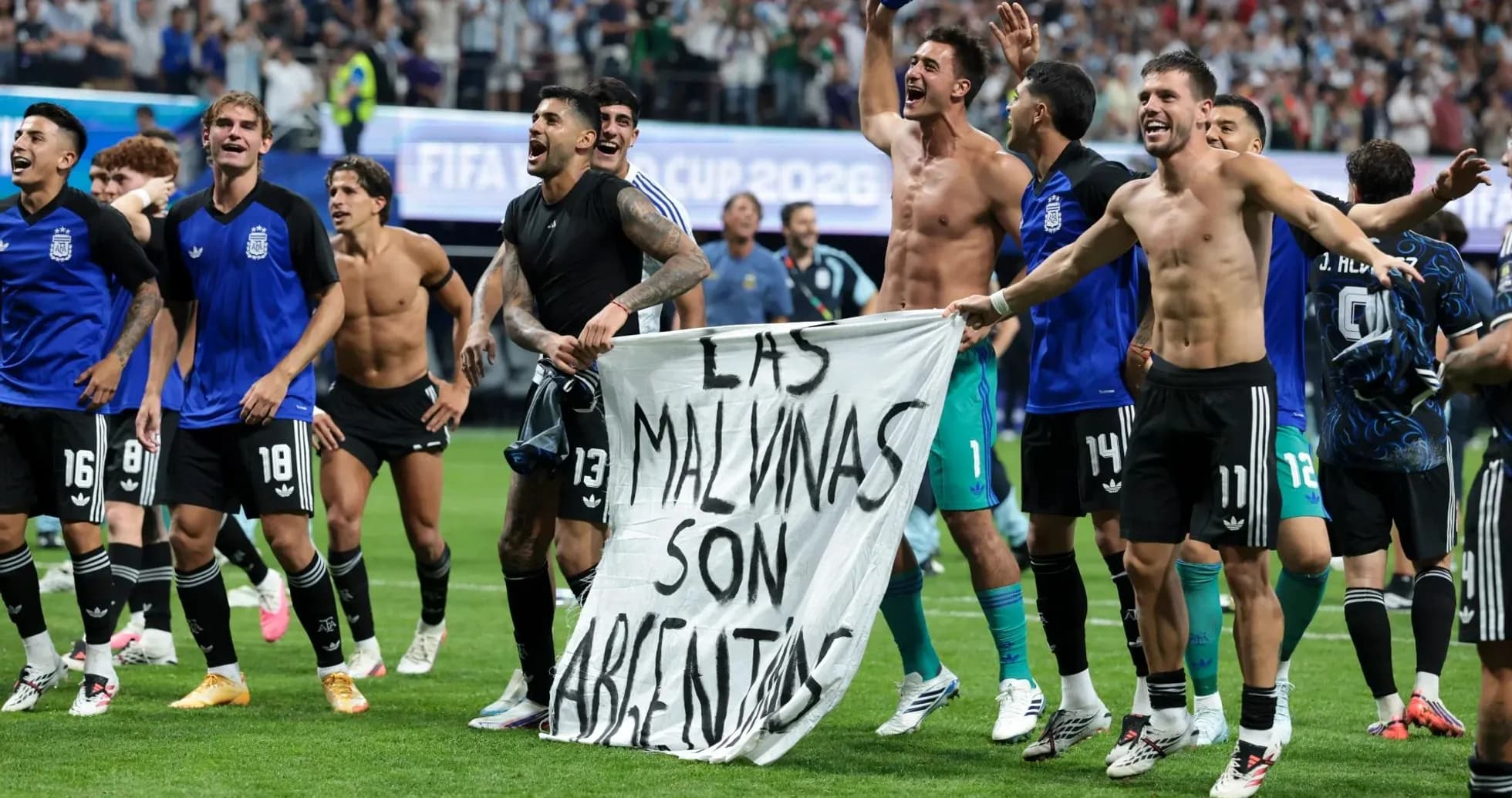
Argentina Faces FIFA Sanctions Over Falklands Banner
Argentina’s charge to the 2026 World Cup final has been hit by off‑field controversy, with FIFA set to investigate a politically charged celebration following their 2-1 semi-final victory over England in Atlanta.
On the pitch, it was a night that once again belonged to Lionel Messi. Off it, the focus quickly turned to a banner and a bitter historical fault line.
England struck first. Anthony Gordon put the Three Lions ahead in the 55th minute, a composed finish that briefly silenced a partisan crowd and hinted at a seismic upset. For a spell, Argentina looked rattled, the world champions chasing shadows as England grew in confidence.
Then Messi took control.
The captain dragged the Albiceleste back into the contest, threading the pass that led to Enzo Fernández’s equaliser and later supplying the assist for Lautaro Martínez to turn the game on its head. Argentina surged, England faded, and by the final whistle the holders had punched their ticket to the final.
The real storm broke moments later.
As the celebrations began, Argentina’s players unfurled a banner reading, “Las Malvinas son Argentinas” – “The Falklands are Argentine.” The message goes far beyond football. It directly references the 1982 conflict between Britain and Argentina over the Falkland Islands, a war that left 255 British servicemen and 649 Argentinian personnel dead and remains a raw, emotive issue in both countries.
That single act has now dragged FIFA into a political flashpoint it has long tried to keep outside its stadiums. The governing body’s regulations explicitly bar political statements at matches it organises, whether on shirts, banners, or any other visible display.
Argentina’s gesture cut straight across that line.
FIFA is expected to review the incident, with disciplinary action likely. Sanctions could range from fines to more severe measures, depending on how strictly the rules are interpreted and how the governing body judges the intent and impact of the banner.
For Argentina, it creates a jarring split-screen: a team sweeping into another World Cup final on the back of Messi’s enduring brilliance, and a federation bracing for punishment over a celebration that turned a footballing triumph into a geopolitical flashpoint.
The world champions will play for the trophy with the eyes of the sport on their football. FIFA will decide what price, if any, they must pay for the message that followed it.





