Argentina Edges Cape Verde Islands in Thrilling Extra Time Clash
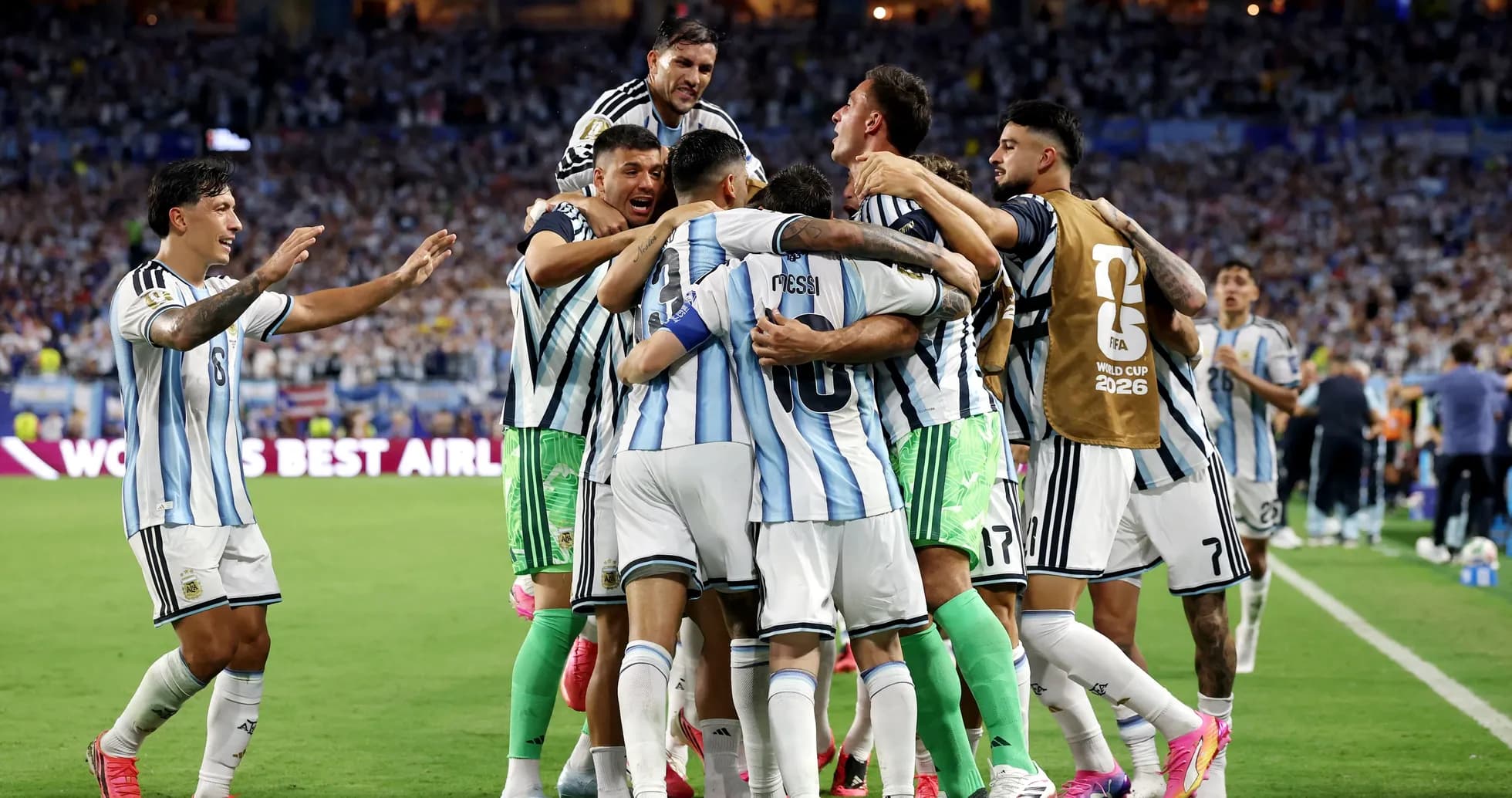
Under the Miami lights at Hard Rock Stadium, this Round of 32 tie became exactly what the numbers had hinted at: Argentina’s ruthless efficiency against Cape Verde Islands’ stubborn refusal to fold. Finished after extra time at 2–1 to Argentina, it was a contest that stretched to 120 minutes and demanded every ounce of tactical clarity from both dugouts.
Heading into this game, Argentina arrived as the World Cup’s form side. Top of Group J with 9 points from 3 matches, they had won all three, scoring 8 and conceding 1 overall in the group. Season-wide in this tournament, they had played 4 fixtures in total, winning all 4, with 11 goals for and 3 against overall. That gives them an overall scoring average of 2.8 goals per game and 0.8 conceded, with a home average of 2.7 scored and 0.7 allowed, and an away average of 3.0 scored and 1.0 conceded. The goal difference overall is +8, the statistical profile of a heavyweight.
Cape Verde Islands, by contrast, came in as the tournament’s awkward puzzle. Second in Group H with 3 points from 3 matches, they had drawn all three group games, scoring 2 and conceding 2 overall. Across the tournament they had played 4 matches in total without a win, drawing 3 and losing 1, with 4 goals for and 5 against overall – a goal difference of -1. On their travels they had played 3, drawing 2 and losing 1, scoring 4 and conceding 5 away, an away scoring average of 1.3 and conceding 1.7, while at home they had a single goalless draw.
I. The Big Picture – Shapes and Intent
Lionel Scaloni stayed loyal to Argentina’s established tournament blueprint: a 4-4-2 that has started in all 4 of their matches. Emiliano Martinez in goal sat behind a back four of Nahuel Molina, Cristian Romero, Lisandro Martinez, and Facundo Medina. In midfield, Rodrigo de Paul, Alexis Mac Allister, Enzo Fernandez, and Thiago Almada formed a line designed to suffocate transitions and feed the front two. Up top, Lionel Messi and Lautaro Martinez were paired again, the purest expression of Argentina’s blend of artistry and aggression.
Pedro Leitao Brito’s Cape Verde Islands answered with a 4-1-4-1 that has become their tournament identity, having used it in all 4 fixtures. Vozinha started in goal, protected by a back four of S. Moreira, R. Lopes, D. Borges, and S. Lopes Cabral. K. Lenini anchored in front of them, with R. Mendes, L. Duarte, D. Duarte, and J. Cabral forming the advanced band of four behind lone forward N. Da Costa. It was a shape built to compress central spaces and force Argentina wide, then spring forward in carefully chosen moments.
II. Tactical Voids and Discipline
There were no listed absentees, so both managers had full decks to play with. Instead, the “voids” were structural and psychological.
Argentina’s one statistical blemish heading into this tie was discipline late in games. All of their yellow cards in this World Cup have come after the 76th minute, evenly split: 33.33% between 76–90, 33.33% between 91–105, and 33.33% between 106–120. It paints a picture of a side that, while dominant, can be dragged into attritional battles as fatigue and emotion rise.
Cape Verde Islands, on the other hand, tend to front-load their aggression. Forty percent of their yellow cards arrive between 0–15 minutes, another 20% between 16–30, and 20% between 61–75, with a further 20% from 91–105. This is a team that sets the tone early and is not afraid to disrupt rhythm, especially in the opening quarter-hour.
Those curves intersected ominously: Cape Verde’s early bite against Argentina’s late-game volatility. Over 120 minutes, the discipline narrative was always likely to be a subplot.
III. Key Matchups – Hunter vs Shield, Engine Room vs Enforcer
The headline duel was always going to be Lionel Messi versus Cape Verde’s defensive structure. Messi entered this match as the World Cup’s leading scorer: 7 goals in 4 appearances, all for Argentina, with 22 shots in total and 15 on target. His overall rating of 9.28 and 10 key passes underline a player not just finishing moves but orchestrating them. Yet beneath the brilliance lies a human detail: from 2 penalties awarded to Argentina overall this tournament, they have scored 1 and missed 1, and Messi himself has missed 1 penalty. That small crack in perfection gave Cape Verde a sliver of hope: even the hunter can falter from the spot.
Cape Verde’s shield was collective rather than individual. Their overall defensive record – 5 conceded in 4 games, with 2 clean sheets overall and 1 on their travels – suggests a side capable of extended concentration. The 4-1-4-1, with K. Lenini screening and R. Lopes and D. Borges patrolling centrally, was tasked with closing Messi’s inside channels and preventing the classic one-two combinations with Lautaro Martinez.
Behind that duel lay the engine room. For Argentina, Enzo Fernandez and Alexis Mac Allister are the metronomes, with Rodrigo de Paul as the tempo-shifter and Thiago Almada the creative agitator between the lines. They faced a Cape Verde midfield that is more about cohesion than star power: K. Lenini’s positional discipline, the work rate of L. Duarte and D. Duarte, and J. Cabral’s ability to shuttle wide and infield.
The battle here was about second balls and rest defence. Argentina’s overall numbers – 2.8 goals scored and 0.8 conceded per game – are built on controlling transitions. Cape Verde’s 1.0 goals scored and 1.3 conceded overall, with 3 draws from 4, reflect a team comfortable in long, attritional games where they can drag opponents into their rhythm.
IV. Statistical Prognosis – Why Extra Time Felt Inevitable
On paper, this was a meeting between an irresistible force and a side that refuses to break. Argentina’s perfect record – 4 wins from 4, no draws, no defeats – suggested they would eventually find a way through. Cape Verde’s 3 draws from 4 and narrow overall goal difference of -1 hinted they would keep it tight.
Argentina’s attack, averaging 2.7 goals at home, was always likely to generate more chances than Cape Verde’s away attack at 1.3 goals. Defensively, Argentina’s 0.7 home goals conceded per game compared to Cape Verde’s 1.7 away suggested that over 90 minutes, the South Americans would both create and prevent more.
Yet the card timing and penalty profile added nuance. Argentina’s tendency to collect cards late and their 50.00% penalty conversion overall, with 1 missed, pointed to potential nerves under pressure. Cape Verde’s early aggression and defensive compactness made it plausible that they could survive the initial onslaught, disrupt rhythm, and drag the contest deep.
In the end, that is exactly what unfolded: a match that needed 120 minutes, where Argentina’s superior attacking ceiling and depth across the XI finally told, but only after Cape Verde Islands had again proven they belong at this level. The numbers had predicted a narrow Argentine edge; the pitch turned that into a long, tense night that only just bent to the favourites’ will.