Anthony Barry's Honest Half-Time Interviews at World Cup
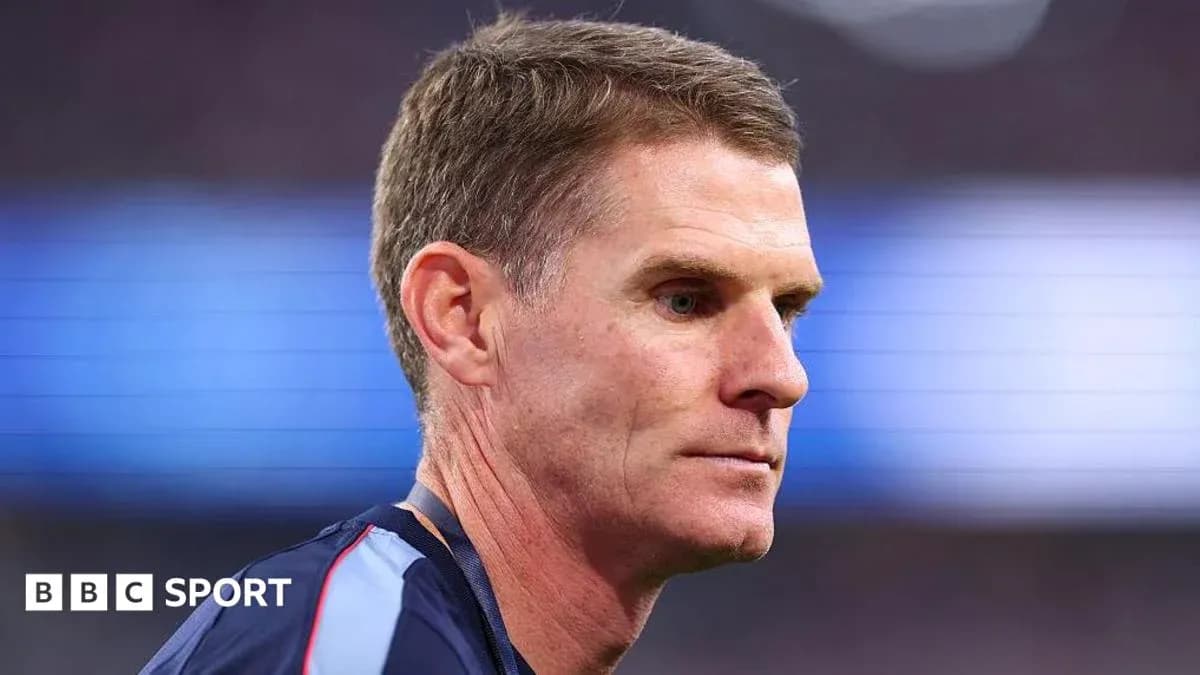
Anthony Barry will continue to front England’s televised half-time interviews at the World Cup, despite his stark on-air critique of the team’s opening display against Croatia.
The assistant coach did not sugar-coat what he had seen in Dallas. With the score locked at 2-2 after a chaotic first half, Barry described England’s performance as “complicated and confusing”, highlighting nervous energy, muddled decision-making and “fearful patterns” on the ball. Thomas Tuchel’s side eventually steadied themselves and powered to a 4-2 win, but the tone of Barry’s assessment raised eyebrows among some observers.
Inside the England camp, though, there is no sense of controversy. Quite the opposite. Tuchel is understood to value Barry’s candour, and there is no suggestion that the assistant’s honesty has ruffled feathers among staff or players. The view is simple: the head coach and the squad have precious few minutes at half-time, and handing those over to broadcast duties would be a poor use of time.
So Barry will stay in front of the cameras.
Honest assessments stay on air
Half-time interviews have been one of the new broadcast experiments at this World Cup. Broadcasters are encouraged to grab a quick word from the bench, but it is described as a “request rather than mandatory”, and nations have taken very different approaches. Some send the manager, some a substitute, some offer little more than a polite soundbite.
Barry went the other way. Asked for his verdict at the interval against Croatia, he delivered a detailed breakdown of what had gone wrong.
“Overall, a complicated and confusing first half from us really,” he said. “I think a lot of nervous energy early on and maybe that should be accepted and maybe expected in the opening game of a World Cup.
“From there, we made some decisions where the energy was not free in our mind. We played long when we should play short and played short when we should play long really. Not playing through the gaps, so not allowing us to accelerate our game the way we wanted to.
“You'd think the penalty would free us up and allow us to play more like us and look more like ourselves, but again we fall back into some fearful patterns.
“Yeah, we've always been able to rely on set-pieces. We get the second goal and again we're hoping that's the moment to free us up and move forward in the game. But, OK, we concede the second goal late on and now we have to speak about that at half-time.”
It was the kind of tactical and emotional unpacking supporters rarely hear in real time from inside a World Cup dugout. The surprise was not that an assistant had noticed those flaws, but that he was willing to lay them out so bluntly with 45 minutes still to play.
England, though, see value in that transparency. Tuchel’s stance is said to be relaxed; he welcomes the straight talk and trusts Barry to handle the spotlight while he works inside the dressing room. For now, at least, the experiment continues.
Rashford fitness under watch
While the debate around half-time access rumbles on outside, England’s staff have a more traditional concern on their hands: the fitness of Marcus Rashford.
The forward stepped off the bench in Dallas and added England’s fourth goal, rounding off the win and underlining his importance as an impact option. After the match, though, he reported muscle discomfort and some soreness.
Medical staff are now monitoring him closely ahead of Tuesday’s game against Ghana. There is optimism that the issue is not serious enough to rule him out, but England will not take risks lightly with a player who can change the tempo of a match in a single run.
As the tournament settles into its rhythm, England find themselves in an unusual position: dissected in public at half-time by one of their own, and content with that, while quietly hoping one of their most decisive forwards is ready to explode again when Ghana arrive.