Ángel Di María's Rallying Cry After Argentina's Defeat
Ángel Di María was nowhere near the grass when the final whistle went, yet his voice cut straight through the silence that followed Argentina’s defeat.
Within minutes, the veteran winger reached for his phone and sent a message that felt less like a social media post and more like a rallying cry to a wounded dressing room. On his Instagram story, he refused to let a single night define a decade of dominance.
“A country is proud of you. A country was united once again thanks to the love and the b*lls you put into this World Cup,” he wrote, his words aimed squarely at a group of players who had just seen their era punctured on the biggest stage.
He didn’t stop there. Di María, a central figure in so many of Argentina’s modern triumphs, underlined what this generation has become.
“You are history, you are legends, and no one can ever take that away from you. The best national team in the history of our country. Five consecutive finals, no one will ever be able to take that away from you. THANK YOU SO MUCH FOR EVERYTHING.”
No tactics board, no consolation speech from a coach could compete with that. It was one of their own, reminding them what they had already carved into football history.
On the pitch, the contrast was brutal.
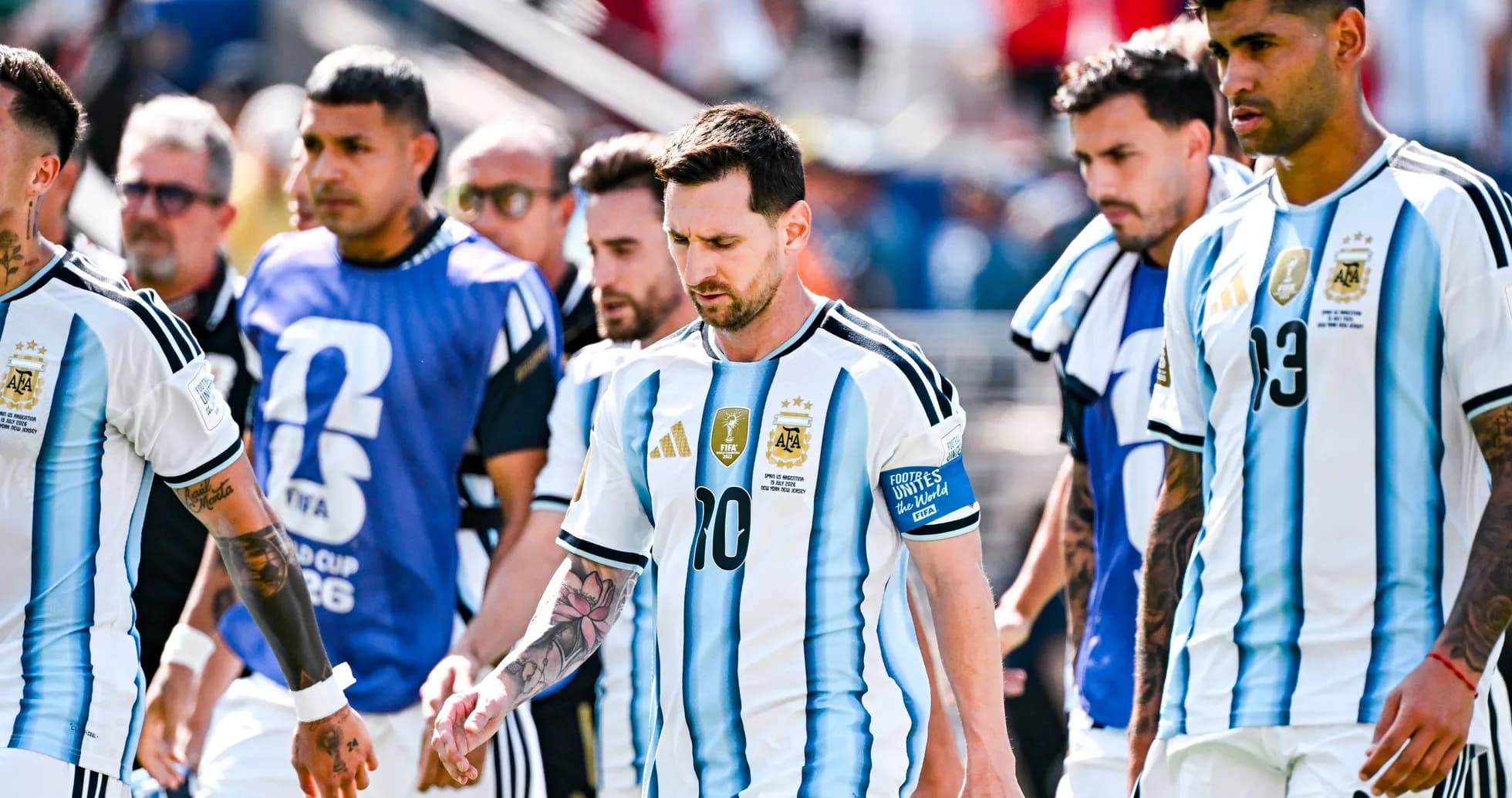
The decisive match turned into a cage. Argentina, usually so sharp and incisive on the big occasions, never found a way out. The defending champions failed to register a single shot during normal time – a stark, unwanted record and a jarring statistic for a side that had built its reputation on big-game courage and cutting edge.
Tension seeped into every challenge. The game broke into fragments, heavy collisions replacing flowing moves. The first major blow landed when Lisandro Martínez, one of Argentina’s fiercest competitors, was forced off with a severe first-half injury. His departure stripped the back line of its organiser and its warrior.
The pressure only tightened.
Just as Argentina tried to steady themselves, another crack appeared. Enzo was sent off shortly before extra time, leaving the champions to stare down the final stretch a man light, their margin for error gone. Any thought of a late surge evaporated under the weight of fatigue, frustration and Spain’s control of the occasion.
While Spain celebrated, history tilted their way. They became the first nation to hold both the men’s and women’s world titles at the same time, a symbolic passing of the torch on the global stage.
Argentina, by contrast, stood at the edge of something else entirely. Not collapse, but closure. The end of a golden run that had carried them to five consecutive finals and dragged a football-obsessed country through a whirlwind of joy, relief and catharsis.
They watched Spain lift the trophy, knowing the night belonged to someone else. Di María’s message cut through that reality: this defeat sits at the end of an era, not in place of it.
The medals may have gone elsewhere, but the question now is sharper, more demanding: what comes after a generation that has already given everything?