Andoni Iraola’s Liverpool: Promise and Problems Ahead
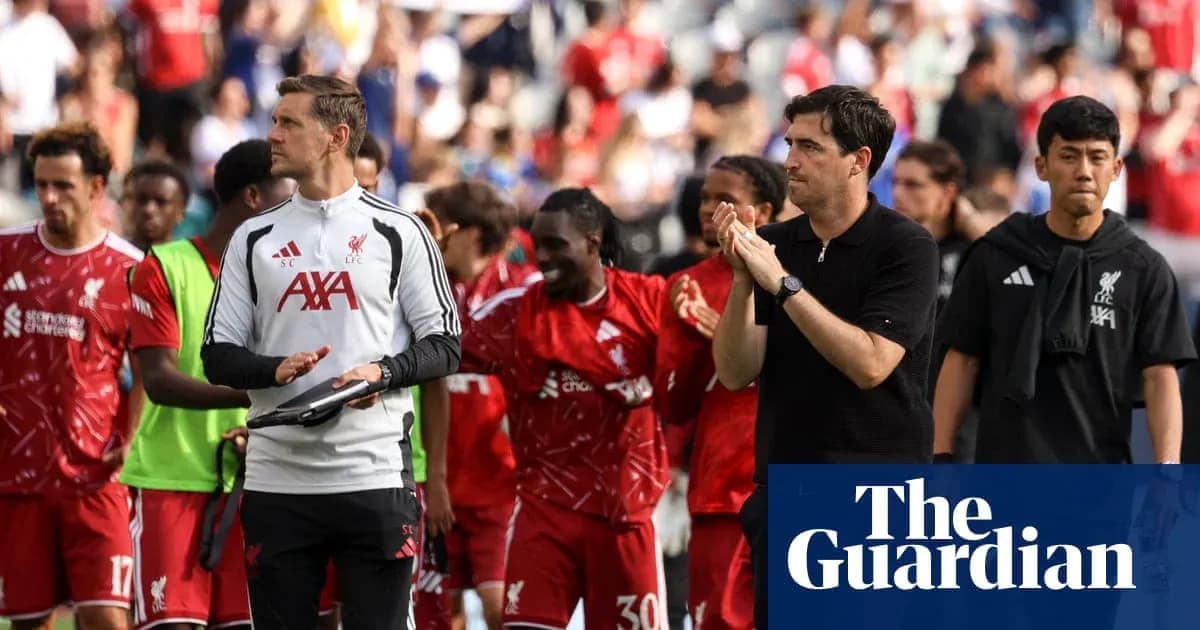
Andoni Iraola’s first taste of life on the road with Liverpool had a bit of everything. Two wins – Sunderland in Nashville, Wrexham in New York – and then a jolt in Chicago, a 4-2 defeat by Leeds that stripped away some of the early gloss and showed exactly how far this project still has to run.
Across three US cities, one theme kept returning: the idea is clear, the execution will take time.
A bold idea, short on time
For 45 minutes against Leeds, Liverpool looked like a side already buying into Iraola’s front-foot gospel. Aggressive line, quick triggers, midfielders snapping forward to play vertically. With the senior names back on the pitch, the intensity jumped a level and the structure finally resembled something close to his Bournemouth blueprint, only now in Liverpool red.
Then the changes came. So did the old problems.
Set-piece frailty. Concentration dips. The kind of soft concessions that haunted last season resurfaced, and Leeds punished them. For Iraola, it was both a warning and a useful piece of evidence: this is not a quick renovation; it’s a rebuild of habits.
That rebuild is barely under way. Iraola has not yet coached Virgil van Dijk, Cody Gakpo, Alisson, Alexis Mac Allister or new signing Víctor Muñoz. He has not even met some of them in person. They return to the AXA Training Centre on Wednesday after a brief breather following the flight back from Chicago. Mac Allister will remain absent after his World Cup exertions.
There are fewer than three weeks until Liverpool walk out at Newcastle on the opening weekend of the Premier League season. Only two more friendlies remain, a double-header against Como at Anfield. The calendar is unforgiving.
“I would like to say on the first day we are going to be perfect, everyone will be in place,” Iraola admitted. “But probably it is not going to be like this.” It won’t be. Not with this preparation, and not with this squad as it stands.
A head coach waiting for help
The numbers on this tour were brutal. Eight first-team players missing because of post-World Cup holidays. Six more sidelined by injury – some recovering, others, like the luckless Joe Gomez, hurt in the US.
Fourteen absentees. Fourteen.
Of course Liverpool would have looked different with that group available. The pressing would have been sharper, the rotations cleaner, the adaptation to Iraola’s methods further along. Yet even if everyone were fit and present, the gaps in this squad are hard to ignore.
Mohamed Salah’s departure was confirmed in March. Discussions to end his contract a year early began before that. Five months on, there is still no replacement. For a club that has built an era around his output and gravity on the right, that is not a small omission; it is a structural hole.
Conor Bradley’s serious knee injury only deepens the sense of imbalance. Right-back looks light. Centre-back looks lighter still in Premier League experience.
There is genuine excitement around Jérémy Jacquet and Giovanni Leoni – the latter returning from an anterior cruciate ligament injury looking like he has spent his rehab chiselling himself into a different body. Ifeanyi Ndukwe and Mor Talla Ndiaye, both 18, handled themselves well in the US. But Ndukwe cannot play this season because of post-Brexit work permit rules. Gomez’s history means any sustained availability has to be treated as a bonus, not a foundation.
Iraola spoke interestingly about his preference for wingers who can operate on both flanks and the benefits of switching them mid-game. It is a flexible, modern idea. Yet right now, without Salah and with the club still trying to prise Bradley Barcola from Paris Saint-Germain, Liverpool’s right side feels like a question mark rather than a weapon.
For a new head coach trying to impose a demanding style, that is a lot of improvisation to ask for.
Nyoni steps out of the shadows
If the squad looked thin in places, it also offered opportunity. Iraola leaned heavily on youth during the tour and came away impressed by what he saw on the training pitches and under the stadium lights.
Ndukwe and Talla Ndiaye caught the eye. So did Lewis Koumas, Kieran Morrison and Luke Chambers. But one youngster walked away from America having clearly changed his status: Nyoni.
The 19-year-old, part of Arne Slot’s squad last season alongside Rio Ngumoha, had to watch as the winger collected 19 Premier League appearances – five of them starts – while his own league involvement amounted to six cameos from the bench. In the US, that dynamic shifted.
Nyoni looked as if he had been waiting all summer for this. Calm on the ball, sharp without it, he embraced Iraola’s demand to find forward options as quickly as possible. He did it under pressure. He did it by drifting into pockets and creating his own space with clever movement.
His pass in the buildup to Florian Wirtz’s goal against Leeds was the sort of detail that sticks in a coach’s mind – weight, angle, timing, all in sync with the runner. It was also entirely in keeping with his wider contribution.
After the game, Nyoni admitted he knew he had to improve this summer. On this evidence, he already has. He will not be waiting in the shadows much longer.
Jones at a crossroads
The same tour that elevated Nyoni placed a harsh spotlight on Curtis Jones.
With 12 months left on his contract and Inter circling, this was a chance to show a new head coach that he belonged at the heart of the project. Instead, he drifted. On the pitch, he never looked as naturally aligned with Iraola’s central midfield demands as Nyoni or Dominik Szoboszlai. The second half against Leeds, in particular, exposed his discomfort in the role.
Then came the moment that did him few favours.
Against Wrexham, when Szoboszlai passed the captain’s armband, Jones reacted poorly to being overlooked. It was petulant rather than poisonous, but in a group stripped of its senior leaders, it jarred.
He had already seen the armband bypass him once, when Gomez went off in the opener against Sunderland and it went instead to Kostas Tsimikas – a reserve left-back who spent last season on loan at Roma. The same thing happened against Wrexham. Twice, a boyhood Liverpool fan and one of the more senior figures on tour watched the symbol of authority go elsewhere.
Of course it stung. Jones, Szoboszlai and Tsimikas all made a point of laughing it off in the days that followed. Social media inflated the incident, as it always does. Yet set against Iraola’s insistence, in Chicago, on the primacy of the collective and the need to strip ego out of the dressing room, Jones’s reaction cut against the grain.
For a player already edging towards a decision point in his Liverpool career, the timing could hardly have been worse.
Szoboszlai takes centre stage
While some reputations wobbled, one only grew stronger.
With Salah, Andy Robertson, Van Dijk and Alisson all absent, Dominik Szoboszlai became the face of Liverpool’s tour. The Hungary captain walked into each US stadium as the main attraction. Every appearance, every touch, every strike was greeted with a noise that belonged more to a superstar forward than a midfielder.
The cameras followed him. So did the kids in replica shirts. That was the marketing side.
On the football side, he delivered what Iraola needed most: standards. Szoboszlai trained like the reference point of the group, setting the tempo in sessions and offering a visible, vocal lead for a squad stacked with inexperience.
Fresh from signing a new five-year contract, the 25-year-old looks nailed on to claim one of the vice-captain slots left vacant by Salah and Robertson. On this tour, he did the job in all but name.
Three cities, three very different performances, one clear conclusion: Iraola has an idea worth backing. Whether Liverpool move quickly enough – in the market, in contract decisions, in turning promise into structure – will decide if this summer’s lessons become the foundations of something serious, or the first warnings of a season spent chasing its tail.