
Andoni Iraola's Coaching Team Transforms Liverpool's Set-Piece Strategy
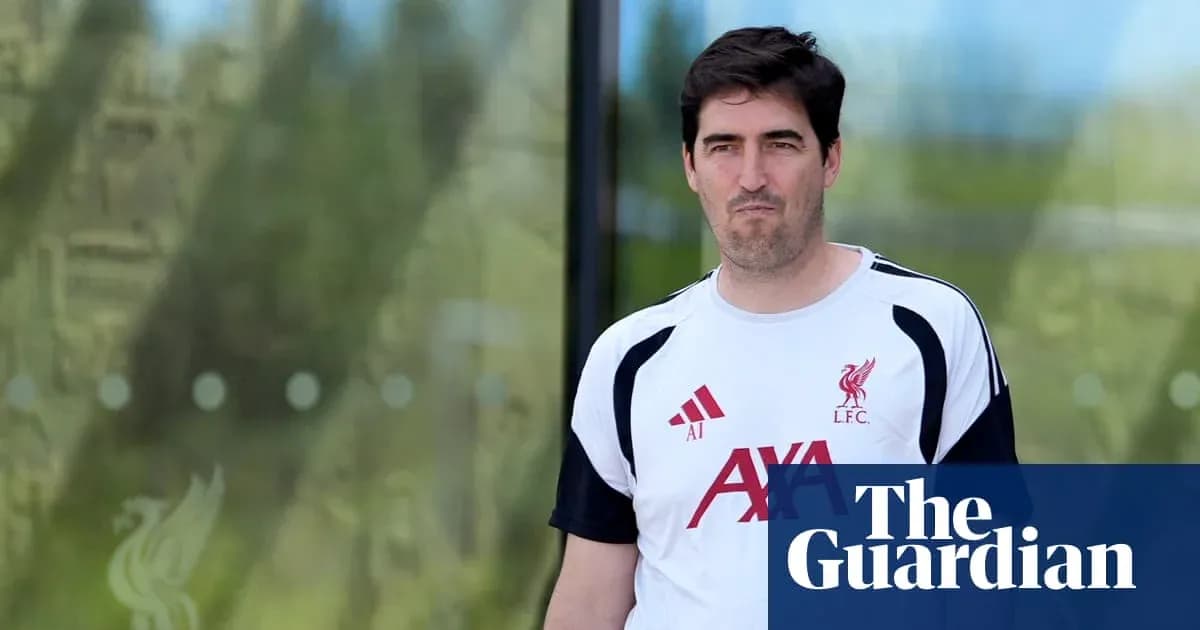
Andoni Iraola did not walk into Liverpool blind. He walked in with a team.
The Basque coach, only weeks into the job after succeeding Arne Slot, has wasted no time transplanting the structure that underpinned his work at Bournemouth into Anfield. If Liverpool are to fix one of last season’s glaring weaknesses – a soft underbelly at set pieces – it will be this backroom group, as much as the players, that carries the responsibility.
A Bournemouth core, rebuilt on Merseyside
Tommy Elphick and Shaun Cooper, key figures in Iraola’s Bournemouth staff, have followed him north as first-team coaches. Pablo de la Torre, his long-time lieutenant, has arrived as assistant coach. Alejandro Rosalen, fresh from five years at Napoli, now leads the goalkeeping department.
This is not a cosmetic reshuffle. It is the spine of Iraola’s footballing operation.
“For me, it was important they came with me,” he said, ahead of his first game in charge of Liverpool – a pre-season friendly against Sunderland in Nashville on Saturday. The line is understated, but the meaning is clear: he does not work alone.
De la Torre, officially a physical coach, has been at Iraola’s side since his first steps in the dugout at AEK Larnaca, and later at Rayo Vallecano. The label barely covers the reality. “He is much more than a physical coach really. He is an assistant and we know each other very well,” Iraola explained. This is the trusted voice in his ear, the sounding board who already speaks his football language.
Lucky break, sharp learning
Iraola is quick to point out that his Bournemouth story might have unfolded very differently. His original assistant, Iñigo Pérez, was blocked from joining due to work permit issues when Iraola left Rayo Vallecano for the south coast. It could have been a destabilising start.
Instead, it opened the door for Elphick and Cooper.
“I was very lucky with Tommy and Shaun when I arrived at Bournemouth,” he said. The luck ran both ways. Pérez has since landed on his feet at Villarreal – “Maybe we play him in the Champions League,” Iraola added – but in the meantime, Elphick and Cooper became central to his adaptation to English football.
With them in place, Iraola felt no need to search for another assistant. They had the knowledge he lacked: the nuances of English dressing rooms, the rhythm of the week, the small but crucial differences from Spain. How players like to train. What they respond to. What they quietly resist.
“They were very prepared, they were very helpful for me in terms of understanding the English culture, the mentality of the players, what they were used to, what they like in training, even the small details that maybe in Spain are different,” he said.
Elphick’s playing career – Aston Villa, Bournemouth, Brighton, Huddersfield – gives him a direct line into the squad. He is close enough in age and experience to bridge any gap between coach and player. “They can be in a closer position to the players. They can feel more identified. I am a little bit older. Some of the players maybe didn’t know I was a player,” Iraola admitted, half-joking but entirely aware of the dynamic.
Fixing Liverpool’s set-piece flaw
That dynamic now shifts to a club with very different expectations. Slot’s final season brought a title, but it also exposed a vulnerability that top sides simply cannot carry for long: Liverpool conceded 23 goals from set pieces in the league. Only Bournemouth (26), Crystal Palace (25) and Leeds (24) were worse.
For a team that wants to dominate Europe again, that number is an alarm siren.
Iraola knows it. His staff know it. Their roles are already defined.
“Tommy does defensive set plays, Shaun does more offensive, more creative ones,” he outlined. The division of labour is precise. Elphick will be the one drilling the line, marshalling blocks, organising the chaos when the ball is swung into Liverpool’s box. Cooper will focus on what happens at the other end: movement, deception, rehearsed patterns that turn dead balls into chances.
They are not working in isolation. Inside the club, set-piece analyst Lewis Mahoney has emerged as an important figure, particularly in the second half of last season. Iraola has chosen to lean into that existing expertise rather than rip it up.
“We are working very well here with the set-piece analyst [Lewis Mahoney], who was very good in the second half of last season. He is already with the club, so they are working on some stuff,” Iraola said. The phrase “some stuff” hints at detail that will stay behind closed doors until the season starts, but the structure is clear: analyst and coaches, feeding into a single, coherent plan.
“They are very good coaches,” Iraola added. “We kind of understand the game similarly and they have different roles in the coaching staff, they help with set pieces also. That’s the reason I continued with them.”
A new Liverpool, built on details
The picture that emerges is of a manager who trusts his people and obsesses over the margins. He has not arrived at Anfield to be the lone visionary. He has arrived with a unit that has already survived the Premier League together and learned from it.
On Saturday in Nashville, the focus will be on the players in red and how they adapt to Iraola’s ideas. But the real story of Liverpool’s evolution may be unfolding a few yards back, on the edge of the technical area, where a Bournemouth core, a long-time confidant from AEK Larnaca and Rayo, a goalkeeping coach from Napoli and an in-house analyst from last season are quietly reshaping the club’s most fragile phase of play.
If Liverpool stop conceding from dead balls and start punishing others with them, it will not be an accident. It will be the work of a staff that has already decided where this team can no longer afford to be soft.





