
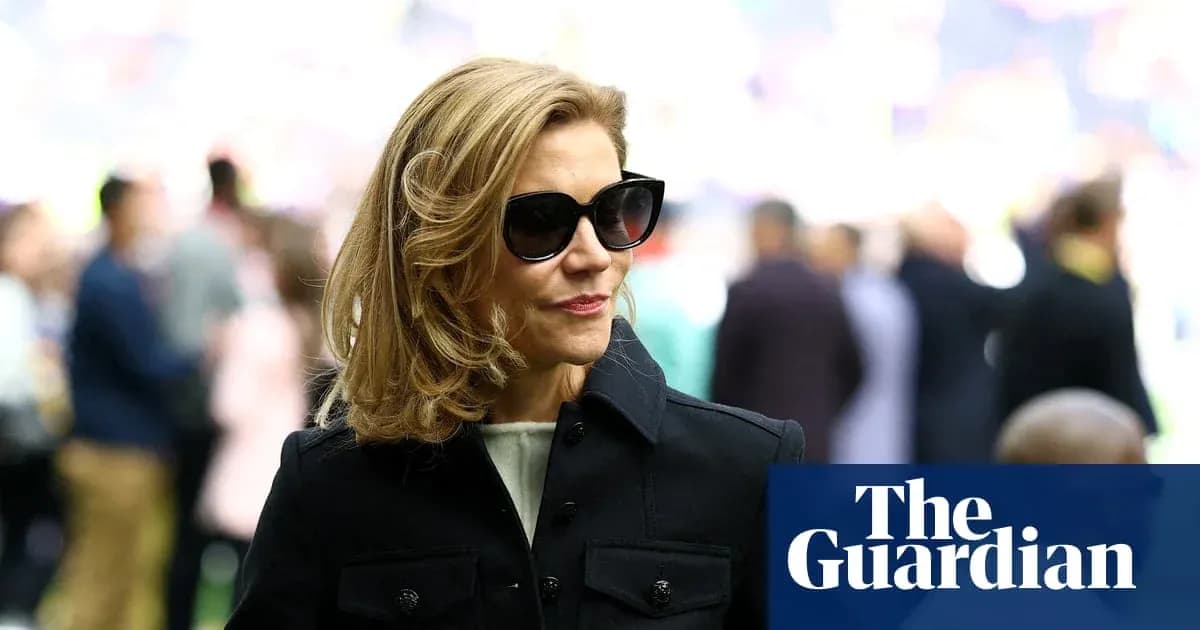
Amanda Staveley Acquires 25.1% Stake in West Ham
West Ham’s long, uneasy wait for clarity in the boardroom has taken a sharp new turn. Amanda Staveley, one of the most recognisable deal-makers in modern English football, has struck an agreement to buy a 25.1% stake in the club from the Gold family trust.
It is a move loaded with symbolism and intent. Two seasons on from lifting the Europa Conference League, West Ham are a Championship club, fighting to reclaim a place in the elite. Now, the woman who helped front the Saudi‑backed takeover at Newcastle United is positioning herself at the heart of that fight in east London.
Gold era begins to close
The shares in question belong to Vanessa Gold, daughter of former joint‑chair David Gold, who died in 2023. The Gold family trust holds just over a quarter of the club, a block of power that has long been central to West Ham’s ownership structure.
Vanessa Gold stepped into a joint‑chair and director role after her father’s passing, a continuation of a family story that stretches from David Gold’s days as a youth player and fan to his years as an owner. She described that spell as “a great honour” and spoke of the “huge personal pride” she has taken in protecting his legacy and working with staff, players and supporters.
But the landscape has shifted. West Ham’s relegation from the Premier League last season altered the financial and competitive equation. The club, still adjusting to life outside the top flight so soon after European glory in 2023, has become a different kind of project – and a different kind of opportunity.
A deal that collapsed, and one that didn’t
This is not the first time Vanessa Gold has tried to reshape the club’s shareholding. On 12 June she agreed a sale of the family stake to fellow shareholder Daniel Kretínsky, the Czech businessman whose EP Group already holds a significant position in West Ham.
That deal would have made EP Group the single largest shareholder. It never reached the finish line. Gold confirmed that the agreement, and subsequent alternatives explored with Kretínsky, “could not be brought to fruition”.
The door that closed to Prague has opened to a familiar face from Tyneside.
Staveley steps in
Gold has now reached an agreement to sell the 25.1% holding to a consortium led by Amanda Staveley, Mehrdad Ghodoussi and PCP Capital Partners. The transaction is not yet done – it is subject to a pre‑emption process that hands existing shareholders the right to buy the shares on the same terms.
That clause matters. Current investors can still step in and match the offer, keeping the stake in existing hands. Those shareholders will be formally presented with the chance to buy out the Gold family as part of the ongoing process.
For now, though, Staveley and Ghodoussi are back on the English football stage. Their track record is clear. Staveley brokered the Saudi‑backed takeover of Newcastle from Mike Ashley in October 2021, then, alongside Ghodoussi, helped steer a club drifting towards relegation into the Champions League and, after their departure in the summer of 2024, a Carabao Cup triumph.
It is that experience – of building structure, attracting investment, and changing the direction of a club – that appeals so strongly to Gold. She spoke of her “every confidence” in what Staveley and her partners can bring to West Ham, stressing their “deep experience and understanding of what it takes to lead a successful football club”.
Relegation, ambition and a battle for control
Behind the formal language sits a simple reality: this is a critical moment for West Ham. Relegation has stripped away the Premier League safety net. The club’s recent European success only sharpens the sense of underachievement and urgency.
Gold has been open about her aims. Throughout the sale process, she said, her ambition has been to secure “the right leadership and ownership” to help West Ham “achieve its potential and return to its rightful place in the Premier League”.
That phrase – “rightful place” – will resonate with a fanbase that has lived through years of tension over ownership, direction and identity. The London Stadium era has brought European nights and a major trophy, but also protests, managerial churn and now demotion.
The next few weeks will tell whether Staveley’s consortium becomes a new power centre in east London or whether existing shareholders choose to tighten their grip instead. While that plays out, Gold has pledged to continue acting in the club’s best interests, as her father “did and would expect” of her.
The numbers are clear. The stakes, even clearer. A 25.1% slice of West Ham is in play, and with it a significant say in how quickly – and how convincingly – the club can climb back to the Premier League.





