2026 World Cup Reflections: Teams Poised for 2030 Success
The 2026 World Cup felt like the closing chapter of an era. Lionel Messi, Cristiano Ronaldo, Luka Modric, Neymar, James Rodríguez, Guillermo Ochoa – giants of the modern game – bowed out in tears, their last acts played on the biggest stage.
Now the calendar rolls towards 2030, and the conversation shifts. Anyone 32 or older is counting training sessions, not just caps, trying to hold off time for one more shot. National team coaches, meanwhile, are staring at depth charts and birth certificates, not highlight reels.
These rankings lean hard into certainty. Squads stacked with players in their 20s, already proven at the highest level, carry a different kind of security than those clinging to one more miracle from a fading star. These are the 10 nations with the strongest platforms to believe a quarter-final – at minimum – is within reach in 2030.
Ages listed are as of 1 June 2030.
1) Spain – Champions with room to grow
Spain will walk into a home World Cup as defending champions and, on current evidence, the team to beat. That is a terrifying prospect for everyone else.
Luis de la Fuente has built a side that understands itself. The players buy in, the structure suits them, and the talent pipeline shows no sign of slowing. It’s not just a golden moment; it looks like the start of a sustained era.
Unai Simón (32), Joan García (29) and David Raya (34) can easily reprise their roles as the goalkeeping trio. In front of them, Marc Pubill (26), Eric García (29), Pedro Porro (30) and Pau Cubarsí (23) form a defensive core with years ahead of them.
Midfield remains Spain’s calling card. Dani Olmo (32), Gavi (25) and Pedri (27) should all be back, with Rodri (33) still a strong candidate to sit at the base and dictate. Out wide, Nico Williams (27) and Lamine Yamal (22) will hope to stay fitter, but their impact in the decisive stages of 2026 underlined just how central they already are. Ferran Torres (30) may again be the weapon off the bench who punishes tired legs.
And this is before you even get to the next wave. Dean Huijsen (25) and Cristhian Mosquera (25) are natural successors to Aymeric Laporte (36). Fermin López (27), Pablo Barrios (26), Javier Guerra (27), Marc Bernal (23) and Jesús Rodríguez (24) have all had a taste of de la Fuente’s setup.
Up front lies the one big question – and the one big opportunity. If Samu Aghehowa (26) or Gonzalo García (26) emerge as reliable No 9 options, Spain’s possession machine could finally add a ruthless cutting edge. The thought of this side adding goals to control is the nightmare that keeps the rest of the world awake.
2) France – Zidane inherits a loaded deck
France crashed out in 2026 with a semi-final collapse that felt more psychological than tactical. Now, a new era begins on the touchline, with Zinedine Zidane stepping in for Didier Deschamps after three World Cup cycles.
The raw materials remain elite. Mike Maignan (34) should still command the box with authority, protected by a central defensive trio of Dayot Upamecano (31), Ibrahima Konaté (31) and William Saliba (29) – all in their primes.
Midfield looks just as secure. Manu Koné (29) and Aurélien Tchouaméni (30) give France a powerful, modern double pivot, while Eduardo Camavinga (27) and Khéphren Thuram (29) – left out of the last squad – add depth and flexibility.
Up front, the headline act is unchanged. Kylian Mbappé (31) will hunt down records, not just goals, and he will not be short of help. Michael Olise (28) and Désiré Doué (24) bring craft and incision around him.
The issue in 2026 wasn’t talent. It was breaking Spain’s structure and managing the emotional swings of knockout football. Zidane’s Real Madrid tenure showed his strength in handling stars and pressure. If he can pair that with a clearer tactical identity, France will arrive in 2030 with a squad that expects, not hopes, to play the final week.
3) England – Depth, belief… and a Kane-sized question
England’s 2026 run was a cocktail of resilience and regret. They survived a thriller against Mexico, clawed back against Norway to reach yet another semi-final, then froze with a 2-0 lead over Argentina. That collapse will linger, but the core of the team screams continuity.
At the back, Marc Guéhi (29) emerged as a genuine leading center-back, while Djed Spence (29) finished the tournament in the form of his life. In midfield, Declan Rice (31), Elliot Anderson (27), Jude Bellingham (26) and Kobbie Mainoo (25) give Gareth Southgate’s successor – or Southgate himself, if he stays – a wealth of combinations.
On the flanks, Bukayo Saka (28) and Anthony Gordon (29) again showed they can handle the heat of a major tournament. The talent is there, the experience is there, and the scars might even harden them.
Then comes the asterisk. Harry Kane will be 36. Can he still be a 90-minute focal point? England have yet to identify a clear heir to their all-time leading scorer, and that uncertainty hangs over everything.
Goalkeeper is another open contest. But the depth elsewhere is startling. Lewis Hall (25), Cole Palmer (28), Adam Wharton (26), Alex Scott (26), Phil Foden (30), Rio Ngumoha (21) and Ayden Heaven (23) all missed out on Thomas Tuchel’s World Cup squad yet remain very much in the frame.
England are built for a big Euro 2028 and another deep World Cup run. Whether they finally find the striker to carry them over the line is the story waiting to be written.
4) Morocco – Co-hosts with a cause
Morocco’s recent record is no fairy tale. It’s a blueprint. Back-to-back quarter-final appearances, one of them extended into a historic semi-final. An Afcon 2025 crown. A new coach who injected more attacking ambition without loosening the defensive screws.
Now they co-host in 2030, and the question is no longer whether they belong. It’s how far they can go.
The defensive spine should hold. Achraf Hakimi (31), Chadi Riad (26), Anass Salah-Eddine (28) and Noussair Mazraoui (32) all project to remain key figures. In midfield, Ayyoub Bouaddi (22) will only sharpen after a breakout World Cup, with Azzedine Ounahi (30) again beside him.
Higher up the pitch, Ismael Saibari (29) was a near-certainty to score before injury cut his tournament short. Around him, Bilal El Khannouss (26), Gessime Yassine (24) and Brahim Díaz (30) offer guile and unpredictability.
The next generation is already winning. Morocco claimed the most recent U-20 World Cup, powered by forwards Othmane Maamma (24) and Yassir Zabiri (25), plus goalkeeper Ibrahim Gomis (25). If veteran hero Yassine Bounou (39) can somehow keep his level, they become a nightmare draw in their own backyard.
This is no longer a Cinderella story. It’s a sustained project with a home World Cup as its climax.
5) Argentina – Life after Messi, but not life without hope
Argentina’s run to the 2026 final once again underlined a truth the world already knew: Lionel Messi was not just their best player; he was their system, their heartbeat, their shield. Everything revolved around him. Everything flowed from him. There is no replacing that.
Yet Argentina are far from hollowed out. Julián Álvarez (30) has grown into a leading man, capable of carrying an attack for club and country. Lautaro Martínez (32) remains a ruthless finisher in support.
In midfield, Enzo Fernández (33) owes his nation redemption after his red card, but he is well placed to anchor the next cycle. At the back, Nahuel Molina (32), Cristian Romero (32) and Lisandro Martínez (32) will all be seasoned veterans, battle-tested and streetwise. Behind them, Emiliano Martínez (37) should still bring his unique blend of shot-stopping and gamesmanship.
The conveyor belt is still moving. Argentina’s U-20 side finished runners-up at the last tournament, with midfielder Milton Delgado (24), left-back Julio Soler (25) and goalkeeper Santino Barbi (24) all marked as ones to watch.
They will never find another Messi. Nobody will. But they might find a new way to win without him.
6) Portugal – A golden chance gone, or one still to come?
Portugal left 2026 with a nagging thought: what if they had moved on sooner? With an otherwise balanced, dangerous side, the lack of a more mobile, natural line-leader up front felt decisive.
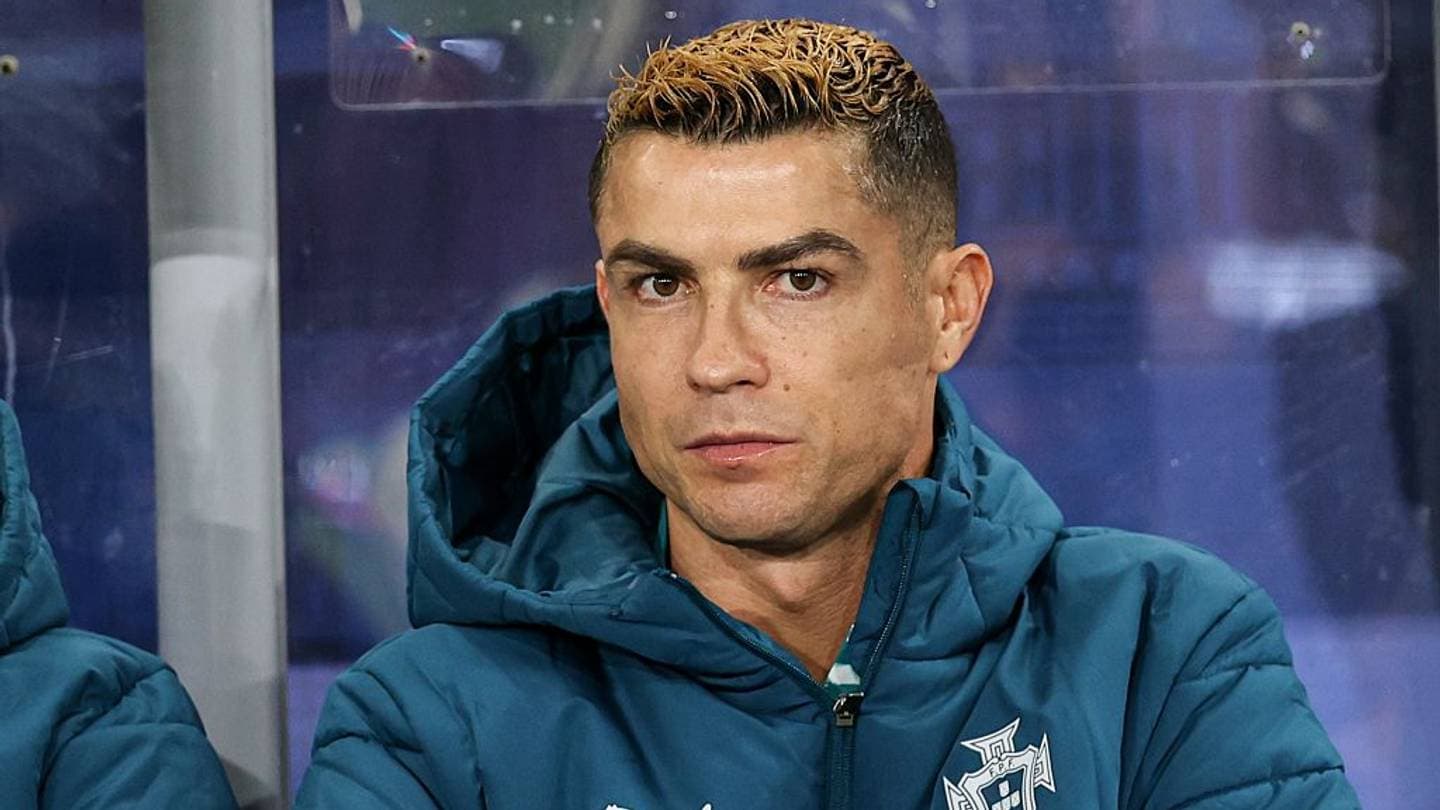
Cristiano Ronaldo has already admitted he will not play in 2030 at 45. His shadow will linger, but the team must step out of it.
There is plenty to build on. Diogo Costa (30) stands among the elite goalkeepers in world football. In front of him, Gonçalo Inácio (28) and Nuno Mendes (27) give Portugal a strong defensive platform. António Silva (26) will try to reboot his career – seemingly at Bournemouth – and still carries huge upside.
Midfield looks rich: João Neves (25) and Vitinha (30) would walk into most national teams as starters. In attack, Gonçalo Ramos (28), João Félix (30) and Francisco Conceição (27) all return with unfinished business.
The concern lies with age creeping in among key leaders. Bruno Fernandes (35), Bernardo Silva (35) and Rúben Dias (33) will not be around forever at their current levels. There’s a real sense that the best window might have been 2026.
Yet if the next coach can unshackle this group and find the right balance in attack, Portugal still have enough talent to scare anyone.
7) Norway – Haaland’s window, Norway’s moment
Norway arrived in 2026 as dark horses and left as something more serious. Their run to the quarter-finals, built on a tight-knit culture and a fearless approach, turned them into one of the stories of the summer.
And the main character? Erling Haaland, of course.
Few players looked like they enjoyed the World Cup as much as Haaland (29). He bullied defenses, relished the stage and embraced the responsibility. In 2030, he should still be terrifying center-backs.
He will not be alone. Andreas Schjelderup (26), Antonio Nusa (25) and Oscar Bobb (26) offer sharp, inventive support in the final third. Martin Ødegaard (31), if he can finally shake off his injury troubles, will again orchestrate from midfield.
The back half of the squad needs work. There will be turnover in defense and in goal, with new solutions required. But as long as Haaland leads the line and Ødegaard pulls the strings, Norway have a puncher’s chance against anyone.
The question is whether they can build a backline worthy of their attack in time.
8) Côte d’Ivoire – Rising force with a soft spot
Côte d’Ivoire handled a tricky Group E in 2026, beating Ecuador and Curaçao before exiting to Norway in the last 32. It was a campaign that hinted at something more substantial on the horizon, especially with the World Cup returning, in part, to African soil.
If Emerse Faé stays on the bench, he will have an enviable squad at his disposal.
In goal, Yahia Fofana (29) offers calm and reliability. The defenders in front of him – Ousmane Diomande (26), Odilon Kossounou (29) and Wilfried Singo (29) – bring power, pace and composure.
The forward line creates luxury problems. Amad Diallo (27), Oumar Diakité (26), Elye Wahi (27), Yan Diomandé (23), Simon Adingra (28) and Ange-Yoan Bonny (26) form a pool of attackers most coaches would dream of.
Midfield, though, is thinner. If Franck Kessié (33) fades from starting contention, someone will need to step into that leadership and physicality void. On paper, that’s the one area that could hold them back.
Still, with an Afcon 2023 title already in the cabinet and a first World Cup knockout win secured, the Elephants look like a team ready to stomp deeper into the tournament.
9) Germany – Klopp’s rebuild on the clock
Germany’s recent World Cup history has been a slow decline from the heights of 2014. Early exits, muddled identities, and a sense of drift. Jürgen Klopp’s arrival changes the mood instantly.
He has four years to reshape the culture, rewire the system and drag Die Mannschaft back to the sharp end of tournaments. The question is whether the player pool matches the ambition.
The injury to Lennart Karl (22) on the eve of 2026 hurt preparations and robbed Germany of a creative hub. His return should be a major boost. Kai Havertz (30) will still pop up with crucial goals, his knack for timing and space as valuable as ever.
Florian Wirtz (27) and Jamal Musiala (27) should hit 2030 at full power, provided they arrive in better form and fitness than in 2026. Nathaniel Brown (26) looks tailor-made for a wing-back role in Klopp’s high-energy system.
Then there is Joshua Kimmich (35). He has already brushed aside talk of retiring before Klopp takes over, a huge relief given the looming overhaul needed in defense and midfield. His presence offers stability during what will be a significant reset.
Germany have the coach. Now they need the next wave of players to justify his appointment.
10) United States – A bruised breakthrough
The United States entered 2026 with optimism and left with a complicated mix of pride and frustration. The Balogun Affair overshadowed what should have been celebrated as their most promising men’s World Cup performance to date. Mauricio Pochettino’s future only adds to the uncertainty.
Yet the football itself told a different story. A run to the last 16 featured a cluster of players in the same age band stepping up and staking a claim to be long-term pillars of the program. The core is young, ambitious and already battle-tested.
If the federation can resolve the coaching situation and navigate the fallout from 2026, the US will not arrive at the next World Cup as plucky underdogs. They will come as a team that expects to be in the knockout rounds – and maybe to stay there a little longer.
In a tournament defined by the end of one generation, 2030 may well be remembered for the rise of another.