2026 World Cup Quarter-Finals: Seven Nations, One Trophy
Seven nations remain. One World Cup. And a knockout bracket that now feels less like a tournament and more like a gauntlet.
Europe dominates the closing stretch of 2026, but the continent’s grip on the trophy is being prised at by one familiar left foot from South America. Argentina stand alone against a wall of European heavyweights and rising forces, each led by a star who has turned this World Cup into a personal stage.
Below are the seven still standing — and the players dragging them toward history.
France – Mbappé chasing a three‑peat
France are already waiting in the semi-finals, businesslike and ruthless. A 2-0 win over Morocco booked their place, and the two-time champions now stare down the chance to complete a historic hat-trick of World Cups.
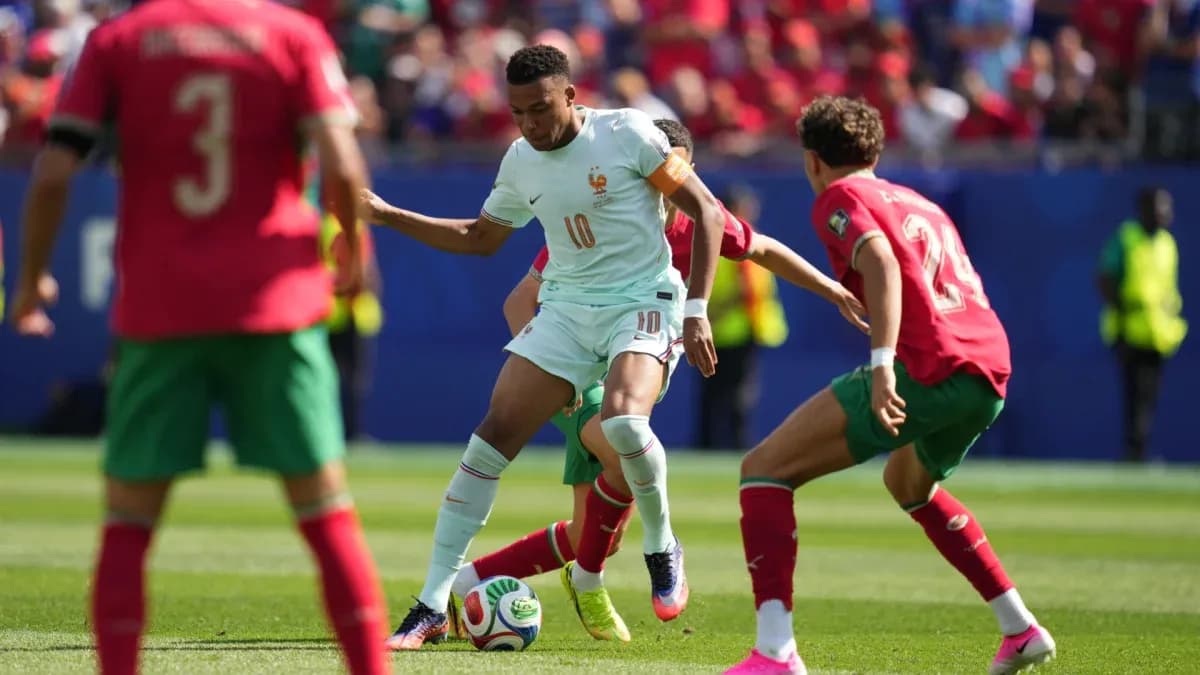
Les Bleus have not slipped once. They tore through Group I, beating Senegal 3-1, Iraq 3-0, and Norway 4-1. The knockout rounds brought sterner names, not different outcomes: Sweden swept aside 3-0, Paraguay edged 1-0, Morocco handled with that controlled 2-0.
At the heart of it all, inevitably, is Kylian Mbappé.
France’s captain and all-time top scorer is not just the face of this team; he is the tournament’s most devastating weapon. He leads the scoring charts in 2026 and has already drawn level with Lionel Messi on 17 non-penalty World Cup goals across his career. He insists Messi and Cristiano Ronaldo remain above him. His numbers argue back.
An ankle scare against Morocco briefly sent a chill through French supporters, but Mbappé has declared himself “completely fine.” If that holds true, France will stride into Dallas on July 14 at AT&T Stadium with their talisman ready, waiting to see whether Spain or Belgium dare to stand in their way.
Spain – La Roja’s new era, Yamal’s stage
Spain arrive at their quarter-final against Belgium with the calm menace of a team that knows it belongs in the latter stages. Ranked just behind Argentina in the FIFA standings, La Roja sense an opening to reclaim the crown they last wore in 2010.
Their Group H campaign started slowly with a 0-0 draw against Cabo Verde, then clicked into gear. Saudi Arabia were swept aside 4-0, Uruguay squeezed out 1-0. Austria fell 3-0 in the round of 16, Portugal 1-0 in a tight Iberian duel that underlined Spain’s defensive steel as much as their technical polish.
And then there is Lamine Yamal.
The 18-year-old right winger, fresh from a hamstring injury and still building back to full-match fitness, plays as if the stage is his by right. His previous tournaments hinted at it; this World Cup is confirming it. Every touch carries intent, every surge down the flank a reminder that Spain’s future has already arrived.
Spain face Belgium on Friday, July 10 at SoFi Stadium in Los Angeles. Win, and a semi-final showdown with France awaits — a collision of old European powers, both retooled, both convinced this is their time.
Belgium – Lukaku, the super-sub turned record-breaker
Belgium were supposed to be fading. Instead, they walked into the United States’ backyard and tore up the script.
A 4-1 demolition of Team USA on Monday stunned the home crowd and silenced the noise around Folarin Balogun’s reinstatement. FIFA had suspended the American forward’s red card to allow him to play, a decision Donald Trump publicly claimed a hand in. None of it mattered once the whistle blew. De Rode Duivels simply overran the hosts.
Belgium’s path has been a slow burn. Group-stage draws with Egypt (1-1) and Iran (0-0) did not exactly scream contender. Then came a 5-1 dismantling of New Zealand, followed by a 3-2 thriller against Senegal in the knockouts. The U.S. were next, and fell hard.
Rudi Garcia still insists “everyone thinks [they] are going home.” The mood in the Belgian camp says otherwise, and one man embodies that defiance: Romelu Lukaku.
Belgium’s all-time top scorer has turned the bench into his launchpad. He has scored in each of their last three World Cup games after coming on as a substitute, becoming the first player in World Cup history to score as a sub in four separate matches. He smells records and doubts in equal measure — and seems determined to devour both.
Spain await in Los Angeles. If Belgium want France in the semi-final, Lukaku will almost certainly have to drag them there.
Norway – Haaland and a nation’s breakthrough
For Norway, everything from here is uncharted territory.
Their quarter-final against England on Saturday, July 11 at Hard Rock Stadium in Miami is already the greatest World Cup run in their history. It does not feel like a ceiling. Not with this squad. Not with this striker.
Landslaget emerged from Group I in the shadow of France, beaten 4-1 by Les Bleus but resilient enough to respond. They hammered Iraq 4-1, edged Senegal 3-2, and then did something far more audacious: they knocked out Côte d’Ivoire 2-1 and then Brazil by the same scoreline. Those are the kinds of scalps that turn belief into something harder, more dangerous.
At the center of it all, Erling Haaland looms large.
Norway’s all-time top scorer has produced a staggering return: 60 goals in 53 senior international matches, his 60th coming against Côte d’Ivoire in this World Cup. Messi and Ronaldo needed more than twice as many games to reach that milestone. Haaland shrugs off the comparisons, but the numbers refuse to.
Now he runs into England, a team built to go deep, a defense drilled to stop exactly this kind of phenomenon. If Norway’s dream is to stretch beyond Miami, Haaland will have to bend the match to his will again.
England – Kane hunting another crown
England know this territory. They also know how quickly it can vanish.
The Three Lions arrive at their quarter-final with Norway having navigated Group L with a blend of control and occasional edge. Croatia were beaten 4-2 in a lively opener, Ghana held them to a 0-0 stalemate, Panama were handled 2-0. The knockouts have been tighter: a 2-1 win over the Democratic Republic of Congo, a 3-2 victory over Mexico that asked questions of their composure and answered most of them.
Harry Kane remains the constant.
England’s captain and all-time leading scorer has six goals at this World Cup, trailing only Mbappé, Messi, and Haaland in the tournament charts. The Golden Boot he collected in 2018 is no museum piece; his 73 goals in the 2025-26 season so far underline a striker in peak rhythm, not late-career decline.
England are three wins from a World Cup title. First, they must solve Haaland and a fearless Norway side. Then, if they survive, the winner of Argentina vs Switzerland waits in the semi-final. Kane has made a career out of delivering under pressure. This is the biggest stage left to do it on.
Argentina – Messi versus the continent
Argentina stand alone as the last non-European nation in the tournament, but nothing about them says outsider.
Ranked No. 1 in the world, La Albiceleste have played like it. Group J saw them brush aside Algeria 3-0, Austria 2-0, and Jordan 3-1. The knockout stage tightened the margins but not the outcome: Cabo Verde beaten 3-2, Egypt dispatched by the same scoreline.
At the heart of it all is a familiar figure, still rewriting the sport’s record books.
Lionel Messi is both head coach and captain, Argentina’s all-time top scorer and, for many, the greatest footballer the game has ever seen. He became the first player to win the World Cup’s Golden Ball twice, and in this tournament he has gone beyond even his own standards. He now holds the record for most goals in World Cup history with 21, and he is the first player ever to score in eight consecutive matches at the tournament.
Argentina face Switzerland on Saturday, July 11 at Arrowhead Stadium in Kansas City, Missouri. It is a clash of rankings — No. 1 against No. 19 — but this World Cup has already reminded everyone that numbers can lie. Messi, though, rarely does when the stakes peak.
Switzerland – Xhaka and the art of defiance
Switzerland have spent this World Cup ignoring their place in the hierarchy.
Ranked 19th in the world, Nati now stare down the top-ranked team on the planet with a semi-final spot on the line. To get here, they had to be stubborn, clever, and occasionally ruthless.
Group B began with a 1-1 draw against Qatar, then exploded into life with a 4-1 win over Bosnia and Herzegovina and a 2-1 victory over Canada. The knockouts demanded more nerve. Algeria were pushed aside 2-0. Colombia clung on for a 0-0 draw, only to fall 4-3 in a penalty shootout.
Granit Xhaka sits at the core of this side.
The captain and defensive midfielder has already led Switzerland to their first World Cup quarter-final since 1954. He is not the man expected to score the goals, but he is often the one who makes them possible. Xhaka breaks lines, dictates tempo, and drags his teammates up the pitch with him. Against Argentina, his job becomes something else entirely: contain Messi, disrupt Argentina’s rhythm, and still find a way to launch his own side forward.
The Swiss players have spoken openly of their excitement at facing Messi. The novelty will last until the first whistle. After that, it becomes a simple question: can Xhaka and Nati turn admiration into an upset that would echo through World Cup history?
Seven nations, seven stars, one trophy. Europe has the numbers. Argentina have the greatest player of his generation. The margins now are brutal. One mistake, one flash of genius, and a World Cup dream either explodes into life or disappears into the Miami, Dallas, Los Angeles, or Kansas night.
By the time the final kicks off, will it be another European coronation — or the last South American giant refusing to let go of the game’s biggest stage?