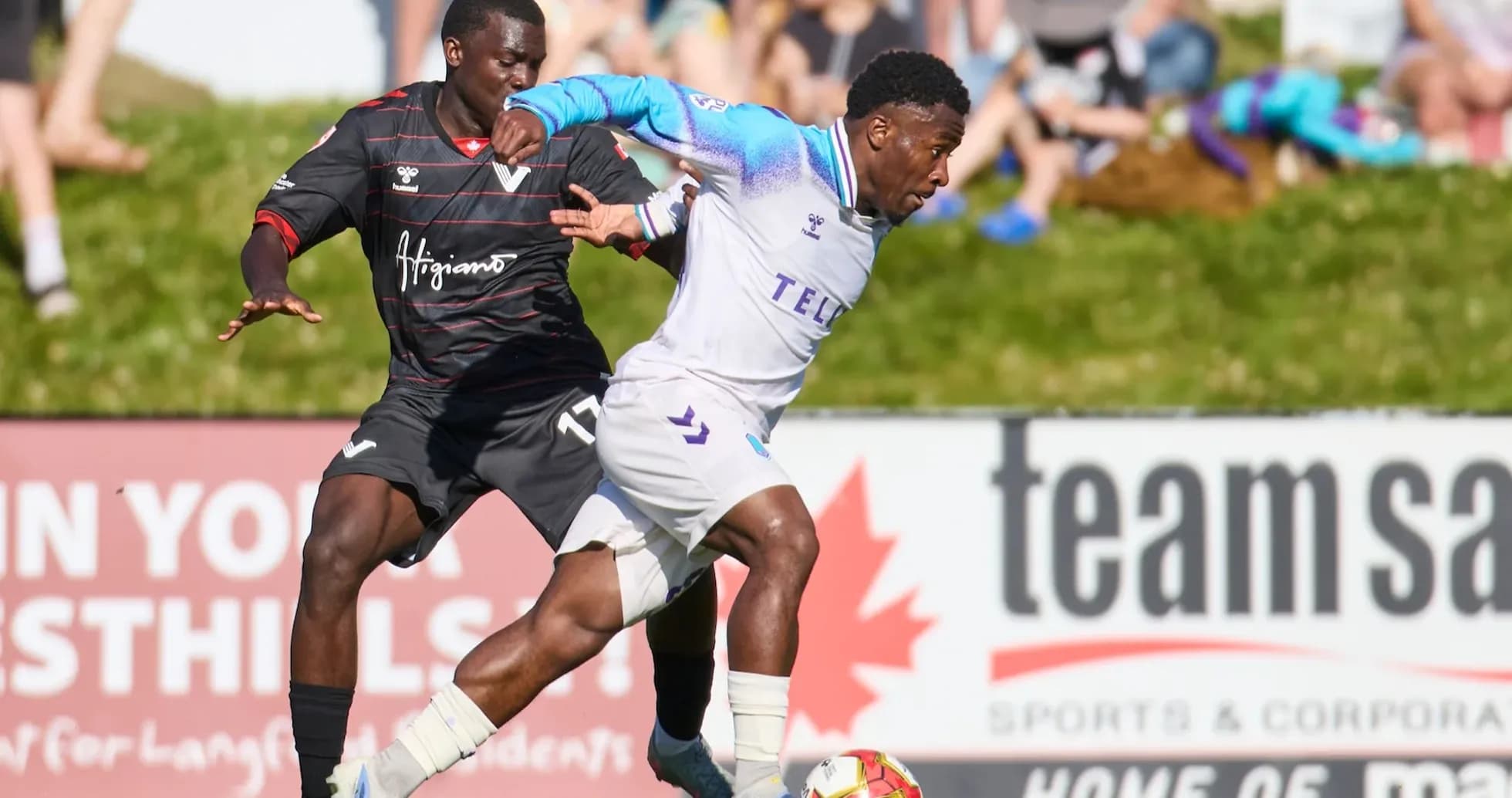
York Lions Overpower Vancouver FC in 3-1 Victory
York Lions Stadium had the look of a crossroads fixture, and the final scoreline – York United 3, Vancouver FC 1 – confirmed it. This was Group Stage football in the Canadian Premier League with real table weight: York began the day in 6th on 23 points, Vancouver in 4th on 30. One was trying to claw its way back into the playoff conversation, the other to halt a worrying slide after a “LWLLL” run. Over 90 minutes, York’s reshaped identity at home – chaotic, high-scoring, but increasingly effective – overpowered a Vancouver side that has been better on paper than in the fine details of its defending.
Heading into this game, York’s season had been defined by contradiction. Overall they had scored 29 and conceded 42 in 20 matches, a goal difference of -13 that told of fragility without bluntness. At home, though, they were something else: 21 goals scored and 23 conceded in 10 games, averaging 2.1 goals for and 2.3 against at York Lions Stadium. It is wild, unstable football, but it suits a front line built around movement and aggression.
That volatility framed Mauro Eustáquio’s choice to double down on a 3-4-3 that has been his most-used setup this season (6 league starts in that shape). Campos Ralston Kai Antonio stood behind a back three of L. Singh, F. Sturing and O. León – three defenders asked to hold a high line and defend big spaces. Ahead of them, the quartet of C. Guzmán, S. Yeates, O. Bassett and K. Kibato formed a flexible square, with Guzmán and Kibato often stepping inside to crowd central zones while Yeates and Bassett connected play into the front three.
Up top, the selection was a clear statement. L. Accettola and J. Almagro flanked T. Skublak, York’s attacking axis this season. Skublak came into the match as one of the league’s standout forwards: 5 goals and 2 assists in 18 appearances, with 20 shots (12 on target) and a 7.23 average rating. He is not just a finisher but a reference point – 97 duels contested, 49 won – and his physicality, combined with 8 yellow cards, speaks to a striker who plays on the edge and keeps defenders under constant stress.
On the bench, Eustáquio had an intriguing mix: the direct threat of S. Gonzales (who has already seen a red card this season), the creativity of M. Ferrari, and the energy of K. Clarke and C. Onyeocha. With York’s card profile showing a pronounced yellow spike between 61-75 minutes (23.73% of their bookings) and even a red in that window, managing emotional control in the second half was always going to be part of the tactical picture.
Across from them, Vancouver arrived with stronger season numbers but a more fragile mood. Overall they had 30 goals for and 28 against in 22 matches, a positive goal difference of 2 and a more balanced profile: 1.4 goals scored and 1.3 conceded per game in total. Yet their recent form – three straight defeats coming in – hinted at a team fraying at the edges.
Martin Nash stuck with a 4-2-3-1, the shape Vancouver have used most often (7 league matches). C. Irving anchored the side in goal behind a back four of M. Doner, M. Campagna, Thomas Geoffrey Field and K. Proctor. The double pivot of D. Pecile and M. Polisi was designed to be both shield and launchpad, with Polisi in particular a key figure: 19 starts, 415 passes at 85% accuracy, 16 tackles, 3 blocks and 5 interceptions, plus 6 yellow cards. He is Vancouver’s metronome and enforcer rolled into one.
Ahead of them, the line of three – T. Bah on the right, N. Mezquida central, M. Amissi left – supported lone forward L. Mousset. Between them, Vancouver’s attacking identity is clear. Bah has 3 goals and 1 assist, 21 tackles and 119 duels (63 won), plus 5 yellow cards – a relentless, combative wide threat who also won a penalty earlier in the season. Mousset, with 3 goals and 1 assist and a penalty converted, provides penalty-box presence and link play. Mezquida and Amissi add guile between the lines.
Yet the structural tension in Vancouver’s season was exposed by this matchup. On their travels they had scored 13 and conceded 17 in 11 away games, averaging 1.2 goals for and 1.5 against. That away defensive record ran headlong into York’s home scoring power. The pattern was almost pre-written: York’s front three stretching the back four, Skublak pinning Campagna and Field, and wide overloads pulling Doner and Proctor into uncomfortable positions.
The disciplinary undercurrent mattered too. Vancouver’s yellow cards peak late: 25.00% of their bookings arrive between 76-90 minutes. York, by contrast, are most combustible just after the break, with 18.64% of their yellows and their only red coming between 46-75 minutes. The “critical intersection” here was obvious: a second half likely to become stretched, with York’s aggressive press and direct front line testing a Vancouver side that tends to accumulate fouls and cards as legs tire.
From a squad-usage perspective, Nash had options – P. Gee to stiffen the back line, Benjamin Lee and Abdoulaye Ouattara to add legs in midfield, and A. Traore or Vitor Lucas to chase the game – but the underlying numbers pointed to a narrow margin for error. Vancouver have kept only 1 clean sheet away all season, and while they are perfect from the spot (2 penalties taken, 2 scored), they lack the defensive solidity to lean on tight, low-event football.
In the end, York’s 3-1 win felt like the logical extension of the data. A team that averages 2.1 goals at home, driven by a talismanic but combustible centre-forward in Skublak and supported by creative outlets like Yeates and Almagro, found enough cutting edge to overwhelm a Vancouver side whose away defensive record always looked vulnerable. Following this result, the tactical lesson is clear: if you let York turn the game into a track meet at York Lions Stadium, they will drag you into their chaos – and more often than not, they now seem equipped to win there.