World Cup Last 16: Upsets and England's Challenge in Mexico City
Six days, sixteen matches, and the World Cup has been sliced clean in half. From 32 hopefuls to 16 survivors. The numbers tell one story. The way some of the favourites have staggered into the knockout phase tells another.
Germany are gone. Not edged out in a classic, not undone by a late wonder goal, but beaten on penalties by Paraguay in the first major upset of the round. The models had Germany at roughly a 63% chance to go through. They had history, pedigree, and probability on their side. None of it mattered from 12 yards.
Had Senegal held on against Belgium, that would have landed in the same bracket of shock. They did not, and Belgium stay alive. The margins at this stage are brutal.
Morocco’s victory over the Netherlands might feel like an upset to the naked eye, but the numbers don’t scream “miracle”. Elo had the Dutch at around 55% – a slight edge, not dominance. It was one of the most finely balanced ties of the round, and it played out that way.
Some of the most lopsided ties on paper produced the most tension. Cape Verde, given just a 10% chance of progressing, dragged holders Argentina into extra time. A minnow clinging to the champions’ ankles and refusing to let go. Congo, with only a 17% chance of going through, led England with a quarter of an hour to play. For long stretches, the scriptwriters were flirting with chaos.
A familiar cast, with a few stubborn outsiders
The last 16 has a familiar look. Asia is out. Africa is down to just two representatives. The old power blocs – Europe and South America – dominate the bracket again.
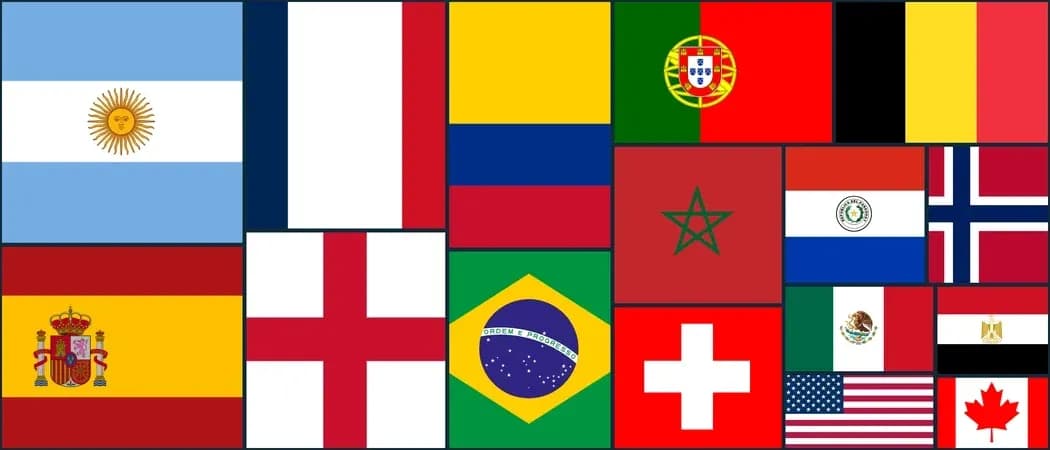
Five nations stand as the remaining outsiders from beyond the traditional heartlands of World Cup glory: Canada, Egypt, Mexico, Morocco and the United States. Between them, their combined chance of lifting the trophy is only about 3.5%. They are the disruptors, not the favourites.
At the top end, Argentina are still the team to beat, even if Cape Verde took a small bite out of their aura. They survived extra time, but their probability of winning the tournament has dipped slightly to 28%. Part of that is down to France. Germany’s shock exit has cleared a potential obstacle from Les Bleus’ path, and the numbers have reacted.
France now sit at around a 14% chance of winning the World Cup. Spain, efficient and ruthless in their dismissal of Austria, are at 16%. Both cruised through their last-16 ties – France did the same to Sweden – and every step forward sharpens their focus on the trophy.
England, Mexico City and the thin air
England’s prospects have ticked upwards as well, now at about 12%. That figure reflects the shrinking field more than any sudden leap in performance. The road ahead remains steep: Brazil and Argentina still loom as potential obstacles if England can first deal with Mexico in Mexico City.
On paper, England are clear favourites. Even after accounting for home advantage, the expected goals model gives Mexico 0.6 and England 1.6 – a full goal’s worth of superiority. That translates into a 62% chance of England winning in normal time, 13% for Mexico, and a 25% chance of a draw and penalties.
Yet this is not just any away game. It is Mexico City. It is altitude. And that has become the talking point.
There is no shortage of speculation about how playing at over 2,000 metres affects visiting teams, but there is also data – thousands of international matches played at varying heights. When the numbers are grouped in 500-metre bands, something striking emerges: the raw home-win rate does not surge with altitude.
At sea level, where about a third of all international matches are played (within 250 metres either side), home teams win roughly 55% of the time. Between 250 and 750 metres, a band that covers about 6% of matches, the pattern holds. In the 2000–2250 metre range – where Mexico City sits – there have only been 265 matches historically, and the home win rate is around 52%. Lower than at sea level.
That headline figure, though, ignores who is playing. Team strength matters, and that is where the Economic Observatory Elo ratings come in. They correlate closely with FIFA’s rankings and perform strongly in predicting results. They also provide a baseline: a value of 1 if a home win is virtually certain, 0 if an away win is.
By categorising actual outcomes as 1 for a home win and 0 otherwise, then subtracting the Elo prediction and averaging, you get a measure of how much home teams over- or under-perform expectations at different altitudes.
The teams who live and breathe in the thin air are not traditional superpowers: Bolivia above 3000 metres; Ecuador, Ethiopia and Mexico above 2000. When the Elo-adjusted numbers are plotted, the picture changes. Below roughly 1750 metres, home sides win about as often as expected. Above that threshold, they start to outperform the model.
The advantage is there, but it is modest. Even at the highest altitudes, the over-performance gap – around 20 percentage points – still sits within the margin of error. The numbers whisper, rather than shout.
So what does that mean for England in Mexico City? It does not point to a huge, decisive edge for the hosts. It also does not dismiss the possibility that Mexico might gain something from the conditions, particularly against a side with little time to acclimatise.
If you build in a plausible altitude effect – trimming England’s expected goals by 0.25 and boosting Mexico’s by the same amount – the picture tightens. England’s win probability drops to 48%, Mexico’s rises to 24%, with the rest accounted for by the draw and penalties. The better team, by both past results and market valuation measures such as Transfermarkt, remains England. Altitude drags the gap closer. It does not flip the contest into a coin toss.
The rest of the bracket: favourites with frailties
Beyond Mexico City, the model has a clear view of how the last 16 should unfold.
Argentina are 77% likely to go through against Egypt. England are given a 74% chance of beating Mexico. Morocco are 70% favourites against Canada. Spain have a 72% edge over Portugal in a heavyweight Iberian clash.
On the other side of the draw, Colombia are 70% likely to progress against Switzerland, Brazil 69% against Norway, Belgium 64% against the United States. France, despite their growing title probability, are rated just 62% to get past Paraguay.
That last figure jars. Free-scoring France, only a 62% favourite? The explanation lies in Paraguay’s defensive resolve. As flagged in the Group D preview, this is a side built on resistance, and they have backed that up in every game since their opener against the United States.
The expected goals for that tie underline the challenge: France at 1.1, Paraguay at 0.6. A narrow margin. For all of France’s attacking talent, this shapes up as their sternest test so far, not a procession.
So the last 16 arrives with a familiar cast, a few stubborn outsiders, and several giants who have already felt the ground move beneath them. Germany have paid the price for assuming the numbers would carry them. England now head for Mexico City, into the heat and the height, knowing the data is on their side – but not decisively.
In a tournament already punctured by upsets, how many more times will probability have to apologise?