World Cup Chaos: Storms, History, and Emotions
The World Cup rolled into another chaotic day in North America, a tournament that can’t sit still for a second. On the pitch, Egypt rewrote their history books. Off it, storms threatened to rip up the schedule, flags were stopped at the gates and personal lives collided with football’s biggest stage.
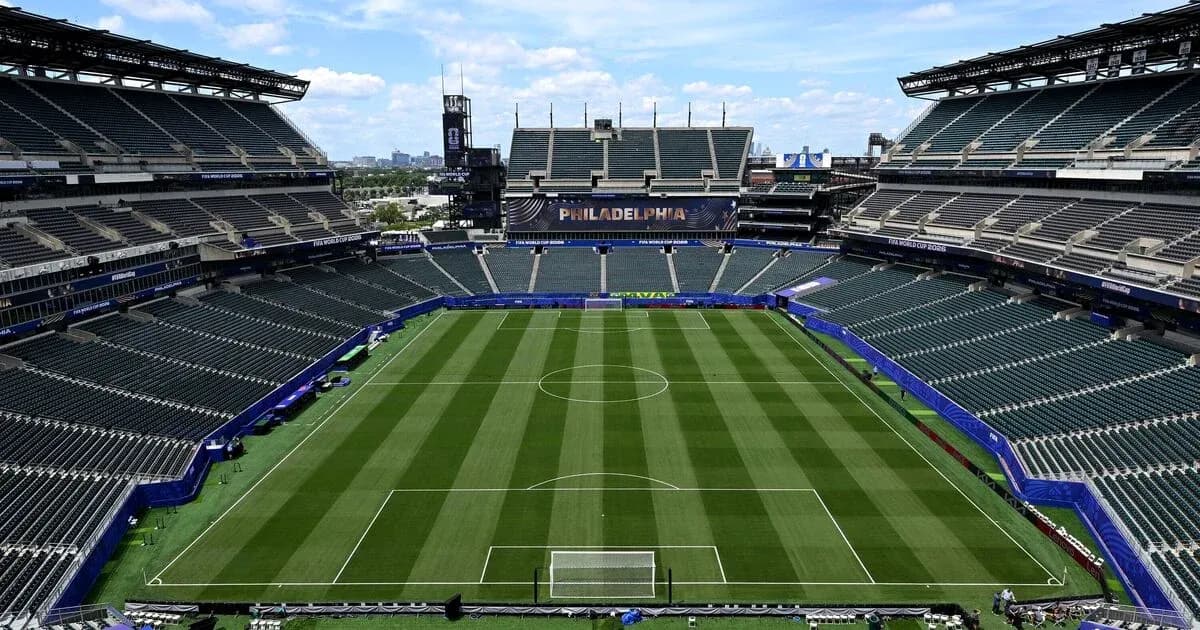
France braced for “apocalyptic” night in Philadelphia
France’s group clash with Iraq in Philadelphia, scheduled for a 10pm kick-off, is staring down the barrel of extreme weather. Local forecasts predict a barrage of thunderstorms sweeping across the city, with damaging winds, intense lightning and even a risk of isolated tornadoes.
Under FIFA protocol, any lightning strike within eight miles of the stadium forces an immediate halt. Fans are moved from the stands into the concourses or emergency shelters, and the clock starts: 30 minutes must pass without another strike before anyone can return.
“They'll start to evacuate the stadium to the main concourse and seek emergency shelter,” explained Lauren Lambrugo, chief operating officer of Philadelphia Soccer 2026. “And then it has to wait 30 minutes prior to them bringing everybody back on the field.”
French outlet RMC Sport has already warned that the match is “threatened by interruption.” If the storm sits over the city, this could be one of those World Cup nights remembered as much for the chaos in the sky as the football below it.
Egypt finally arrive on the world stage
In Vancouver, the story was much simpler. It was about joy.
Egypt, a giant of African football but a ghost at World Cup finals, finally claimed their first ever win at the tournament with a 3-1 comeback victory over New Zealand.
It didn’t start that way. Finn Surman stunned the Pharaohs, losing his marker and thundering home a textbook header from a corner. New Zealand led 1-0 at the break and had history in their own hands, chasing their own first win at a World Cup.
Then Egypt woke up.
From the restart, it was one-way traffic. Pressure built, chances came, and as the hour approached, Ziko dragged his country level, finishing off a spell of sustained dominance. The goal changed everything. New Zealand, so composed in the first half, suddenly looked stretched and rattled.
The inevitable followed. Mohamed Salah, the face of Egyptian football for a decade, finally had his World Cup moment. A sharp one-two, a low finish, and Egypt were in front, driving hard towards that long-awaited victory. Trezeguet then stepped up to make it three, capping a rampant second half that New Zealand simply could not live with.
The final whistle brought “joyous scenes” – Egypt at last on the board, New Zealand still waiting for a first win after nine World Cup games.
Later, footage emerged from Vancouver of Salah celebrating in the streets, singing and dancing among fans. For a country that has known more heartbreak than glory at this tournament, it felt like a release.
Cape Verde keep swinging in Miami
Miami delivered another twist. Uruguay 2-2 Cape Verde, and another statement from the tournament’s surprise package.
Cape Verde, already turning heads with a fearless debut campaign, went ahead in style. Kevin Pina stepped up from around 30 yards and unleashed a laser of a free-kick, a thunderbolt that flew past the keeper and ripped open a contest Uruguay thought they would control.
Stung, Uruguay hit back with a quickfire double. Ronald Araujo levelled, reacting quickest after a header came back off the post, and then turned provider. His knockdown across the six-yard box found Canobbio, who calmly tucked home to send the South American fans wild.
Cape Verde could have folded. They didn’t. Instead, they waited for their moment – and Uruguay handed it to them. Substitute Helio Varela pounced on a defensive calamity, with Fernando Muslera stranded in no man’s land, and rolled the ball into an empty net just three minutes after coming on.
Uruguay, two points from two games, now face Spain needing a performance. Cape Verde, with another point in the bag, know that a win over Saudi Arabia would send them into the knockouts. For Marcelo Bielsa, already dealing with a fractured dressing room and now robbed of Giorgian de Arrascaeta and Ronald Araujo through injury for at least the rest of the group stage, the inquest has already begun.
Spain reset, Yamal rises
In Atlanta, Spain looked like Spain again.
After a flat 0-0 against Cape Verde, the European champions tore into Saudi Arabia and were 3-0 up before the first drinks break, eventually cruising to a 4-0 win.
Lamine Yamal, restored to the starting XI, transformed their attack. It took him minutes to make his mark. Mikel Oyarzabal fizzed a ball across the area and the Barcelona prodigy arrived to tap home his first World Cup goal. Spain suddenly had zip, angles, menace.
Oyarzabal, poor in the opener, flipped the script. He turned scorer and tormentor, striking twice before the break to bury any lingering tension from that opening stalemate. After half-time, Marc Cucurella’s effort was turned into his own net by Hassan Al Tambakti, adding an eighth own goal to these finals and underlining Saudi Arabia’s misery.
Spain thought they had a fifth late on, only for VAR to rule Ferran Torres offside. It hardly mattered. As Yamal later put it, scoring at a World Cup was something he had once watched from a classroom. Now he was living it.
Belgium and Iran crawl to stalemate
Across in Los Angeles, the tone was very different. Belgium 0-0 Iran, and the critics did not hold back.
Mehdi Taremi thought he had given Iran the lead, only for VAR to chalk it off for offside. That flash of drama aside, the first half drifted. The second half threatened to ignite – a wild goalmouth scramble for Belgium, three shots blocked inside the six-yard box – but never quite did.
Then came the turning point that never really turned anything. Nathan Ngoy dragged down Taremi just over halfway, with no covering defender in sight. The referee showed red, VAR confirmed, and Belgium were down to ten.
Even then, neither side found the quality to win it. Maxim De Cuyper squandered Belgium’s best chance, firing straight at Alireza Beiranvand. When it was over, both teams were left with two points from two games and a mountain of work to do in Group G.
Roy Keane, watching on ITV, didn’t sugar-coat it. He called the quality “rubbish” – passing, movement, decision-making, all of it.
Anthem boos and a divided Iran
Off the pitch, Iran’s World Cup continues to be played under a political storm of its own.
For a second straight game, sections of supporters booed the national anthem. Outside stadiums, Iranian fans have used the tournament as a platform for protest, demanding the fall of the Islamic Republic and insisting that the national team “does not represent” them.
Alireza Jahanbakhsh, speaking after the latest match, tried to pull the threads together. He stressed that the players perform “for all the Iranians in Iran, outside Iran, with whatever ideology, whatever preferences they have,” and that the best answer they can give is on the pitch, playing with heart and trying to make people happy. The message from the stands, though, remains raw and unrelenting.
England’s tightrope: injuries, curfews and a banned flag
England’s build-up to their second group game against Ghana in Boston has been far from serene.
Thomas Tuchel is juggling injuries and discipline in equal measure. Declan Rice is a doubt after hobbling off against Croatia. Bukayo Saka, managing an Achilles issue that dogged Arsenal’s title run-in, followed an individual programme on Saturday but came through full training on Sunday, handing Tuchel a major boost.
The England manager had hinted he might hold Saka back until the final group game with Panama. Now, with progression and top spot on the line, that decision looks more complicated.
Tuchel has also imposed a strict curfew on his squad. Defender Dan Burn revealed that players even had to cut short a concert appearance from country artist Ella Langley to make it back in time. Burn, fully kitted out in cowboy hat and boots, joked about the lack of photographic evidence, but the message was clear: this is a tightly controlled camp.
Even the fans have felt the clampdown. An England flag featuring a submarine was barred from the opener against Croatia, falling foul of FIFA’s ban on military imagery. Barrow FC, the club associated with the submarine motif, responded by posting a tongue-in-cheek image with the submarine blurred out, but the line has been drawn. Flags, yes. Symbols of conflict, no.
Doku at the centre of a World Cup storm
Jeremy Doku has found himself at the heart of one of the tournament’s most emotive debates.
The Manchester City winger missed Belgium’s draw with Iran due to a chest infection, according to Belgian outlet RTBF. Yet his situation was already under the microscope after he made clear he wanted to leave the camp for the birth of his first child, due in the second week of July.
“It’s my first child, so I would definitely want to be there,” he said. “If you ask me what I want, my answer is that nobody wants to miss the birth of their first child. But I also know that football involves many other considerations. I know the federation supports its players and understands their situations. We’ll see what we can do.”
French TV presenter France Pierron sparked outrage by attacking that stance, calling childbirth a “disgusting moment” where the father is “useless” and arguing that leaving a World Cup is walking away from a once-in-a-lifetime privilege. She has since apologised and been suspended, but the debate hasn’t cooled.
Inside the game, there is sympathy. England striker Ollie Watkins, a father of two, backed Doku’s position, calling the birth of a first child “a blessing” and insisting “you don't get that opportunity again.” He added that players spend long stretches away from family during the season, and that missing such a moment would be “tough.” His verdict on Doku’s choice was blunt: “I don't think it's anyone else's business.”
Brazil wary, Scotland ready
In Group C, Brazil go into their meeting with Scotland knowing a draw will be enough to reach the last 32 – and that a draw might suit both sides. Lucas Paqueta wanted no part of that narrative.
“All the teams at the World Cup deserve respect,” he said, stressing that Brazil have “great respect” for Scotland but will still play to win. Preparation, he insisted, remains the same regardless of opponent: study them, follow the coach’s plan, and aim for three points every time.
Brazil can afford to think about permutations. Scotland cannot. The tone of that match will tell its own story.
A tournament that won’t sit still
From Curacao’s goalkeeper Eloy Room becoming a national hero in a 0-0 draw with Ecuador, to England fans in cowboy hats racing curfews, to ITV pundit Andros Townsend baffling supporters by posting a plate of what appeared to be raw beef, this World Cup keeps throwing up the surreal alongside the serious.
Spain are purring again. Egypt have finally tasted victory. Cape Verde refuse to bow to reputation. Belgium and Iran are stuck in neutral. Uruguay are wobbling. France might be forced to wait out the weather.
Thunderstorms above Philadelphia, protests outside stadiums, and personal milestones colliding with professional dreams – the question now is not whether this World Cup will produce drama.
It’s who will still be standing when the skies finally clear.