World-Class Goalkeepers to Watch in 2026
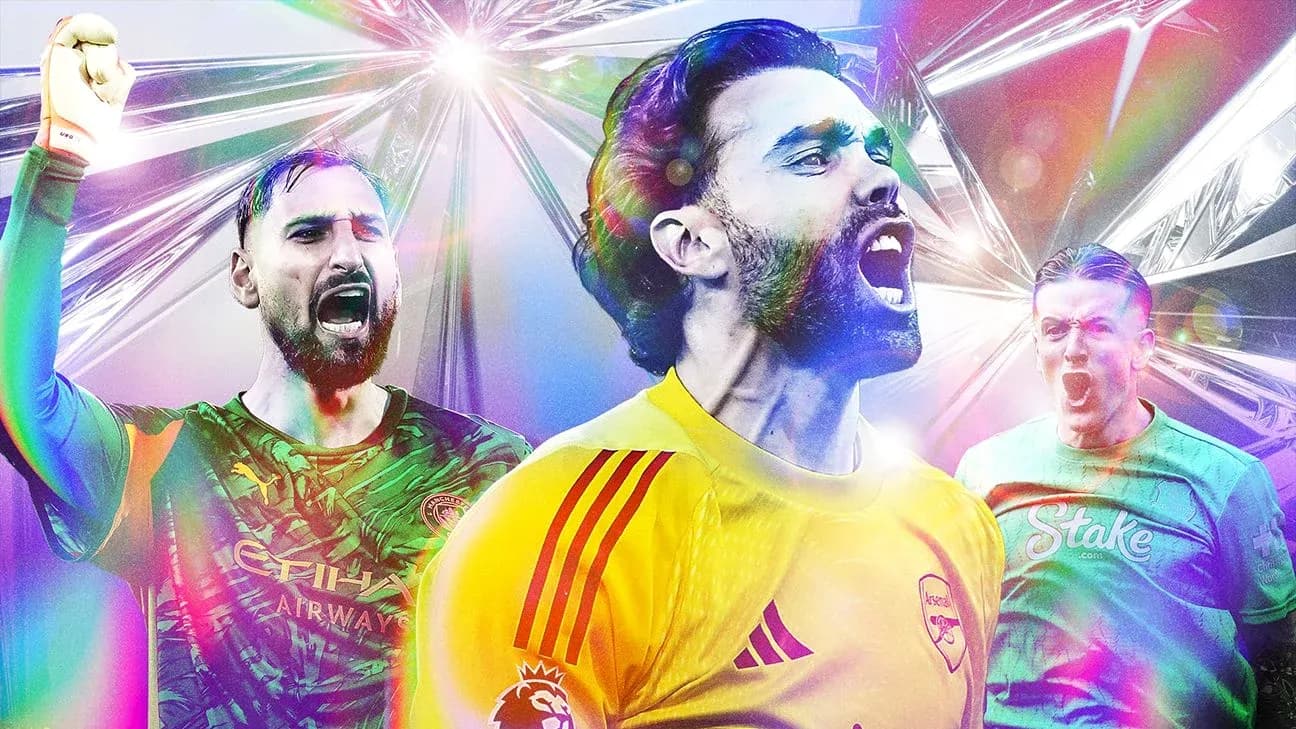
What makes a world-class goalkeeper in 2026? Shot stopping still sits at the top of the job description, but it’s no longer enough. The modern No. 1 has to sprint, pass, anticipate and command, all while making the impossible look routine and the routine look beneath them. The best of them bend matches to their will from 60 yards away.
These 10 have done exactly that over the past year, forcing their way into the FC 100 and, in some cases, redefining what a goalkeeper can be.
10. Matvey Safonov (Paris Saint-Germain/Russia, 27)
Four saves from five penalties to win a trophy. That’s not a highlight; that’s a calling card. Safonov’s shootout masterclass against Flamengo delivered PSG the Intercontinental Cup and announced a new era in goal in Paris.
He arrived in the shadow of Gianluigi Donnarumma’s departure and then found himself behind Lucas Chevalier, a €50 million signing and the darling of Ligue 1. Safonov started the 2025-26 season on the bench, expected by many to stay there.
He didn’t. He convinced Luis Enrique on the training ground, took the shirt and never looked back. Eight shutouts in 15 league games — a 53.3% clean-sheet rate, the best in Ligue 1 among regular starters — underpinned PSG’s title defence in Europe. Liverpool, Bayern Munich, Chelsea: in each knockout tie he did exactly what was required, no more, no less. No big errors. No drama. Just cold reliability in the most pressurised moments.
He is not the most spectacular shot stopper in this list, nor the most gifted with the ball. But he grew into the role of PSG’s No. 1 and delivered in a season when failure would have been unforgivable.
Now comes the brutal side of elite sport. PSG are already sounding out other goalkeepers to push him, maybe even to replace him. Safonov’s status is under threat again. That might be exactly what he needs to prove everyone wrong one more time.
9. Jordan Pickford (Everton/England, 32)
“Dynamite.” That’s how Everton fans sing about him, and it fits. Pickford is as explosive in personality as he is in his saves, and he remains first choice for both club and country.
He played every Premier League game for David Moyes last season, dragging Everton towards the fringes of European qualification with a string of spectacular stops. The campaign tailed off; his level didn’t. Eleven clean sheets left him tied for third in the league, behind only David Raya and Donnarumma.
Then came another summer in an England shirt. He started all but one World Cup game, rode out the criticism that always seems to follow him and produced a standout performance in the 3-2 win over Mexico at the Azteca, a night that tested both his temperament and his talent.
Pickford has nailed his colours to the mast at Goodison, signing a deal that runs to at least 2029. The targets are clear: drag Everton back into Europe, fuel a deep cup run and keep hold of that England No. 1 jersey with another generation snapping at his heels.
8. Diogo Costa (FC Porto/Portugal, 26)
Efficient. Intelligent. Ice-cool. Diogo Costa has been ready for a bigger stage for a while; he just keeps making it harder for Porto to let him go.
He slipped into the first team when Agustín Marchesín was injured in 2021 and never gave the job back. Since then, his rise has been steady rather than spectacular, but the numbers from 2025-26 demand attention: more than 20 league shutouts and a save percentage nudging 80% as Porto claimed yet another Primeira Liga title. He allowed just 0.46 goals per 90 minutes.
Costa is one of the sharpest “sweeper keepers” around. He steps high, reads danger early and, crucially, turns defence into attack with a single pass or throw. Break the press? He does it from his own box, threading the ball into midfield or wide areas with a calmness that recalls Manuel Neuer at his peak.
His shot-stopping numbers over his career sit around 70%, a reminder there’s still room to grow. But the trend is all upward. At 26, turning 27 next month, he’s still years away from what should be his prime.
Chelsea and Manchester United have both circled, but Porto want a big fee and no one has tested their resolve yet. Until that changes, Costa prepares for another season of Champions League football, knowing Europe’s biggest clubs are watching every move.
7. Alisson (Liverpool/Brazil, 33)
This was not the most dominant season of Alisson’s Liverpool career. It didn’t need to be to prove his status.
Muscle injuries disrupted his rhythm, kept him out for stretches and inevitably knocked him down this ranking. But when he played, the old authority returned quickly. At 33, he remains one of the finest one-on-one goalkeepers in the game, a giant presence whose positioning and timing close angles before forwards even realise they’re gone.
Brazil know it. He kept the No. 1 shirt at the World Cup and added two more clean sheets to his tournament tally, taking him to seven — the third-most by a Brazilian keeper in the past six decades. That’s the company he now keeps.
Juventus sniffed around, sensing a possible change of era at Anfield. Liverpool shut that down. They want him for the final year of his contract, at least. If this is the last dance on Merseyside, Alisson will be desperate to leave with one more major trophy and his legacy as a club great beyond dispute.
6. Emiliano Martínez (Aston Villa/Argentina, 33)
Some goalkeepers keep you calm. Martínez does the opposite. He drags every match into his own theatre.
Aston Villa’s 2025-26 season had his fingerprints all over it. Fourth in the Premier League. Champions League football secured. Europa League trophy in the cabinet after a 3-0 win over Freiburg in the final — a game he played with a broken finger picked up in the warmup and still kept a clean sheet.
That’s Martínez in a nutshell. He produced outrageous saves, mixed in some wild errors and even played a pass in the buildup to a goal against Lille so outrageous that his teammates celebrated with him rather than with the scorer, John McGinn. The X factor is real, and it’s disruptive in the best and worst ways.
He took that same energy, and that fractured digit, into the World Cup. Argentina reached the final, and Martínez delivered one of the great goalkeeping performances of the tournament’s history: 11 saves in the showpiece, the most in a final in 60 years, and 10 of them to keep Spain out for as long as he could. On a night that was supposed to belong to Lionel Messi, the goalkeeper stole a chunk of the spotlight.
Juventus’ interest has cooled, so the next act is likely to be in claret and blue, on the Champions League stage. With Martínez, you never quite know what’s coming — only that you won’t be able to look away.
5. Joan García (Barcelona/Spain, 25)
Crossing the city from Espanyol to Barcelona for €25 million was bold. Making Barça instantly better at the back was something else.
García walked into the champions’ dressing room and, within months, turned Hansi Flick’s side into a far more secure defensive unit. The numbers are staggering: just 21 goals conceded in 30 league games, the fewest allowed by any goalkeeper with 30-plus matches across Europe’s big five leagues in 2025-26. Fifteen clean sheets. A league-leading goals-prevented figure of 10.72, with only Getafe’s David Soria even close.
Barça’s high line leaves him exposed, often one-on-one or facing shots others rarely see. He thrives on it. Twice against Rayo Vallecano he bailed his team out. Away at Espanyol, he produced a save from Pere Milla that won LaLiga’s Save of the Season and silenced his former home.
The contrast was brutal. In the eight league games Wojciech Szczęsny played, Barça conceded 15 times. With García, they looked like champions.
His rise has already pushed Marc-André ter Stegen out on loan to Ajax. The next target is the Champions League, where he has been solid but not yet spectacular. Then comes the national team. Unai Simón still holds the Spain gloves after winning the World Cup, but with García’s trajectory, that battle is only just beginning.
4. Unai Simón (Athletic Club/Spain, 29)
Domestically, Unai Simón was ordinary last season. Internationally, he was historic.
Athletic Club’s campaign drifted to a 12th-place finish, and Simón’s form in LaLiga was, at best, steady. But his summer changed everything. For Spain, he conceded just one goal in eight World Cup matches, breaking Walter Zenga’s long-standing record for consecutive minutes without conceding at the tournament — 649 in total — and walked away with the Golden Glove.
Spain’s possession-heavy style and defensive structure protected him, but when the dam threatened to break, he stood firm. The semifinal against France underlined it: three late saves under enormous pressure, each one a step closer to the trophy.
Luis de la Fuente had been criticised for sticking with Simón over David Raya and Joan García. The coach backed his leadership and cool head. The World Cup vindicated that faith. Simón now owns both a World Cup and a European Championship medal, a place in Spain’s goalkeeping pantheon secured even if, on pure club form, he might not be the best Spaniard in his position right now.
Next, he has to help drag Athletic back up the table under new coach Edin Terzic, without the distraction of European football after last season’s bruising Champions League experience. Then comes another fight for his Spain shirt as the world champions launch their Nations League campaign against England. De la Fuente has a decision: stick with his man, or usher in a new era?
3. Gianluigi Donnarumma (Manchester City/Italy, 27)
Told he was surplus to requirements at PSG months after lifting the Champions League, Donnarumma could have sulked. Instead, he turned Manchester City into his next proving ground.
He arrived in the Premier League under scrutiny, with doubts about his distribution and composure on the ball. He left those questions unanswered in some respects, but he settled the more important one: could he keep the ball out of the net often enough to be City’s No. 1? Absolutely.
Fifteen clean sheets in 34 league games, a 44% shutout rate — the best of his career and second only to David Raya in England last season — told the story. He beat James Trafford in the internal battle for the starting role and produced the kind of reflex saves that only a 6-foot-5 frame and elite instincts can deliver. City pushed hard for a final title in Pep Guardiola’s era, and Donnarumma was a major reason they got close.
Internationally, frustration lingers. Italy missed a third straight World Cup, leaving one of the game’s premier shot stoppers watching the biggest stage from home again.
With Guardiola gone, Enzo Maresca now decides his fate. Donnarumma’s next challenge is clear: prove he’s not just Guardiola’s short-term solution, but City’s long-term cornerstone in goal.
2. Thibaut Courtois (Real Madrid/Belgium, 34)
Real Madrid’s season fell short of their own standards. Courtois’ didn’t.
He conceded just 28 goals in 32 LaLiga games, with only Joan García boasting a better goals-against average (0.88 to Courtois’ 0.88, with García narrowly ahead on overall record). Thirteen clean sheets left him second in the league in both shutouts and shutout percentage.
In Europe, he raised his level again. An 81.5% save rate in the Champions League, bettered only by David Raya, powered Madrid into the quarterfinals. When the margins tightened, Courtois expanded to fill the goal, as he has so often in his career.
Belgium felt his value the hard way. In the World Cup quarterfinal against eventual champions Spain, he went off injured at 1-1. Replacement Senne Lammens made a costly mistake, and Belgium went out. It was impossible not to wonder how the night would have played out with Courtois still between the posts.
Now comes a new era at Madrid under José Mourinho, a coach whose obsession with defensive structure and discipline should be music to Courtois’ ears. The club have invested heavily at the back to wrest LaLiga back from Barcelona. With Belgium, he wants a breather, openly admitting he’d like to skip the Nations League and stay in Madrid if the federation agrees.
One of the defining keepers of his generation finally has a coach whose priorities mirror his own. The excuses, for club at least, are running out.
1. David Raya (Arsenal/Spain, 30)
Three years ago, people argued about whether David Raya was even an upgrade on Aaron Ramsdale. Now he stands at the top of the goalkeeping world.
Arsenal’s Premier League title in 2025-26 was built on a defence that simply refused to yield, and Raya was its anchor. Nineteen clean sheets in the league, four more than any rival, and 48 shutouts across the past three Premier League seasons — 12 more than any other goalkeeper — underline his dominance. He collected a third straight Golden Glove and was arguably the most important figure in a back line that kept 32 clean sheets in all competitions.
Arsenal reached the Champions League final as well, finishing runners-up, and again it was Raya who repeatedly held the line when games threatened to tilt away from Mikel Arteta’s side. He is perfectly tuned to the physical, aerial and mental demands of English football: aggressive in his box, brave with his starting position, and calm under pressure with the ball at his feet.
Yet, for all that, he watched Spain’s World Cup triumph from the bench. Luis de la Fuente stuck with Unai Simón, and Raya never played a minute.
That snub gives the coming season an extra edge. Arsenal may loosen the handbrake and attack more, or they may double down on the defensive solidity that delivered the title. Either way, their ambitions — to defend the Premier League crown and finally lift the Champions League — rest heavily on the shoulders of a goalkeeper who can now make a genuine claim: right now, he might be the best in the world.