Waldemar Anton: Borussia Dortmund's Defensive Leader
The boos started early. They always do when Waldemar Anton comes back to Stuttgart. Every touch, every header, every simple five-yard pass for Borussia Dortmund is met with a wall of noise from the stands that once cheered him.
On Saturday night, he didn’t flinch. He rarely does anymore.
In Dortmund’s 1-0 win over VfB Stuttgart, the 30-year-old centre-back once again stood right in the middle of the storm and simply went about dismantling it. The drama swirled around others.
This time, it was Serhou Guirassy who drew the ire.
The striker, substituted in the 74th minute, took his time leaving the pitch. Too much time. Under the new rules, his slow walk forced Fabio Silva to wait 60 seconds before coming on. Dortmund briefly played with ten men, and Niko Kovac was visibly furious with Guirassy’s lack of urgency.
Anton, who once joked that he and Guirassy shout at each other “in every game”, had another moment to let his old friend know exactly what he thought. Their relationship is strong enough to handle it. As Anton put it recently, they have known each other “so long that we can tell each other what we think on the pitch too, even if it might sometimes be a bit over the top.”
The shouting is noise. His defending is not.
Kovac’s Defensive Cornerstone
Since Kovac walked into Dortmund, he has demanded defensive steel. He has it now. In abundance.
Last season, BVB already owned the best defence in the league, conceding just 34 goals. Four matchdays into the new campaign, they have started as if determined to repeat the feat: three clean sheets, only two goals conceded, joint-best in the division alongside Bayern Munich.
Anton sits at the heart of that transformation.
His first year in Dortmund was anything but smooth. Two muscle fibre tears, suffered in quick succession, forced him into the longest spell on the sidelines of his career. Rhythm gone, momentum stalled, questions asked.
He has answered all of them.
Months ago, Kovac called him a “total constant” at BVB. The coach has barely stopped praising him since. Before the Champions League opener against Villarreal, Kovac laid it out plainly: Anton is “a leader. Someone who leads the way. He thinks, eats, sleeps, drinks football 24/7. Someone who supports his team-mates, never gives up and gives everything for the team – a role model.”
Anton shrugs off labels like “defensive leader”. His coach does not. Nor does the data.
Last season, the “Ironman”, as Kovac dubbed him, missed just three of 47 competitive matches. In league and cup, he played all 35 games in full. No rotation, no managed minutes, no easing off. Just relentless availability.
Always There, Always Relentless
Even a World Cup summer with Germany could not slow him down. He had less preparation time than almost anyone else in the Dortmund squad before this season kicked off. It barely registered in his performances.
The 15-cap international has simply carried his form over. Same intensity. Same clarity. Same refusal to switch off.
His value goes far beyond just being fit. Anton leads by example, not volume. Discipline, mentality, resilience – the staples of his game. He doesn’t decorate his defending, he strips it down. No fuss, no drama, just a series of duels won, spaces closed, crosses cleared.
His anticipation now stands out as an elite trait. He steps in front of attackers, reads passing lanes early, and defends on the front foot with a sharpness Dortmund have not consistently seen since Mats Hummels in his prime.
The numbers back up the eye test. Anton ranks among the league’s best in duel success, aerial wins, interceptions and clearances. He has become one of the defining faces of Dortmund’s resurgence under Kovac and, on current form, there is no German centre-back playing better.
The National Team Question
That form inevitably drags the conversation towards the DFB.
Jürgen Klopp wants to rebuild Germany on a solid defensive base. He needs reliability, organisation, experience – and someone who can guide younger defenders through the chaos of international football.
Anton ticks all those boxes. He reads the game well, he communicates constantly, and he brings the physical and mental sharpness of a player who rarely misses a minute. For Klopp’s vision of a new Germany, he looks almost tailor-made.
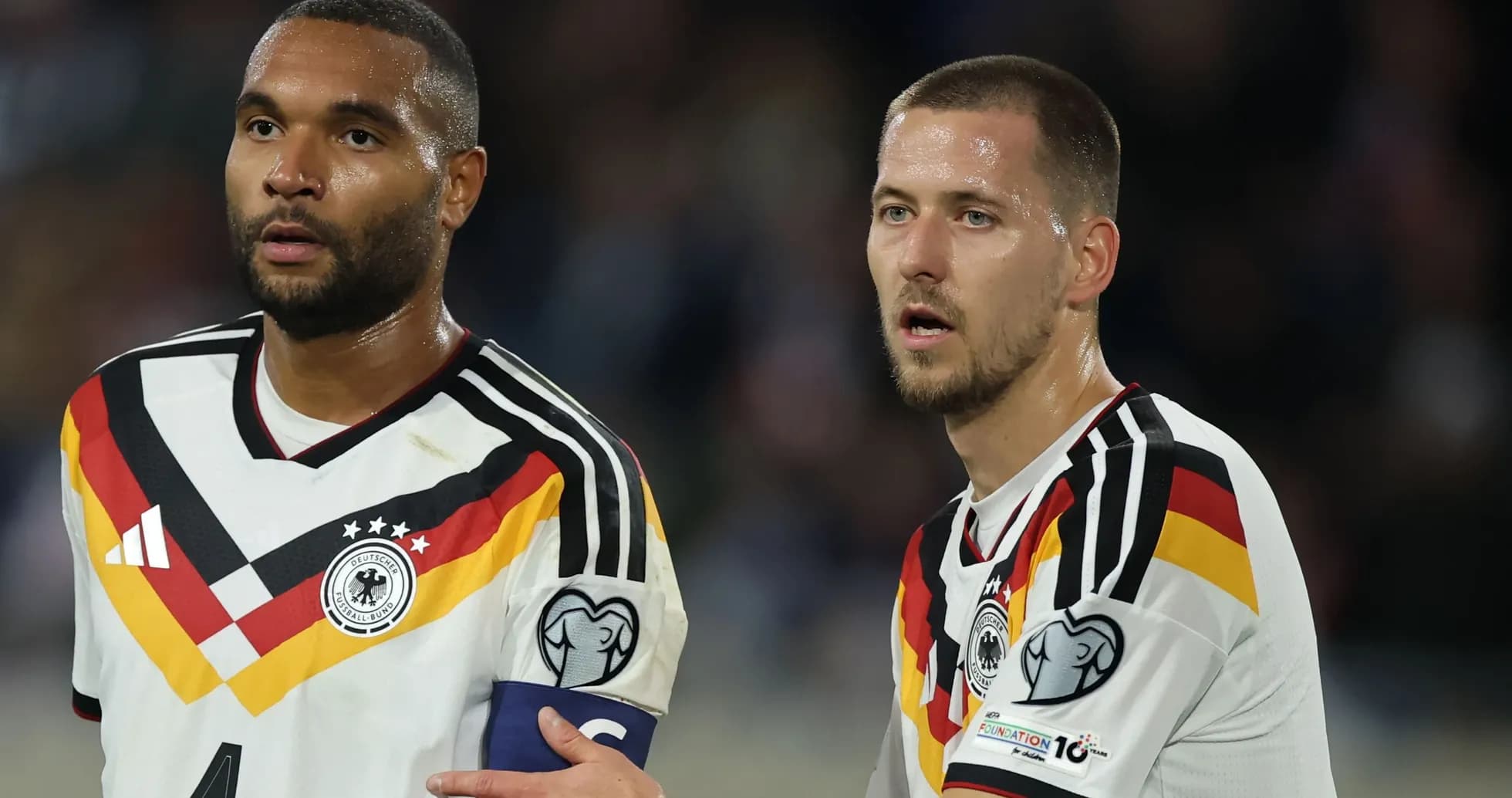
There is competition, of course. Long term, Nico Schlotterbeck’s left foot and his excellent diagonal balls in the build-up could give him an edge in certain systems. Bayern Munich’s Jonathan Tah remains the undisputed number one at centre-back for now.
But the idea of a defensive core built around Tah and Anton grows harder to ignore with every Dortmund clean sheet.
Anton will not sell that idea himself. Self-promotion is not in his nature. Kovac has described him as “very calm, very modest, very humble. Putting his own ego to one side and the team to the fore – simply outstanding.”
At Dortmund, top of the table and miserly at the back, Anton no longer has to fight for status. He has it. He owns it.
The real battle now lies elsewhere – in Klopp’s plans for the national team and in the question that hangs over Germany’s back line: can anyone really afford to leave out the country’s form centre-back?