VAR's Speed Over Accuracy in Manchester Derby Controversy
“Quick, quick, quick, quick! Go, go, go, go, go!”
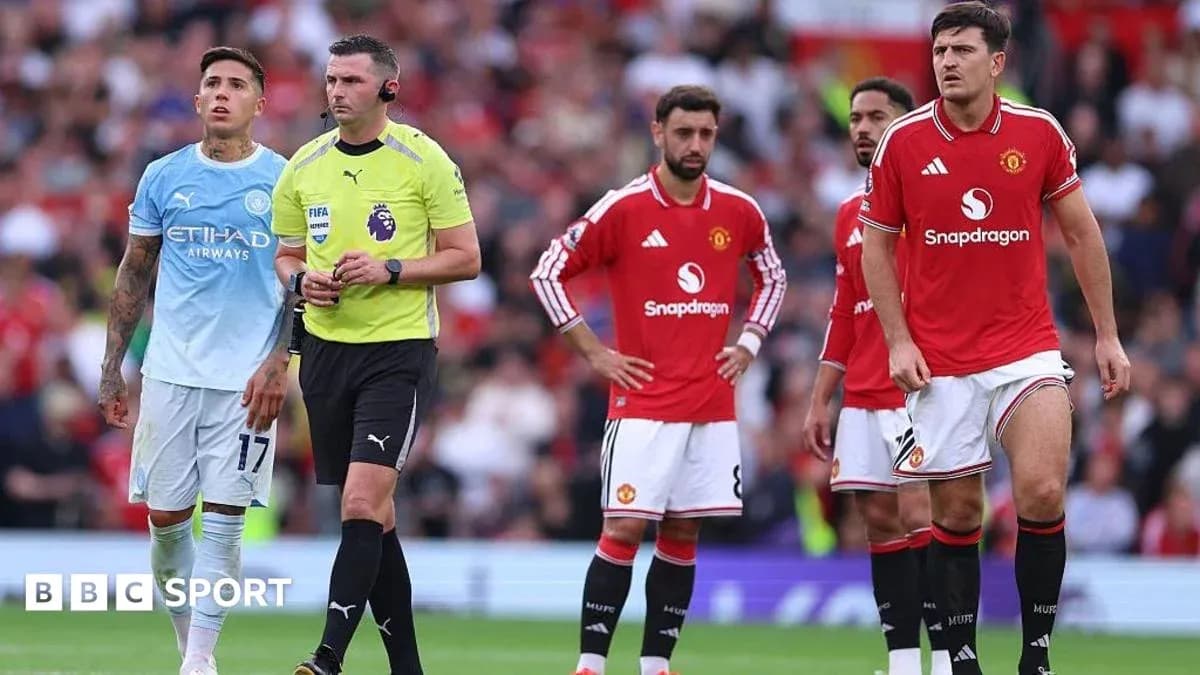
Matt Donohue’s voice crackled through the VAR hub at Stockley Park, urgency rising with every word as he raced through the check on Erling Haaland’s late winner in the Manchester derby.
Seconds later, the goal stood. Manchester City 1-0 Manchester United. Derby decided. Title race nudged. And one of the most glaring VAR failures the Premier League has seen was sealed.
Speed over sight
Donohue was clearly trying to be efficient. The Premier League has hammered home its desire this season: fewer delays, slicker checks, quicker decisions. VAR, but faster.
This time, speed blew the system apart.
In the scramble to confirm the goal, Donohue and assistant VAR Blake Antrobus somehow missed the obvious: Enzo Fernandez, three yards offside when the cross came in, attacking the ball before Haaland scored. It was the kind of offside that should be spotted at park level, let alone in one of the most-watched games on the planet with semi-automated technology at hand.
Instead, the goal was given. No offside, no intervention, no rescue from the replay angles that sat unused for too long.
The pressure around VAR has always been intense. Every delay is booed, every line drawn on a screen dissected, every pause in play used as a stick to beat officials. The Premier League leaned into that noise, making “more efficient application of VAR to reduce delays” one of its stated football principles this season.
On Sunday, that principle collided with reality.
“Let’s go, let’s go, let’s go”
The audio from the review tells its own story. This wasn’t a calm, methodical examination of a match-defining moment. It sounded frantic.
“Let’s go, let’s go, let’s go, let’s go!”
The VAR room, where everything is supposed to slow down and be stripped of chaos, mirrored the tension of the stadium instead of cutting through it. Rushed checks replaced cold analysis. The need for speed overran the need for accuracy.
Officials hear it constantly – from fans, pundits, managers, phone-ins, surveys – VAR must be quicker. The Premier League’s own stakeholders’ survey, canvassing managers, coaches and supporters, highlighted one main demand: faster decisions.
That pressure is real. But it cannot excuse what unfolded.
City head coach Enzo Maresca, speaking on Wednesday, was measured despite being the direct beneficiary.
“To make a decision in 10, 20 seconds is not easy for them,” he said. “Sometimes they make mistakes. I make mistakes, players make mistakes. It’s part of our job.”
The job, though, is supposed to be protected by process. And the process broke.
The moment it went wrong
On paper, the numbers look good for the league. VAR delays – including the time taken for the referee to announce the outcome to the crowd – are down from an average of 46 seconds per game last season to 36 seconds this campaign.
But the other major VAR error this season, the failure to award Arsenal a penalty at Aston Villa, also came from a review that was cleared too quickly. A pattern is starting to form.
With Haaland’s goal, the critical mistake didn’t come when Donohue began to hurry through the attacking phase. It came earlier.
On the first replay of Josko Gvardiol playing the ball across, Donohue told the replay operator to stop. From there, he jumped straight into the semi-automated offside system.
That step should have waited.
The VAR team should have watched the full sequence: from Gvardiol’s cross, through Fernandez’s movement, to Haaland’s header. That would have shown Fernandez’s offside position and his clear involvement as he tried to play the ball.
They didn’t. The events inside the box were only really considered once they were already deep into the attacking phase review. By that point, the entire focus had narrowed to a single question: did Fernandez touch the ball? If he had, it would have created a new phase and left Haaland offside.
The wider picture – Fernandez starting in an offside position and challenging for the ball – slipped away.
Where was the safety net?
Donohue has taken most of the heat this week, but Antrobus’ role was just as important. Or rather, his lack of it.
The AVAR is there to provide checks and balances, to spot what the lead VAR might have missed, to slow things down if the review is heading off track.
His full contribution to the entire incident? “No, yeah,” on whether Fernandez touched the ball. One second later, Donohue said: “Final decision is goal, check complete.”
That’s not a safety net. That’s a rubber stamp.
Antrobus’ recent history adds another layer. The only long VAR delay this season came in Brentford v Sunderland, when Dan Ballard’s goal was ruled out for a subjective offside against Kevin Danso. That review took more than four minutes. Antrobus was AVAR that day as well and faced heavy criticism in some quarters for the time it took.
Did that experience sit in the back of his mind on Sunday? Did the fear of another four-minute stoppage nudge him away from speaking up? Only he will know.
The irony is stark. In that Brentford game, Antrobus played a key role in helping VAR Tim Wood reach the correct offside call against Danso. This time, in an even bigger moment, the intervention never came.
There was another potential safeguard. A support VAR sits in the operations room next to the main hub at Stockley Park, able to step in on protocol issues and flag concerns. That official saw what was happening. No intervention came from there either.
Even after the goal was awarded, the situation was still recoverable. Between the ball hitting the net and the restart from kick-off, there was a window to spot the error and pull it back. That chance passed too.
The specialist who slipped
Pro Ref has poured time, money and training into VAR. The aim is simple: make it both quicker and more accurate. But when an error of this scale happens in a marquee fixture, no amount of investment hides the failure.
Calls for dedicated VAR specialists have grown louder. Yet Donohue is exactly that by the Premier League’s own definition.
Three seasons ago, Pro Ref invited officials to apply to become video specialists. Candidates went through aptitude tests; about 15 reached the final stages of training, and 10 have since taken charge of VAR duties in Premier League matches.
Donohue is one of them. Sunday was his 65th game as the video official. His development has been strong enough that he now sits on the international list and worked UEFA club competition qualifying ties over the summer.
He has made mistakes – almost all VARs have – but that underlines how demanding the role is. Only two VARs, Nick Hopton and Neil Davies, have a clean record over the last two seasons. Both came through the same accelerated programme.
Turning on-field referees into full-time VAR operators has not been a magic fix either. Lee Mason and Mike Dean, the league’s only dedicated VARs appointed after retiring from on-pitch duties, were both dismissed by Howard Webb within months of his arrival after a string of high-profile errors.
Even leagues that have gone all-in on video specialists are not immune. Spain’s La Liga and its second tier use teams of officials who only work as VARs and never referee on the pitch. The controversies are as fierce there as anywhere else. At the start of last season, VAR in Spain completely missed that a goalscorer was offside when the ball was played.
The job is specialised. It is also unforgiving.
Football’s obsession with haste
Pro Ref will now face hard questions. Why was a VAR rushing so desperately through a review in one of the biggest games of the season? Why did the push for speed override the basic requirement to watch the full phase of play?
Those questions didn’t arise when West Ham’s stoppage-time equaliser against Arsenal was ruled out last season. That check dragged on for more than four minutes. The outcome was unpopular in some corners, but the VAR got to the correct decision.
The contrast is sharp. Take your time and get hammered for delays. Rush it and risk distorting the league table.
The drive to make VAR faster is starting to cut against the very reason it exists. The obsession with shaving seconds off reviews threatens to undermine the entire system and the work that has gone into it.
That feels less like a VAR problem and more like a football problem. The sport has demanded speed. On Sunday, it found out what that really costs.