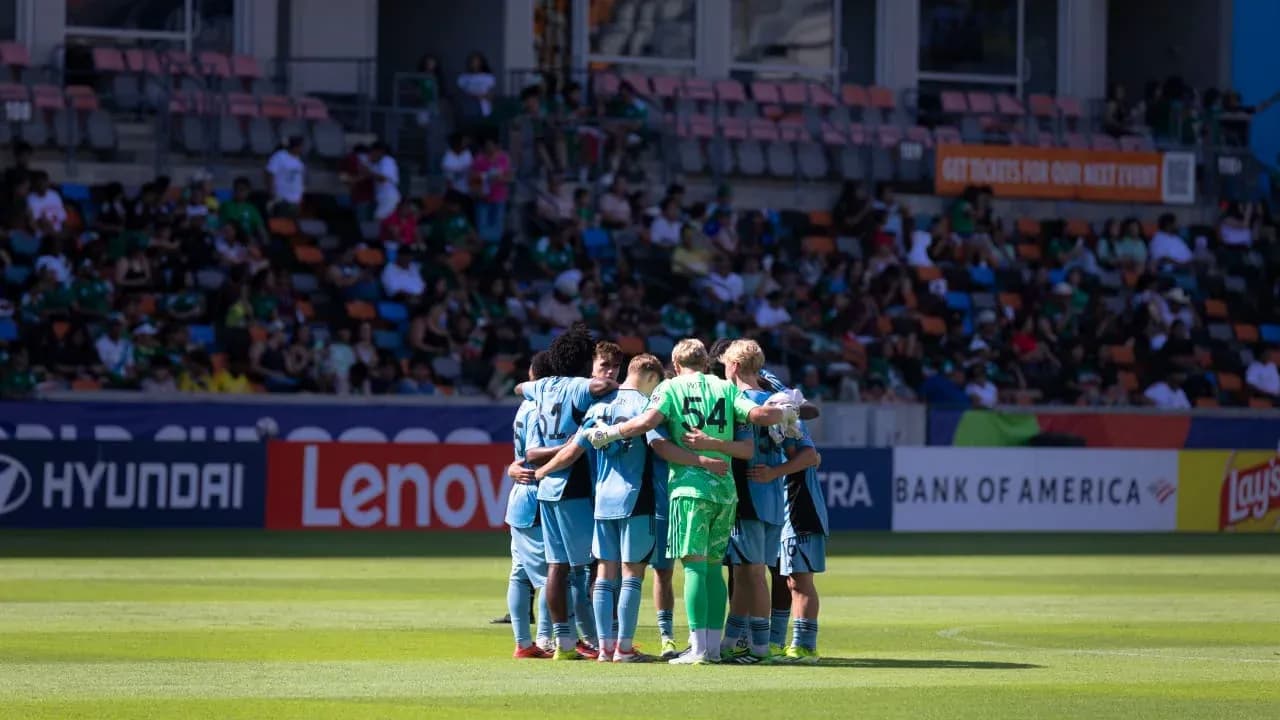
Vancouver Whitecaps II vs Real Monarchs: A Clash of Campaigns
Under the lights at Swangard Stadium, this MLS Next Pro Group Stage clash brought together two sides heading in sharply different directions. Vancouver Whitecaps II, stuck in a season of turbulence, hosted a Real Monarchs outfit riding a far more confident wave. By full time, the scoreline – 3-1 to the visitors after a 1-0 lead at the break – felt like the on‑field expression of the broader campaign trajectories that both clubs have been tracing.
Heading into this game, Vancouver sat 7th in the Pacific Division and 13th in the Eastern Conference table snapshot, with 9 points from 12 matches and a goal difference of -13 overall (16 scored, 29 conceded). Their season had been defined by volatility: 3 wins, 0 draws, 9 defeats, and a form line of “LLLLW” in the standings, underlined by “LLWLLWLWLLLL” in the detailed statistics. Real Monarchs, by contrast, arrived as a more ruthless, if streaky, unit. They were 5th in the Pacific Division and 10th in the Eastern Conference with 18 points from 11 games, boasting 7 wins and a positive overall goal difference of 2 (19 for, 17 against).
The seasonal DNA of both teams framed the contest. Vancouver’s defensive fragility has been glaring: overall they concede 2.5 goals per game, with 1.8 at home and a punishing 3.2 on their travels. At home they still leak 11 goals from 6 fixtures, but they do at least carry some attacking punch with 1.5 goals per game at Swangard. Real Monarchs, meanwhile, play with a more assertive edge. Overall they score 2.0 goals per match, rising to 2.3 away, while conceding 1.5 in total – a defensive record that, though not watertight, is clearly more stable than Vancouver’s.
Rich Fagan’s selection reflected a side still searching for a reliable spine. S. Rogers, J. Peace and Trevor Wright headlined a young Vancouver back line, with P. Amponsah and M. Garnette among those tasked with knitting defence to midfield. In advanced zones, the creativity and direct running of Y. Tsuji, C. Bruletti, S. Deo, C. Rassak and Y. Zuluaga were meant to compensate for the lack of an established, high‑volume scorer in the data. K. Podgorni led the line, but the statistical profile of the squad hints at a collective rather than star‑driven attack: 17 total goals, with no single player emerging as a clear talisman in the league charts.
Trevor Wright is the curious figure in this narrative. Listed as both a top scorer and top assister in the league data despite having no goals or assists recorded, he embodies Vancouver’s transitional identity: a defender by position, a symbolic “ratingPosition” leader in a side without obvious headline attackers. Fagan’s challenge is to turn that symbolic leadership into structural solidity, giving Wright and his fellow defenders a more coherent platform.
On the other side, Mark Lowry’s Real Monarchs presented a more balanced XI. R. Alphin anchored the back, supported by C. Cowell, K. Henry and G. Calderon in a defensive unit that has allowed just 6 away goals in 4 league matches heading into this fixture – an average of 1.5 per away game. The midfield blend of G. Villa, L. Moisa and L. O’Gara, with I. Amparo and V. Parker offering width and incision, provided the visitors with the control and verticality to exploit Vancouver’s soft underbelly. F. Ewald’s presence in the front line symbolised the Monarchs’ intent to press and break with purpose.
In terms of tactical voids, the raw data offers no explicit absences, but the structural gaps are clear. Vancouver’s season‑long inability to keep a clean sheet – 0 clean sheets in total, home or away – is as damning as it is defining. They have failed to score only twice in 12 matches, which underscores that the problem is not purely in attack but in their defensive organisation and transition resistance.
Disciplinary trends added another layer of risk to Vancouver’s approach. Their yellow card distribution shows a late‑game surge: 17.39% of yellows arrive between 46-60 minutes, another 17.39% between 76-90, and a further 17.39% in the 91-105 window. This is a team that increasingly plays on the edge as fatigue and game state bite. Real Monarchs, by contrast, peak even more sharply late: 28.57% of their yellows come between 76-90 minutes, and 21.43% between 46-60. Their only recorded red card lands in the 31-45 range. This creates a combustible zone around half time and deep into the second period, precisely when Vancouver’s defensive concentration has too often deserted them.
The “Hunter vs Shield” matchup in this tie was always going to be systemic rather than individual. Real Monarchs’ attack – 22 goals overall, 9 on their travels – functions as a collective hunter. Away from home, they average 2.3 goals per game, a figure that directly targets Vancouver’s home concession rate of 1.8. In pure numbers, the visitors’ offensive ceiling is higher than the hosts’ defensive floor. The 3-1 final score at Swangard simply confirmed that imbalance.
In the “Engine Room”, the battle between Vancouver’s ball‑carriers like Tsuji, Bruletti and Deo and the Monarchs’ central trio of Villa, Moisa and O’Gara was decisive. Real Monarchs’ season‑long pattern of 7 wins without a single draw points to a side that either seizes control or goes down swinging. Their biggest away win, 0-5, and their ability to score up to 5 on their travels underline the danger when their midfield gains rhythm and time to pick passes into space behind a vulnerable back line.
From a statistical prognosis standpoint, the pre‑match numbers already tilted heavily towards the visitors. Vancouver’s overall goal difference of -13 heading into the game was the product of 17 goals scored and 30 conceded; Real Monarchs’ overall goal difference of 5 in the detailed stats (22 for, 17 against) told the story of a side more capable of dictating terms. With Vancouver conceding 3.2 goals per game away and 1.8 at home, and Real Monarchs scoring 2.3 away, the most likely script involved the visitors finding multiple goals.
Following this result, the narrative hardens rather than shifts. Vancouver remain a side that can punch in moments but cannot yet protect themselves over 90 minutes. Real Monarchs, with their high‑ceiling attack and solid, if occasionally volatile, defensive block, look every inch a playoff‑chasing unit in MLS Next Pro. The task for Fagan now is clear: turn symbolic leaders like Trevor Wright and the energy of his young starters into a more disciplined structure, or nights like this at Swangard will continue to echo the same story.