
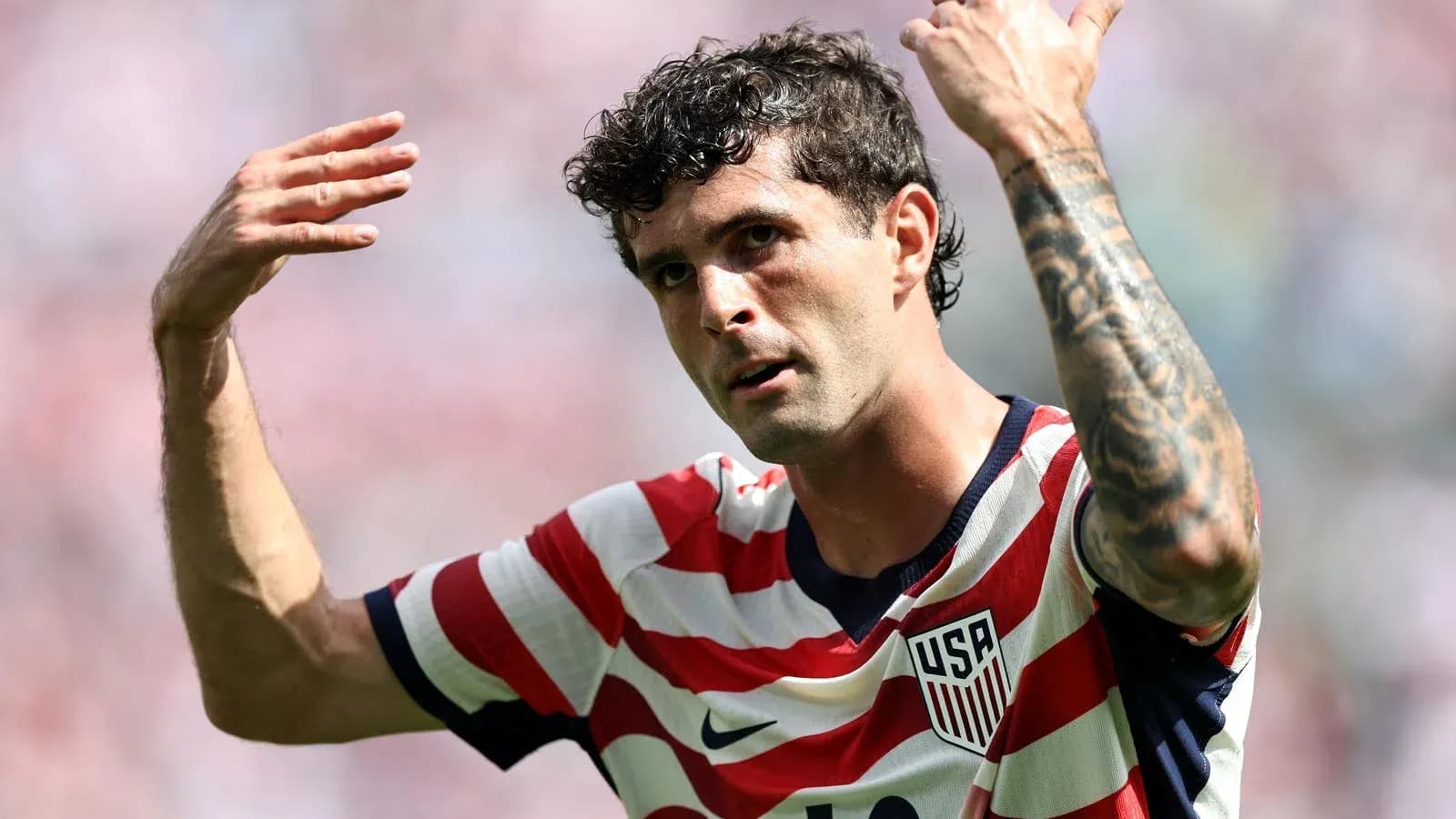
USMNT vs Germany: A Clash of Styles and Strategies
The World Cup hasn’t kicked off yet, but Mauricio Pochettino and Julian Nagelsmann are already walking the tightrope. Soldier Field will host two managers who don’t do safety-first, two squads still searching for their final shape, and a friendly that feels anything but gentle.
USMNT: Pochettino Balances Risk and Rhythm
The first headache for Pochettino is at the heart of his defense. Chris Richards arrived from Crystal Palace carrying ankle ligament damage, and the situation has deteriorated to the point where an injury-enforced roster change before the World Cup opener is firmly on the table. What’s already clear: he won’t feature in Chicago.
Without Richards, the bigger strategic question looms. Does Pochettino double down on continuity, rolling out something close to his first-choice XI and then unleashing another avalanche of second-half substitutions? Or does he flip the script, start a more experimental side, and let the presumed starters sharpen up late?
His last outing offers a clue. Against Senegal, he replaced all but one of his outfield players by halftime, a sweeping reset that told you everything about his appetite for live-fire tinkering. That pattern suggests he’ll again lean toward a strong opening lineup, then rip it up as the game wears on.
There will be adjustments, though. Folarin Balogun, who began on the bench six days earlier, is pushing hard to start at center forward. Weston McKennie, too, looks a prime candidate to move from impact sub to midfield anchor from the first whistle. And in goal, Matt Freese is expected to finally get his chance after watching from the sidelines against Senegal as the only unused goalkeeper.
On paper, the projected USMNT XI looks bold and front-footed in a 3-4-3:
Matt Freese in goal; a back three of Tim Ream, Mark McKenzie, and Alex Freeman; Antonee Robinson and Sergiño Dest raiding the flanks; Tyler Adams and Weston McKennie patrolling central midfield; Christian Pulisic and Gio Reyna flanking Folarin Balogun in attack.
That setup screams intent. Width from Robinson and Dest, creativity between the lines from Pulisic and Reyna, and Balogun tasked with turning half-chances into headlines. The risk sits behind them, where a re-shaped back line must cope without Richards’ recovery speed and composure.
Germany: Rotation, Reputation, and a Different Kind of Test
Germany arrive with a 4-0 win in their back pocket and question marks all over the team sheet. In Mainz, they dismantled Finland, scoring all four between the 34th and 63rd minutes in a ruthless spell that showed what Nagelsmann’s ideas can look like when they click.
Deniz Undav stole the show with a brace, extending his remarkable Stuttgart form onto the international stage. He’s turned a breakout Bundesliga season into genuine competition for places in the national setup, the kind of late surge that complicates a coach’s best-laid plans.
But that Finland match came at a cost. Most of that side went the full 90, and two days later they were on a plane to the United States. With that workload and travel, Nagelsmann is widely expected to rotate heavily against the Americans, using this game to spread minutes and probe deeper into his depth chart.
There are injury and availability wrinkles too. Manuel Neuer, back from international retirement chasing a fifth World Cup, is a doubt for Saturday, his status casting a shadow over the goalkeeping position. Kai Havertz missed the Finland game entirely as he wrapped up duties with Arsenal’s UEFA Champions League campaign on June 30, but he’s now in line to feature. Pascal Groß, the veteran holding midfielder who stayed rooted to the bench last weekend, is also primed for involvement.
The projected Germany XI shifts the look and the tone in a 4-2-3-1:
Oliver Baumann in goal; a back four of David Raum, Nico Schlotterbach, Waldemar Anton, and Joshua Kimmich; Leon Goretzka and Pascal Groß forming the double pivot; Florian Wirtz, Kai Havertz, and Leroy Sané operating behind central striker Nick Woldemade.
That’s not a second-string. It’s a rotated side laced with quality. Goretzka’s surges, Groß’s distribution, Wirtz’s vision, Sané’s pace, Kimmich’s authority even from right back — this is still Germany, still loaded with players who can flip a game in a heartbeat.
A Match Built for Chaos
On paper, Germany carry the bigger global names. That’s rarely in dispute. Yet this version of Die Mannschaft remains unpredictable, still wrestling with identity under an intense, meticulous coach. In that sense, they mirror the USMNT under Pochettino: talent, volatility, and a narrative that swings from promise to doubt in a single performance.
What both managers share is an attacking instinct. Caution is unlikely to win the day. Pochettino wants his front three to build rhythm and chemistry. Nagelsmann, even with rotation, will demand vertical passing and aggressive positioning. That combination usually leads to one thing.
Goals.
Chicago adds another twist. Soldier Field won’t feel like a traditional home fortress for the USMNT. The city’s deep German-American roots mean the stands could sound closer to neutral, if not slightly tilted toward the visitors. The atmosphere may be shared; the margin for error will not.
At full strength, Germany’s pedigree and experience would tilt this fixture their way. But this is not full strength. It’s a test run, a lab session under the lights, with both coaches juggling fitness, form, and the looming demands of a World Cup.
That opens the door for something more even, more chaotic, and more entertaining than a simple hierarchy of reputations might suggest.
USMNT 2, Germany 2 feels like the right kind of verdict for this moment: a high-scoring draw, both sides bloodied and enlightened, neither fully satisfied.
The real question is which of them learns faster from the chaos — because the next time they roll out lineups like these, there won’t be any room left for trial runs.





