
US Soccer Defeats Australia 2-0 in World Cup Showdown
Soccer won. It usually does here.
On a clear, almost smugly pleasant Friday afternoon in the Pacific north-west, two nations that can at least agree on the word “soccer” met in a World Cup game that carried far more weight than a routine group fixture. The United States beat Australia 2-0 in front of 66,925 fans, booked a place in the knockout round, and put one hand on top spot in Group D, pending Turkey v Paraguay later in the day.
The scoreline told one story. The occasion told another.
A stage built for stakes
This is a World Cup where both the US and Australia arrive with the same burden: every tournament feels like a referendum on the sport’s future back home. Both fight for attention in markets dominated by other games, and both know that nights like this can tilt the conversation for years.
Nobody needed reminding of the stakes in Seattle. A quartet of military helicopters thundered over the stadium as the US anthem ended, a perfectly choreographed roar that shook the stands and cranked the volume on an already fevered crowd. Australia’s pockets of yellow – three loud, defiant blocs clustered at the south end – did their best to punch holes in the noise. They were spirited. They were outnumbered.
The game itself arrived under a cloud of speculation. Christian Pulisic’s calf had dominated the buildup after he limped out of the opener at half-time and trained alone all week. Moments before kick-off, Mauricio Pochettino confirmed what many had feared: his star was not available. How would the US unlock a stubborn Australian backline without their most reliable match-winner?
If that created doubt outside the camp, it didn’t show inside it.
Early blow, familiar source
Australia had listened all week to American pundits calling them a “layup” and worse, despite their own impressive start to the tournament. The US players and staff, by contrast, had talked up the Socceroos at every turn, stressing their quality as if reciting a script. Within a minute, that respect looked justified.
Alex Freeman coughed up a loose pass, Mohamed Touré pounced, and suddenly the US were scrambling. Touré drove at Chris Richards and squeezed off a low shot from a tight angle that Matt Freese gathered without fuss. A warning, if not a wound.
Then the US settled. They gripped the ball, stretched the field, and began to probe both flanks of an Australian defense that refused to panic. The breakthrough, when it came, arrived from the channel where Pulisic would normally roam.
Antonee Robinson slid a pass down the left to Folarin Balogun, stationed wider than usual. Balogun burned past Jacob Italiano and whipped a low ball across the six-yard box. Defender Burgess, desperately trying to cut it out, only succeeded in diverting it into his own net.
Another early own goal for the US at this World Cup. Another opponent suddenly chasing the game.
Paraguay had crumbled in similar circumstances. Australia did not. The backline tightened, the midfield snapped into challenges, and the contest hardened.
Within two minutes, they almost hit back. Touré held off defenders on the edge of the box, laid it into space, and Mathew Leckie tried an audacious outside-of-the-boot curler around Richards. The idea was better than the execution; the ball sailed high and wide.
Bruises, clashes, and a second punch
The physical edge both teams had promised began to surface. Nishan Velupillay clattered into Tyler Adams right in front of the US bench, sparking anger from the touchline and the stands. Jordan Bos went into the book for a hand to Weston McKennie’s face. Alessandro Circati followed later for clipping Malik Tillman’s heel as the American midfielder burst toward the box, a foul that led to a dangerous free-kick and a brave Australian clearance.
Then came a sickening clash of heads in the 39th minute. Freeman and Paul Okon-Engstler collided and both hit the turf, medical staff rushing on. After treatment, both continued. Freeman’s next major involvement would be far more memorable.
The move that produced the second goal started with Tillman refusing to give up on a ball near the byline. Locked in a wrestling match with Velupillay, he somehow kept possession and drew a foul in a prime set-piece area. Robinson rolled the free-kick to the top of the box, where Sergiño Dest met it with a driven effort. Harry Souttar hurled himself into the shot, blocking it but only as far as Freeman.
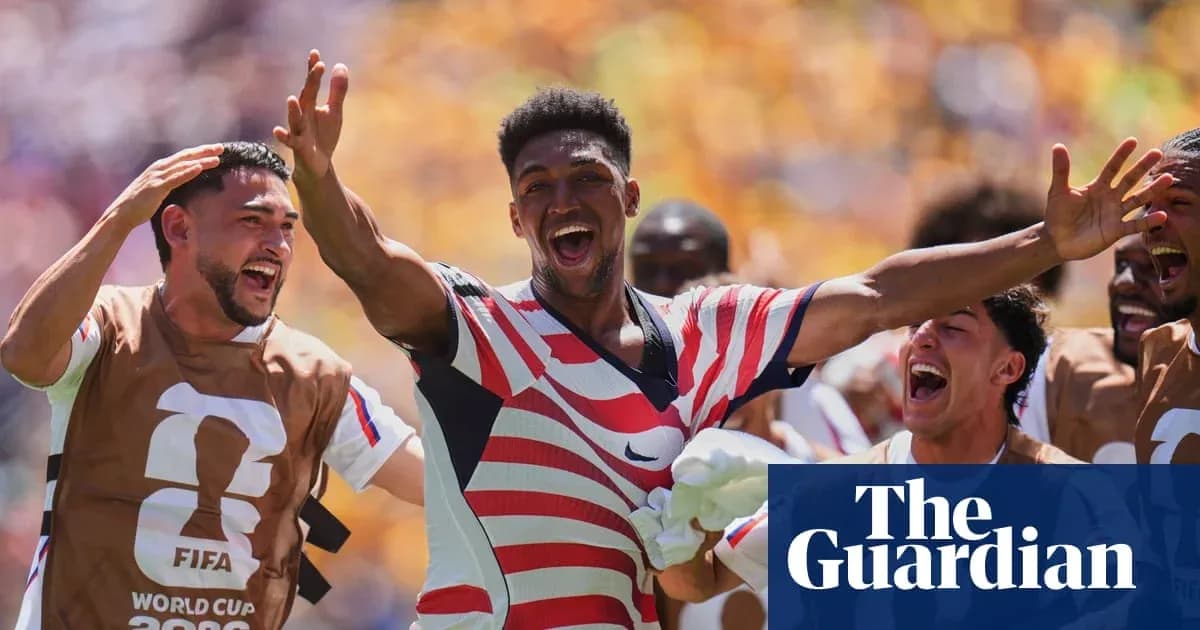
The defender reacted first, bundling the rebound into the net. The flag went up, the VAR check followed, and tension hung for a few seconds. Goal given.
Freeman, now back in his usual center-back role after his earlier adventure, ended up celebrating at the opposite end of the field, mobbed by teammates streaming from the bench. A head knock, a scare, and then a goal that gave the US a 2-0 lead and a stranglehold on the match.
Popovic rolls the dice
Tony Popovic had seen enough from his starting XI. He came out for the second half with a different team and a different intent.
Jason Geria replaced Burgess. Nestory Irankunda and Connor Metcalfe, both scorers in Australia’s opener, came on for Touré and Velupillay. On the ball, the Socceroos morphed into a bold 4-3-3. Off it, they still dropped into the familiar five-man line, but with far more ambition ahead of them.
The risk was obvious. Within seven minutes of the restart, McKennie stole possession and threaded a pass that sent Balogun charging clear with only Souttar chasing. The defender did just enough; Balogun’s shot was blocked. The warning, though, was unmistakable.
Australia kept coming anyway. Robinson collected the US’s first yellow card in the 56th minute as he chopped down a promising move down his flank, a professional foul that summed up the new dynamic: the Socceroos were now the ones asking questions.
Popovic doubled down just after the hour mark, sending on Cristian Volpato for Leckie. The Sassuolo playmaker almost made an instant impact. Irankunda surged down the right, tore into space, and cut the ball back. Volpato, in stride inside the box, lashed his effort over the bar. A let-off for the US. A glimpse of what Australia’s new shape could produce.
Metcalfe then forced Freese into a more routine save, his effort smothered without drama. Still, the pattern had shifted. The US had the cushion; Australia had the initiative.
Hanging on, standing firm
Popovic kept pushing. Jackson Irvine replaced Okon-Engstler to add more legs and late runs from midfield. Pochettino, sensing the tide, went the other way. He tightened up, withdrawing Robinson, Dest and Ricardo Pepi for Sebastian Berhalter, Auston Trusty and Joe Scally. The message was clear: protect what you have.
The Socceroos grew into the chaos. Circati found himself in the box for one of several frantic late scrambles, the US defense throwing bodies in front of shots and crosses as the minutes drained away. Half-chances flashed wide. Near-misses drew groans from the Australian end and roars of defiance from the home support.
Tempers frayed. Souttar, Balogun and Italiano all picked up late yellow cards in a flurry of on- and off-the-ball incidents. Every challenge felt like it carried a little extra. Every whistle drew a chorus of “USA” from the stands.
Then, a bizarre delay. Referee Felix Zwayer suffered an injury of his own, briefly pausing the game before resuming to see it out. The tension dipped. The energy did not.
Balogun, reading the moment as the clock ticked toward full-time, turned to the crowd and windmilled his arms, demanding more noise, more celebration. The stadium responded, a wall of sound rolling over the pitch as the US saw out the final seconds.
When the whistle finally came, it sealed more than a win. It confirmed the US in the knockout rounds, kept them in control of Group D, and underlined that even without Pulisic, this is a team with enough depth, grit and edge to handle a serious test.
On a day when both nations carried the weight of their sport’s future, it was the hosts who walked off with the points, the momentum, and a stadium that felt, at least for one night, like Soccer City, USA.





