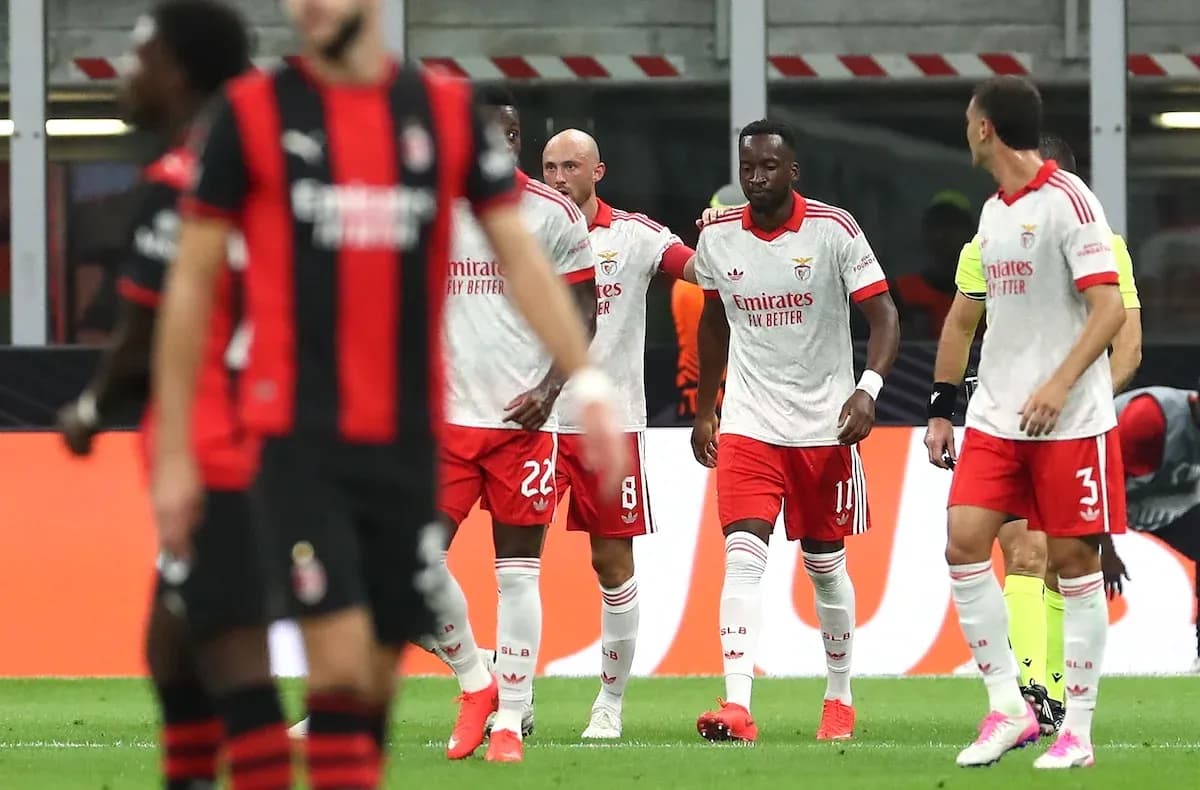
Twente vs Ferencvarosi TC: Tactical Analysis of the UEFA Europa League Match
Twente’s 1-2 defeat to Ferencvarosi TC at De Grolsch Veste was a classic example of territorial and possession dominance being neutralised by a compact, vertically efficient opponent. In the 2nd Qualifying Round of the UEFA Europa League, John van den Brom’s 4-2-1-3 structure gave Twente long spells of control and a heavy shot volume, but Balazs Borbely’s 4-3-3 was razor‑sharp in transition and ruthless in the box, allowing the visitors to convert their limited attacks into a decisive away win.
Twente’s positional play was clear from the opening phases. The back four of B. van Rooij, S. Lemkin, R. Nijstad and A. Adelgaard built patiently, with the double pivot of R. Zerrouki and T. van den Belt offering constant short options. With 651 total passes and 577 accurate, Twente circulated the ball with a high level of security, reflected in their 69% possession. The front line of D. Rots, W. Weghorst and S. Orjasaeter stretched the Ferencvarosi TC back line horizontally, while K. Hlynsson operated between the lines as the advanced midfielder, trying to connect midfield circulation with final-third penetration.
Despite that structure, Twente’s attacking pattern was heavily shot‑oriented rather than chance‑oriented. They produced 18 total shots, with 9 inside the box and 9 from outside, but the distribution hints at a mix of hopeful efforts and crowded shooting zones. Seven shots on goal and seven blocked shots underline how often Ferencvarosi TC got bodies in the line of fire, defending the edge of the box aggressively and collapsing centrally when the ball entered zone 14. Twente’s four corner kicks added another route, but the visitors’ aerial organisation held.
Ferencvarosi TC’s 4-3-3 had a different logic. Out of possession it often resembled a 4-1-4-1/4-5-1, with P. Rommens and M. Corbu narrowing alongside G. Kanichowsky to screen central lanes, while K. Zachariassen and Dele dropped from the front line to help compress the middle. With only 294 total passes (223 accurate) and 31% possession, they accepted long spells without the ball, focusing on compactness and rapid forward surges once possession was regained.
The first Ferencvarosi TC goal at 14 minutes encapsulated their plan: a quick vertical attack that found L. Joseph attacking space, assisted by K. Zachariassen. Twente’s high positioning of full‑backs, especially Adelgaard on the left, left transition channels open. When Twente equalised at 38 minutes through Adelgaard, assisted by S. Orjasaeter, it came from sustained pressure and numbers in advanced zones rather than a sudden break; the left‑back’s involvement underlined how high the home full‑backs were allowed to push.
The second half followed a similar pattern: Twente controlling territory, Ferencvarosi TC waiting for the right moment. The away side’s total of 9 shots (5 inside the box, 4 outside) shows they were selective, but their shot profile was cleaner. Only one of their attempts was blocked, suggesting they were finding clearer lanes to shoot, often at the end of swift counters where Twente’s defensive block was stretched or retreating.
In goal, L. Unnerstall (Twente) had no registered saves, a telling detail: Ferencvarosi TC only hit the target twice, and both efforts ended up as goals. That points less to goalkeeping issues and more to the quality and clarity of the chances conceded. At the other end, D. Dibusz (Ferencvarosi TC) made 6 saves, a crucial factor in preserving the away lead once established. Twente’s shot volume and on‑target count forced him into regular action, but their finishing and shot locations did not consistently beat him.
The substitutions further underlined the tactical battle. On 69 minutes, Borbely refreshed his front line and midfield energy: Dele (OUT) made way as C. O’Dowda (IN) entered, and G. Kanichowsky (OUT) was replaced by J. Levi (IN). O’Dowda immediately added a more direct, vertical threat from wide areas, and his assist for Joseph’s second goal at 80 minutes was pivotal. The move again came from exploiting the spaces Twente left while chasing the game, with Joseph timing his movement superbly.
Van den Brom’s response at 78 minutes was to add fresh legs in midfield: K. Hlynsson (OUT) was replaced by Y. Taha (IN), and R. Zerrouki (OUT) by M. Kjolo (IN). The double change aimed to maintain pressing intensity and add dynamism between the lines, but by then Ferencvarosi TC were increasingly comfortable in a deeper block, protecting their 1-2 advantage after Joseph’s second. Late substitutions for the visitors at 87 and 90+1 minutes — L. Joseph (OUT) for K. Lisztes (IN) and K. Zachariassen (OUT) for O. Nagy (IN) — were primarily about game management, adding fresh defensive work rate and closing central channels.
Discipline played almost no role in disrupting rhythm: neither side received a yellow or red card, and the foul count (11 by Twente, 7 by Ferencvarosi TC) remained moderate. That allowed the tactical patterns to develop with relatively few interruptions, suiting Twente’s possession game but also giving Ferencvarosi TC repeated opportunities to reset their block.
Statistically, the verdict is stark. Twente led in almost every volume metric: 69% possession, 651 passes to 294, 18 total shots to 9, and parity in corners (4-4). Yet Ferencvarosi TC were more efficient where it mattered: 2 shots on goal, 2 goals, and only 1 blocked shot, indicating that when they did shoot, they did so from less congested, higher‑quality positions. Dibusz’s 6 saves underline his importance, while the absence of saves for Unnerstall highlights Twente’s vulnerability to the few clear chances they allowed.
In seasonal terms, a home defeat like this — despite territorial dominance — will raise questions for Twente about their balance between attacking ambition and transition protection, especially in European knockout football where away goals and efficiency are decisive. For Ferencvarosi TC, this performance fits the profile of a side comfortable without the ball, structurally disciplined, and lethal in transition: a template that can travel well in continental competition.