Tottenham Hotspur's Rebuild Under De Zerbi Faces Harsh Reality
By the time Roberto De Zerbi finishes this Tottenham Hotspur rebuild, the bill could be nudging £400m. On the evidence of opening day, money has barely scratched the surface of the real problem.
Spurs were supposed to be reborn at The Gtech Community Stadium. Instead, they relapsed.
A new era, same old collapse
De Zerbi walked into Spurs in March knowing the job was as much about repairing minds as reshaping tactics. He said it himself: psychologist first, coach second. Seven games to keep them in the Premier League, and they survived by clinging to a final-day win over Everton.
That escape bought him time. This summer bought him players.
A “nightmare campaign” had prompted a radical reset, a huge outlay, a very public statement that Spurs would not flirt with 17th again. Yet within one brutal afternoon in west London, the familiar fragility was back, exposed and exploited as Brentford tore them apart.
Spurs did not just lose 3-0. They crumbled at the first real shove.
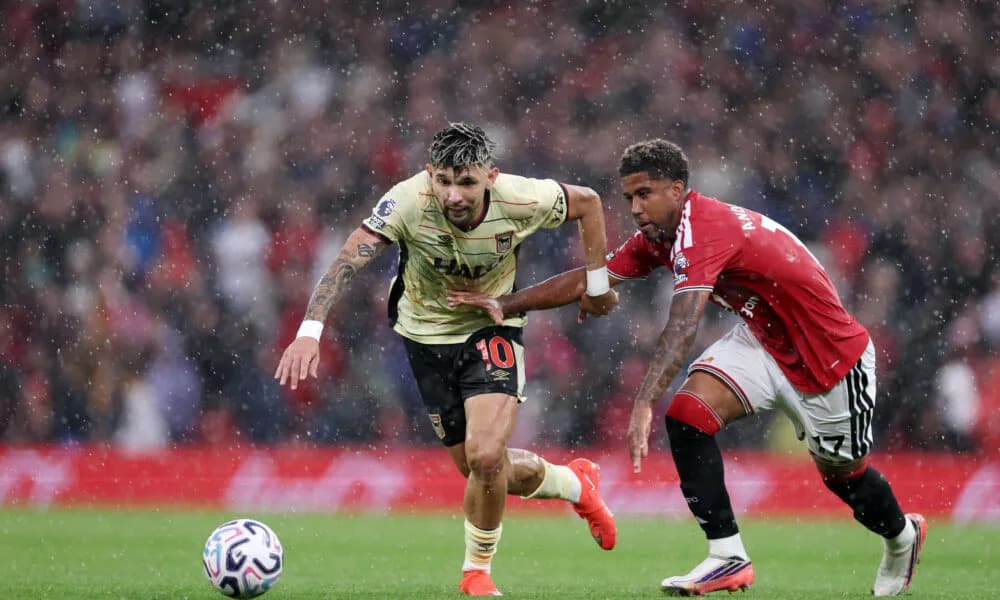
Brentford ran harder, hit harder, thought quicker. Spurs’ resistance? Paper-thin. Every time pressure arrived, the visitors folded, the performance a grim reminder that a swollen transfer budget cannot purchase backbone.
De Zerbi’s diagnosis
De Zerbi did not hide behind the scoreline or the performance. Speaking to BBC Sport's Match of the Day, his words were blunt.
“Bad game. We lost and suffered the difference in the duels. It was the key of this game. We didn't fight in the right way. Maybe credit to them because it's the best quality Brentford have.
“Our physical condition was not in the right level for all players because many came later after the World Cup and there were many new players in the squad and first XI. But we have to analyse this game better because we can't play this way in this type of game.”
He leaned on fitness as context, not as a shield. Some players had returned late after the World Cup, others had barely trained with their new teammates. But none of that explained the basics going missing: loose organisation, weak duels, no resilience, no response.
Brentford, by contrast, looked sharper, hungrier, surer of themselves in every department.
Optimism to exodus
The day began with noise and hope. In one corner of The Gtech Community Stadium, Spurs fans roared in the new signings, a travelling support determined to believe this was the start of something better.
By the 49th minute, many of them were heading for the exits.
When Michael Kayode swept in Brentford’s third to make it 3-0, huge pockets of the away end emptied. Those who remained at full-time watched their players applaud rows of vacant seats, a stark visual of just how quickly the optimism had drained away.
It might have been uglier. Igor Thiago, usually so reliable from the spot, smacked a penalty against the post. The miss spared Spurs further embarrassment on the scoreboard, but not in the story of the match.
Rock legend Jon Bon Jovi watched on from the stands. Spurs offered him enough material for an entire catalogue of sad power ballads: a bad start, a swift collapse, and a team that never looked like clawing its way back.
Debuts under the spotlight
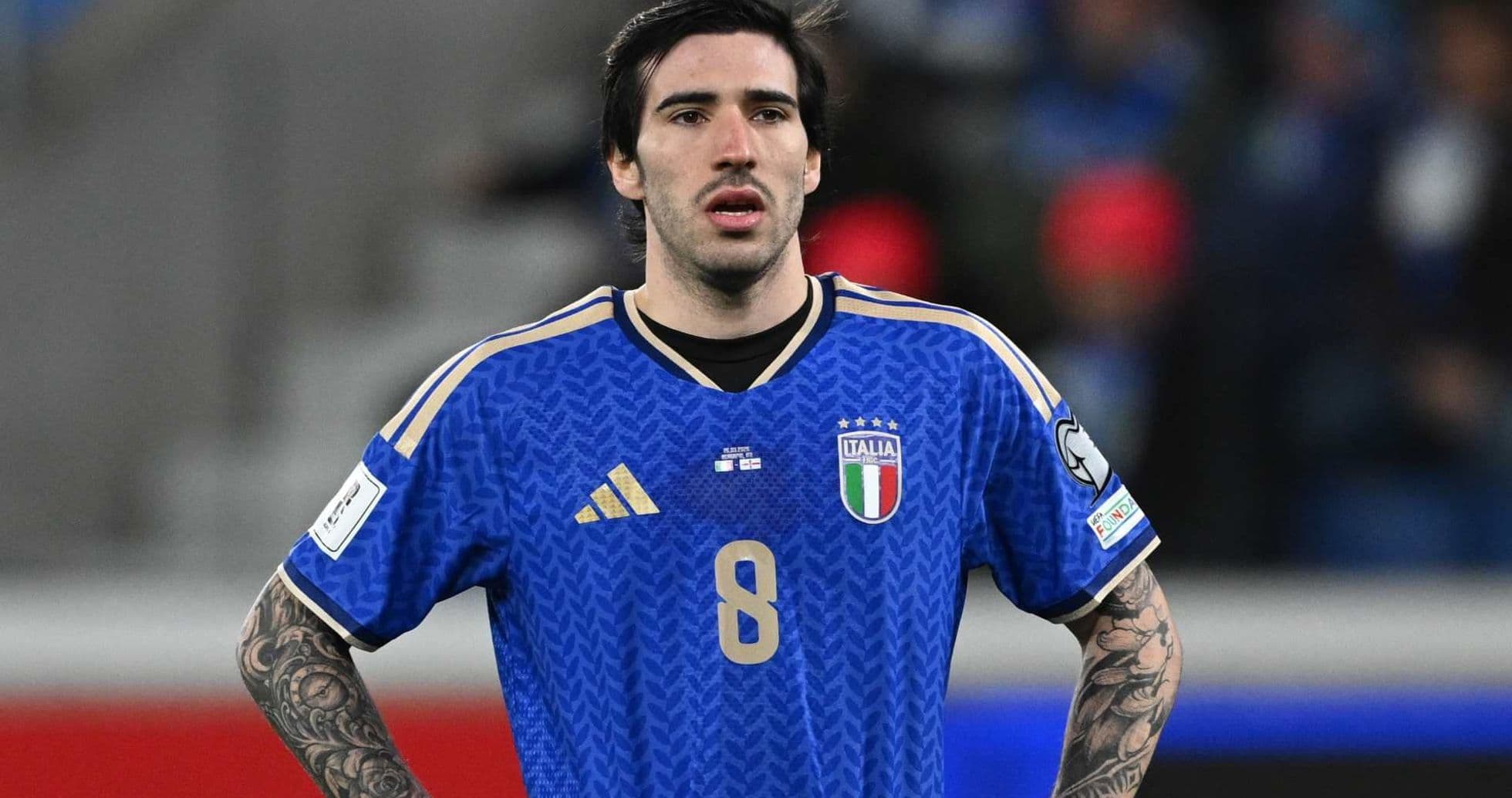
De Zerbi rolled out four new faces from the start: Andrew Robertson, Marcos Senesi, Jan Paul van Hecke and Sandro Tonali. A fresh spine, a new look, a different energy – in theory.
In reality, they hit rock bottom together.
None of the debutants imposed themselves. They were not alone; no one in a Spurs shirt emerged with credit. But this was supposed to be the new core, the proof of progress. Instead, it was a reminder of how far there is to go.
Tonali’s price tag – £100m from Newcastle United – hung heavily over him. On the pitch, Brentford’s record signing Mamadou Sangare outplayed him from first whistle to last. Sangare dominated the midfield, the game’s outstanding performer, while Tonali’s most notable moment was a wild first-half effort that flew high into the sky, greeted by mocking chants that Spurs had wasted their money.
Matheus Fernades, an £85m signing from West Ham United, came on from the bench. Savinho and possibly Omar Marmoush will follow to deepen the squad. Talent is not the issue. The void lies elsewhere.
The glaring absence was heart, fight, a collective refusal to accept being second best.
Brentford smell blood
From the opening minute, Spurs’ supposed “brave new world” looked hauntingly like the old one. One shove, and the cracks appeared. Brentford sensed it instantly.
They pressed in packs, hunted loose touches, and treated every 50-50 as theirs by right. Spurs backed off, backed out, backed down.
The home side should have been ahead before Keane Lewis-Potter struck after 12 minutes. When Vitaly Janelt added a second before the break, the contest felt done. The third from Kayode early in the second half only confirmed what everyone in the stadium already knew.
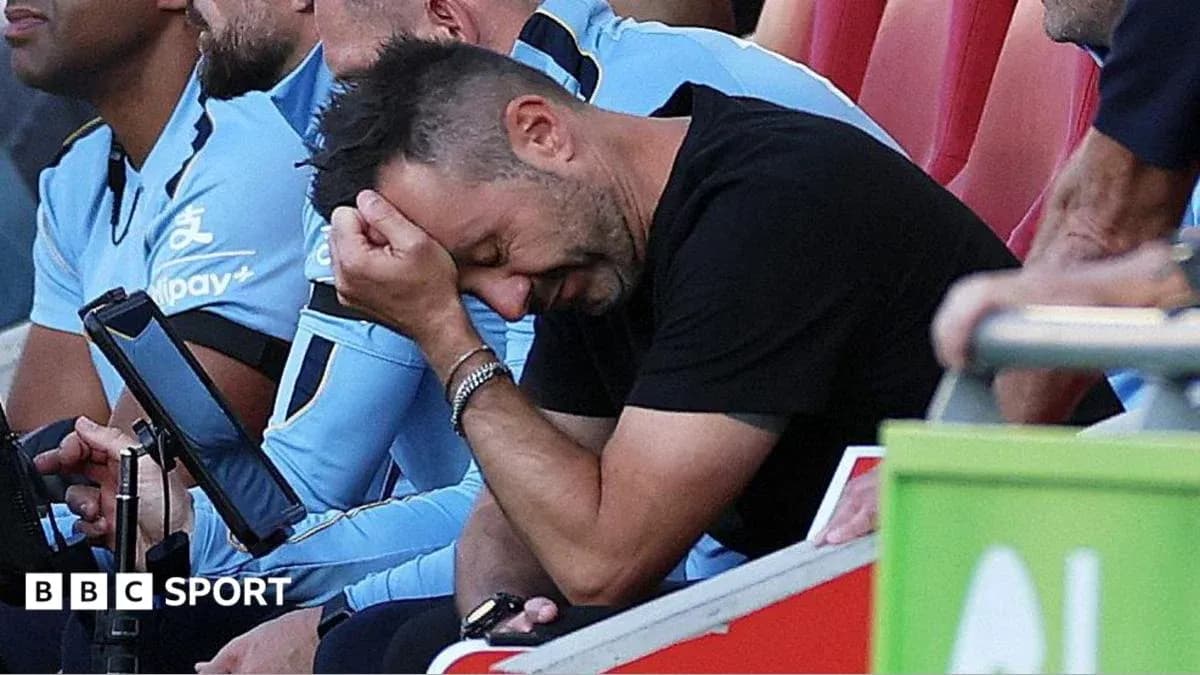
On the touchline, De Zerbi raged and gestured, trying to jolt his players into life. Nothing stuck. Heads dropped, challenges were lost, and panic became their default setting. There was no hint of a comeback, no spark, no belief.
Conor Gallagher and Lucas Bergvall did not reappear after half-time, withdrawn in a double change that could easily have been a quadruple. Spurs were that flat.
A deeper problem than signings
This was not just a bad day. It looked like the continuation of a grim trend.
Spurs have finished 17th in the Premier League in each of the last two seasons, a club trapped in a cycle of underperformance and anxiety. De Zerbi was hired to break that cycle, just as Ange Postecoglou, Thomas Frank and the fleeting Igor Tudor had been tasked before him. Postecoglou at least delivered a Europa League title, but the league malaise never truly lifted.
Now De Zerbi finds himself staring at the same demons.
“I am surprised for the result and performance,” he admitted. “I knew we were not in the right condition. We can't find an excuse. I am sorry for the result and performance. We are starting a new project and we couldn't find the principle.
“Marcos Senesi, Jan Paul van Hecke and Sandro Tonali are not in the best physical condition. We knew that before the game. We have to improve on that and many other things like organisation and pressing.”
More recruits are likely. The spending may not be over. De Zerbi, though, refused to hide behind that safety net.
“I don't want the excuse that the first XI was not enough to compete and get a result. Brentford's spirit on the pitch was great, it has to be the right example for us.”
That spirit is what Spurs lack most.
Culture, not just a squad list
This defeat stripped away the gloss of a busy summer. New faces, big fees, fresh narratives – all of it looked thin once Brentford turned up the heat.
The problem is not just who wears the shirt. It is what happens when the shirt feels heavy.
Spurs have spent two seasons living with defeat as a familiar visitor. Results like this are no longer shocks; they are habits. That is the culture De Zerbi has walked into, and it is the one he must rip up.
He does not just need to refine his starting XI. He needs to rebuild the mentality of an entire dressing room.
Because if this is what Spurs look like at the dawn of a “new project”, how long before the season starts to feel painfully familiar again?