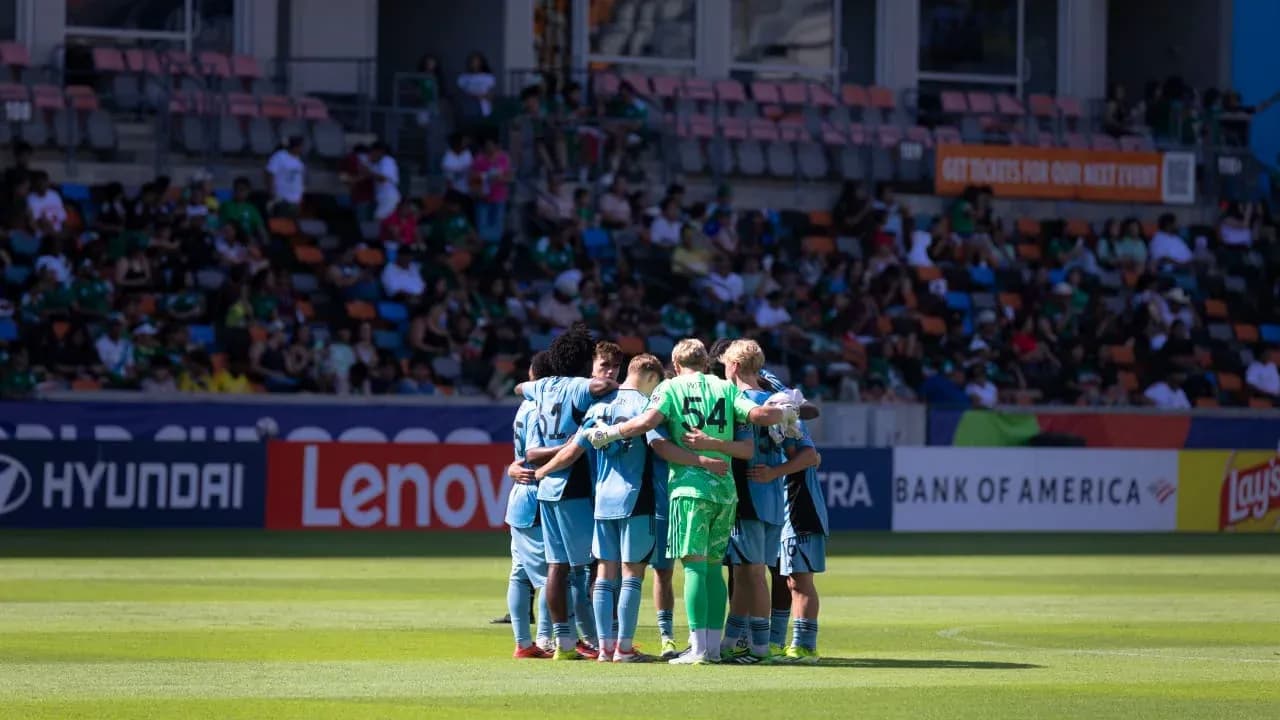
Toronto II vs Philadelphia Union II: A Key MLS Next Pro Clash
Under the lights of York Lions Stadium in Toronto on 29 May 2026, Toronto II and Philadelphia Union II step into another chapter of a rivalry that has quietly become one of MLS Next Pro’s most intriguing subplots. With both sides tightly packed in the Eastern Conference picture, every point feels precious: Toronto II are fighting to climb from mid-pack security into genuine contention, while Philadelphia Union II arrive already sitting in a promotion play-off zone and determined to tighten their grip on it.
Season Context
For Toronto II, the numbers tell a story of volatility. They have played 11 matches, taking 16 points with 18 goals scored and 17 conceded. The goal difference of +1 underlines a team that lives on fine margins, capable of outscoring opponents but rarely fully in control (18 goals for and 17 against in 11 games).
Philadelphia Union II come north with a slightly stronger platform. Also after 11 matches, they have collected 18 points, scoring 14 times and conceding 11. That +3 goal difference and tighter defensive record (11 goals conceded in 11 games) underpin their current status in a “Promotion - MLS Next Pro (Play Offs: 1/8-finals)” zone, making this fixture as much about consolidation for them as it is about pursuit for Toronto II.
Form & Momentum
Toronto II’s recent form string of WWLLW captures their streaky nature. Three wins in their last five by that sequence suggest a dangerous side when things click (WWLLW), but the back-to-back defeats in the middle of that run underline defensive fragility (17 goals conceded across 11 league games). With 18 goals scored in those 11 matches, they average roughly 1.6 per game, so their attacking output is a clear strength (18 goals for in 11).
Philadelphia Union II arrive with a form line of WLLLW, a pattern that hints at inconsistency but also resilience. Three losses in that five-game stretch point to vulnerability (11 goals conceded in 11 league matches), yet the fact they bookend that run with wins shows they can respond when under pressure (WLLLW). Their 14 goals from 11 games give them a more modest attacking average than Toronto II, but the better defensive record (14 for, 11 against) suggests a more balanced side.
Head-to-Head Patterns
The recent history between these teams is rich and finely poised. On 17 April 2026, Toronto II edged a tight contest 1-0 at York Lions Stadium (MLS Next Pro, season 2026, April 2026). Earlier in the same calendar year, on 28 February 2026, Philadelphia Union II had claimed a 1-0 home victory at Subaru Park (MLS Next Pro, season 2026, February 2026), underlining how often this matchup is decided by single-goal margins. Looking back further, on 26 September 2025, Philadelphia Union II came from a level first half to win 2-1 away at York Lions Stadium (MLS Next Pro, season 2025, September 2025), a result that showed they are capable of travelling to Toronto and leaving with all three points.
Tactical Preview
Toronto II’s statistical profile points to an open, front-foot approach. With 18 goals scored and 17 conceded in 11 matches, they average close to both scoring and conceding in every outing, which hints at a side that commits numbers forward and accepts defensive risk (18 for, 17 against in 11). Their broader league data shows 19 goals both scored and conceded across the same 11-game sample, reinforcing the idea of a high-event team. The presence of a young, attack-heavy squad featuring multiple attackers such as D. Barrow, D. Dixon O'Neill, E. Khodri, J. Nolan and J. Nugent suggests they will look to stretch the game, especially at York Lions Stadium.
In midfield, players like B. Boneau, M. Cimermancic and A. Salaou give Toronto II energy and verticality, which fits a strategy of quick transitions rather than slow, possession-heavy buildup (19 goals for at an average of 1.7 per match in the broader statistical sample). At the back, defenders such as M. Chisholm, R. Fisher and L. Costabile anchor a line that has not always been secure, as reflected by their near-identical goals scored and conceded numbers (19 for and 19 against in the extended metrics), so Toronto II may again lean into the idea of outscoring rather than shutting down Philadelphia Union II.
Philadelphia Union II, by contrast, project as slightly more controlled and balanced. With 14 goals scored and only 11 conceded in 11 league games, they show a tighter defensive structure (11 goals conceded in 11), supported by a back line including A. Craig, K. Moore and R. Uzcátegui. Their broader data, showing 15 goals for and 12 against, still points to competitive, relatively close games rather than blowouts. The last-five metrics from the prediction model rate their defence at 67%, significantly higher than Toronto II’s 52%, which supports the view of a side more comfortable absorbing pressure and picking moments to attack.
In attack, Philadelphia Union II lean on a varied forward group featuring Edward Davis, Stas Kornzeniowski and Sal Olivas, supported by creative midfielders like O. Benitez and Paco Dadi. The model’s last-five data gives their attack a 29% index versus Toronto II’s 38%, suggesting they may not create as much volume but are more selective and efficient (15 goals in 11 in the extended sample). Tactically, that could translate into a compact shape out of possession, looking to exploit spaces left by Toronto II’s adventurous full-backs and young midfielders.
The comparison model slightly favours Philadelphia Union II overall at 55.0% to Toronto II’s 45.0%, reflecting their marginally better balance and current play-off positioning, even though Toronto II’s form and attacking indices in the last five matches are competitive (Toronto II last-five form 60% vs Philadelphia Union II 40%).
Statistical Snapshot
- Competition: MLS Next Pro, season 2026 — 29 May 2026.
- Venue: York Lions Stadium, null.
- Prediction: Win or draw — Double chance: draw or Philadelphia Union II.
- Win Probabilities: Home 10% / Draw 45% / Away 45%.
- Model: Toronto II 45.0% — Philadelphia Union II 55.0%.
Betting Verdict
With Philadelphia Union II carrying the stronger defensive metrics (11 goals conceded in 11 league matches) and a slightly better overall record (18 points to 16), the model’s preference for the visitors on a “Win or draw” line looks justified. The head-to-head history shows both teams capable of winning tight games, including a 1-0 home success for each in 2026 and a 2-1 away win for Philadelphia Union II in September 2025, so backing the visitors with protection against the draw aligns with those fine margins. With no concrete odds data provided, a double-chance on draw or Philadelphia Union II would likely sit around the shorter end of the market, but the combination of their play-off positioning and stronger defensive profile supports that conservative, model-backed angle.