Todd Boehly's Exit: The End of an Era at Chelsea
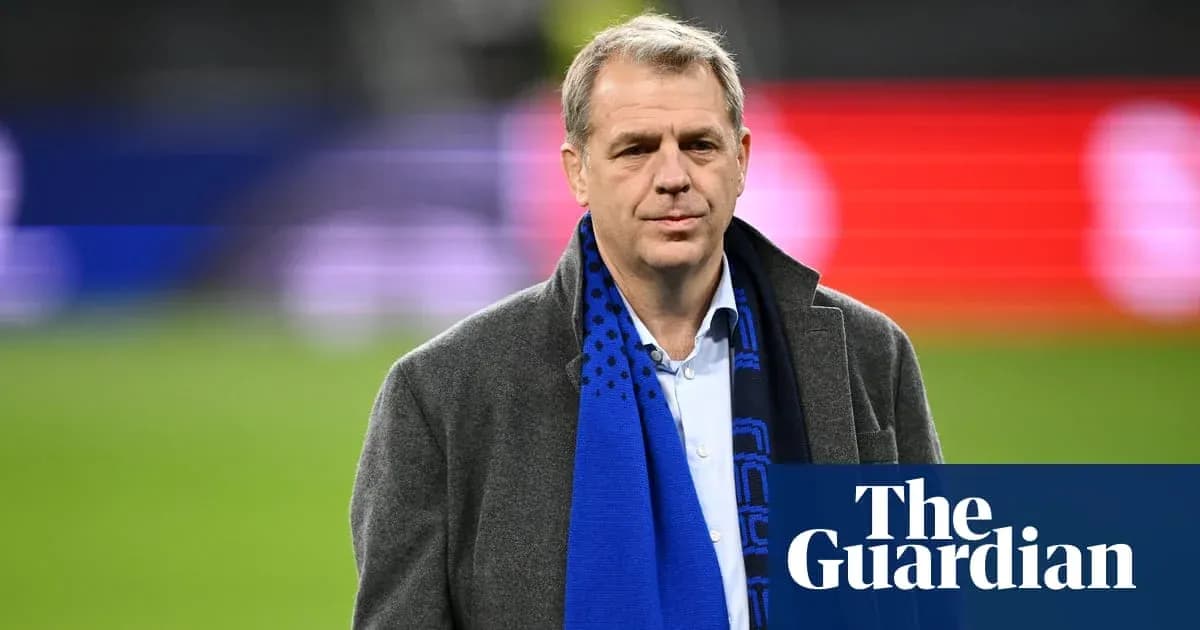
Todd Boehly arrived at Chelsea wanting to be seen and heard. He leaves four years on as a footnote.
His exit, confirmed on Wednesday night alongside fellow investor Mark Walter, closes a noisy, chaotic chapter in the club’s recent history. But it does not usher in a revolution. The real power at Stamford Bridge has long since moved elsewhere.
Clearlake’s club now
Clearlake Capital, fronted by Behdad Eghbali and José E Feliciano, was already running Chelsea. It owned the majority stake, set the tone and made the big calls. Boehly, Walter and Swiss billionaire Hansjörg Wyss shared 38.5% between them, a sizeable slice on paper that in practice had faded into the background almost as soon as the BlueCo consortium paid £2.5bn to buy the club from Roman Abramovich in 2022.
Eghbali has been the dominant figure. Clearlake’s influence was entrenched long before it formally took full control by buying out Boehly and Walter. This split has been brewing for two years, ever since tensions inside the ownership group started to seep into public view.
There were whispers of Boehly losing patience with Clearlake, of a relationship that no longer worked. He wanted clarity. People around him insisted he had investors lined up to back a full takeover. At Clearlake, the response was a roll of the eyes.
They looked instead at buying him out. Another option on the table: Boehly stepping aside as chair and accepting a governance structure that would have left him as little more than a figurehead.
It never came to that. Neither side moved quickly, a truce of sorts followed, and Clearlake carried on in the same direction, with Eghbali increasingly visible as the man in charge. Only over the past year have disillusioned Chelsea supporters really turned their anger towards Clearlake, and towards him in particular. The abusive chants aimed at Eghbali earlier this year underlined where fans now see the centre of power.
Feliciano, who has recently invested in MLB’s San Diego Padres, works more quietly in the background. Eghbali fronts the project. That is where decisions are made.
Boehly’s brief, bruising reign in the spotlight
It was not always this way. In the early days of the takeover, Boehly was the face of the new Chelsea. Clearlake allowed him to step forward, and he grabbed the spotlight. When key football executives departed in the aftermath of Abramovich’s exit, Boehly installed himself as interim sporting director.
How hard could it be? As it turned out, very.
Agents liked him personally but doubted his grasp of the sport. Inside the game there was a clear sense his inexperience could be played. Chelsea burned through around £300m on a scattergun collection of signings. The deal that took Raheem Sterling to Stamford Bridge on £325,000 a week quickly became a warning sign of what could go wrong when a club spent big without a coherent plan.
The chaos deepened when Thomas Tuchel was sacked early in the 2022‑23 season and replaced by Graham Potter. The club lurched from one idea to the next, and the transfer market became a public laboratory for Boehly’s learning curve.
His own explanation for signing Marc Cucurella from Brighton – that he moved because he had heard Manchester City wanted the left-back – said plenty. Copying a rival’s homework is not a long-term recruitment strategy.
On the wider stage, he became a punchline. He wondered out loud at a business conference why the Premier League did not have an All-Star game. He predicted Chelsea would beat Real Madrid 3-0 before a Champions League quarter-final in 2023. They did not. The bravado jarred with the reality on the pitch.
Boehly ended up as the emblem of Chelsea’s excess and confusion, the man everyone pointed at when they wanted to sum up what had gone wrong.
From chaos to structure
Those around him insist this was never meant to be a permanent arrangement, that his plan had always been to step back once “experts” were in place. The club’s approach since that first transfer window backs that up.
Chelsea moved from one interim sporting director to a sprawling structure of five permanent figures: Paul Winstanley, Laurence Stewart, Sam Jewell, Joe Shields and Dave Fallows. Recruitment pivoted towards younger players on long, incentivised contracts. The idea was clear: build assets, build value, build a squad that would grow together.
Eghbali has driven that vision. The journey has been rough. Chelsea have reached the Champions League only once under this ownership. Managers have spun through the revolving door. Yet people close to Clearlake insist hard lessons have been taken on board over the past year.
Last summer’s work backed that up. The club hired a serious manager in Xabi Alonso and moved for more established players. The business looked more coherent, less like a billionaire’s experiment.
Boehly, by then, had stepped away from the frontline. The noise around a buyout quietened until this summer, when events in the United States brought it roaring back.
The endgame and what comes next
The catalyst, it is said, was Walter’s need to liquidate assets to address financial issues in the US. When he sold his stake in the LA Lakers, the direction of travel for his Chelsea involvement became obvious. The exit from Stamford Bridge followed.
Boehly and Walter are understood to have made a modest profit on their Chelsea investment. Jonathan Goldstein, a close ally of Boehly, has also left the board. Wyss, though, remains attached, having invested in a Clearlake vehicle rather than walking away entirely.
Inside the club, the message is continuity. Day-to-day operations are unchanged. The leadership structure is the same. The strategy stays on its current track.
The one area where this reshaped ownership might accelerate things is the stadium. That is the looming decision for Chelsea’s hierarchy.
The Guardian reported in September 2024 that the club were in talks over a possible move from Stamford Bridge to Earls Court. The separate redevelopment proposal for that site, driven by the Earls Court Development Committee, has stalled since receiving planning permission. Chelsea’s interest has not gone away. At the same time, they have not abandoned the more complex option of trying to redevelop Stamford Bridge itself.
Whichever path they take, Boehly will not be part of it. Eghbali and Feliciano were generous in their farewell, saying in a statement that he “will always be a part of the Chelsea story and family”.
Given how quickly his influence evaporated, that feels more like a courtesy than a reflection of the club’s future. The next chapter at Chelsea belongs firmly to Clearlake – and there will be no doubt about who is calling the shots if the stadium move becomes the defining decision of this era.