The Town Dominates Vancouver Whitecaps II 6–1 in MLS Next Pro Match
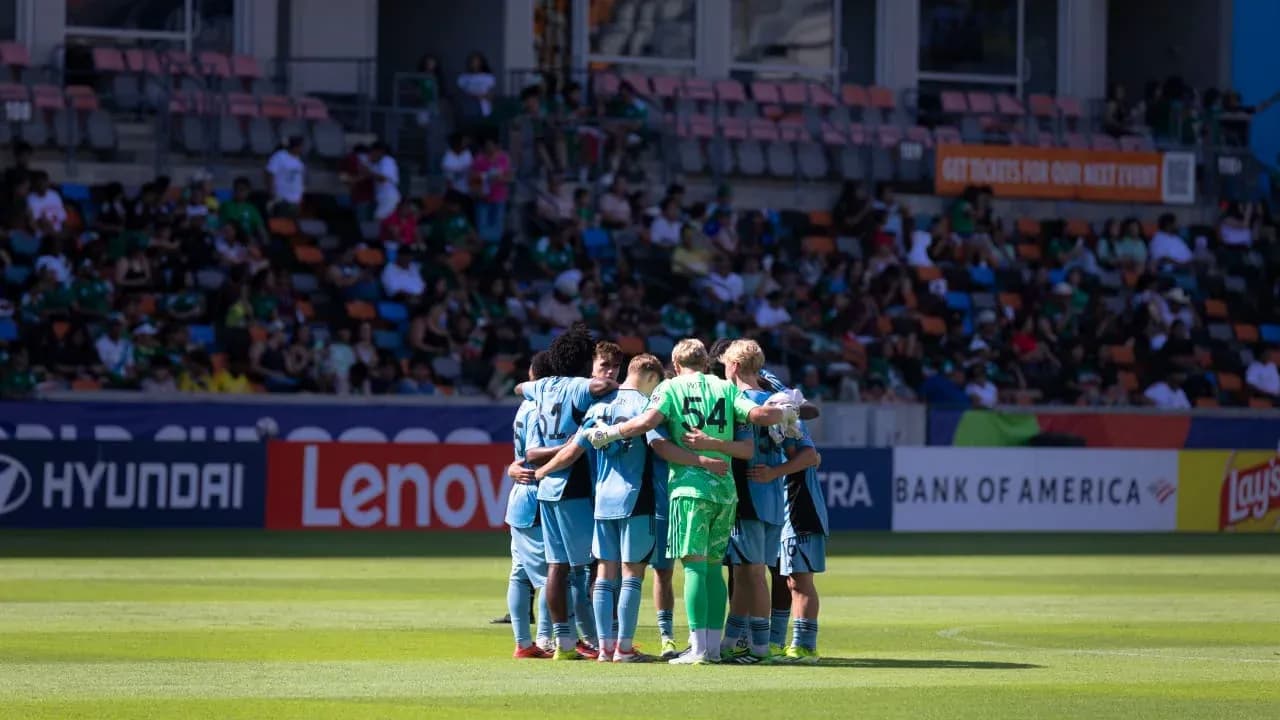
Under the lights at PayPal Park, this MLS Next Pro group-stage fixture felt less like a routine date on the calendar and more like a statement of intent. The Town, second in the Pacific Division and fourth in the Eastern Conference overall with 16 points and a goal difference of 12 heading into this game, dismantled Vancouver Whitecaps II 6–1, turning a potentially tricky assignment into a showcase of their emerging identity.
Vancouver arrived as an enigma: strong at home but brittle on their travels. Overall they had lost 7 of 10, with a total goal difference of -9 (15 scored, 24 conceded in the standings snapshot; 16 scored, 25 conceded in the extended stats), and on their travels they had played 6, lost 6, scoring 8 and conceding 18. The Town, by contrast, were perfect at home: 3 wins from 3, 11 goals for and just 2 against, underpinned by an attacking average at home of 3.7 goals for and only 0.7 against.
I. The Big Picture: A home fortress asserts itself
From the opening whistle, the pattern was clear. The Town’s season-long numbers already hinted at a side that leans into front-foot football: overall 20 goals for and 8 against in the standings block before this match, with an overall scoring average of 2.5 and just 1.1 conceded per game in the detailed stats. The 3–0 half-time scoreline here was less an outlier and more a natural extension of those trends.
Coach Daniel de Geer trusted an adventurous XI. With F. Montali anchoring things from the back and a spine built around A. Cano, D. Baptista, and R. Rajagopal, The Town imposed themselves early. The front line of Z. Bohane, T. Allen, and S. de Flores stretched Vancouver horizontally, while G. Bracken Serra and E. Mendoza offered the connective tissue between the thirds.
Vancouver coach Rich Fagan countered with a side that looked, on paper, reasonably balanced: S. Rogers in goal, a defensive unit including S. Deo, T. Wright, P. Amponsah, and M. Garnette, and a midfield anchored by C. Bruletti, Y. Tsuji, and C. Rassak. Up front, L. MacKenzie, D. Ittycheria, and R. Sewell were tasked with exploiting transitions. But the weight of their away record – an average of 1.3 goals for and a punishing 3.2 conceded per away game – loomed over every defensive action.
II. Tactical Voids: Discipline and structural cracks
If The Town have a flaw, it lies in the edges of their aggression. Heading into this game, their yellow card profile showed a spread of cautions across the match, with notable spikes at 16–30 minutes and 76–90 minutes, both at 30.00%. They also carried a single red card this season, issued in the 31–45 minute band (100.00% of their reds in that window). That pattern suggests a side that can occasionally let emotional intensity tip over, particularly as halves reach their psychological pressure points.
Vancouver’s discipline issues manifest differently. Their yellow cards are more dispersed but show a late-game surge: 21.05% of their yellows arrive in the 76–90 minute window, and another 21.05% between 91–105 minutes. For a team already conceding heavily away, that late indiscipline compounds fatigue and structural looseness, inviting exactly the kind of late punishment The Town are built to deliver.
No formal absences were listed, so the tactical voids here were not about missing personnel but about systemic weaknesses. For Vancouver, that meant an away defensive block that has already shipped 19 goals on their travels this season, with no clean sheets home or away. For The Town, the risk was that their aggressive pressing and high output could again veer into reckless territory; yet on this night, the scoreboard suggests they walked that line with precision.
III. Key Matchups: Hunter vs Shield, and the engine room
The “Hunter vs Shield” narrative in this fixture was almost cruelly lopsided. The Town’s home attack – 11 goals in 3 home matches, at 3.7 per game – faced a Vancouver away defence conceding 3.2 per match. The 6–1 final score simply exaggerated a mismatch that was already baked into the numbers.
In that context, players like S. de Flores and Z. Bohane became the spearheads of a system designed to overload the half-spaces and pin Vancouver’s back line deep. With T. Allen buzzing between the lines and G. Bracken Serra supporting, The Town consistently created overloads against Vancouver’s full-backs and wide centre-backs. The visitors’ “shield” – the defensive core including T. Wright and P. Amponsah – never found a stable reference point, dragged side to side and forced into reactive defending.
In the engine room, the battle was subtler but just as decisive. R. Rajagopal and D. Baptista offered The Town a blend of ball-winning and progression, recycling possession and launching second waves of attacks. Vancouver looked to C. Bruletti and Y. Tsuji to slow the tempo and connect to the front three, but under sustained pressure they were often forced backwards, compressing the pitch and leaving MacKenzie, Ittycheria, and Sewell isolated.
One intriguing subplot was the presence of Trevor Wright in Vancouver’s broader season narrative. Listed as a defender in the league’s performance tables, he embodies a back line that has been asked to weather too many storms. Even with his profile as a disciplined presence – no yellows, no reds recorded – the collective structure around him has not been robust enough, and this match underlined that systemic fragility.
IV. Statistical Prognosis and xG-style verdict
Even without explicit xG data, the underlying numbers frame this result as the logical outcome of clashing trends. A home side averaging 2.5 goals overall, with 3.7 at home, facing an away side conceding 3.2 on their travels and 2.5 overall, is almost destined to generate a high-chance environment. The Town’s ability to translate territorial dominance into goals has been consistent all season, while Vancouver’s lack of any clean sheet – home or away – points to a chronic inability to suppress quality chances.
Following this result, the broader prognosis is clear. The Town look every inch a play-off calibre side, justifying their Eastern Conference description of “Promotion – MLS Next Pro (Play Offs: 1/8-finals)” with a performance that blended intensity, structure, and ruthlessness. Their home form, now reinforced by a biggest home win margin already recorded at 6–1, makes PayPal Park one of the league’s most intimidating venues.
For Vancouver Whitecaps II, the story is more sobering. Their total of 3 penalties this season, all scored for a 100.00% conversion rate, shows they can take their moments when gifted. But no amount of dead-ball efficiency can offset an away record of 6 defeats from 6, with 8 goals for and 19 against. Until the defensive block is rebuilt – in structure, not just personnel – every trip on their travels will feel like an uphill climb against the numbers.
In narrative terms, this was less an upset and more a crystallisation of identity. The Town announced that their attacking fluency is no mirage; Vancouver were reminded that in MLS Next Pro, defensive frailty on the road is ruthlessly, and repeatedly, exposed.