Sweden's Journey to the World Cup: Chaos and New Leadership
The plan – or what was left of it
Sweden did not so much stumble through World Cup qualifying as fall flat on their face. One point from the first four games under Jon Dahl Tomasson, capped by a 1-0 defeat away to Kosovo in October 2025, left the campaign in ruins and the Dane out of a job. The post-Zlatan era, already fragile, looked close to collapse.
Into that wreckage walked Graham Potter. Back to the country where his coaching career truly began, back to the football culture that shaped him at Östersund between 2011 and 2017. He had taken that club from the fourth tier to Allsvenskan, won a domestic cup, and outfoxed Arsenal in Europe. Sweden knew him. He knew them.
Potter stripped things back. Out went the experimental, in came the familiar: defensive discipline, hard running, counterattacks that bite. He spoke of preferring a back four but, when the stakes rose, he parked the theory. In the Nations League playoff route that resurrected Sweden’s World Cup dream, he lined them up in a 5-3-2, a low-risk structure built on silence at the back and sharpness on the break.
The pressure finally told in Spain. In the semi-final against Ukraine, Sweden produced the kind of performance that had been missing for years: compact, ruthless, clinical. Viktor Gyökeres scored all three in a 3-1 win, a hat-trick that announced, without debate, who now carried this team.
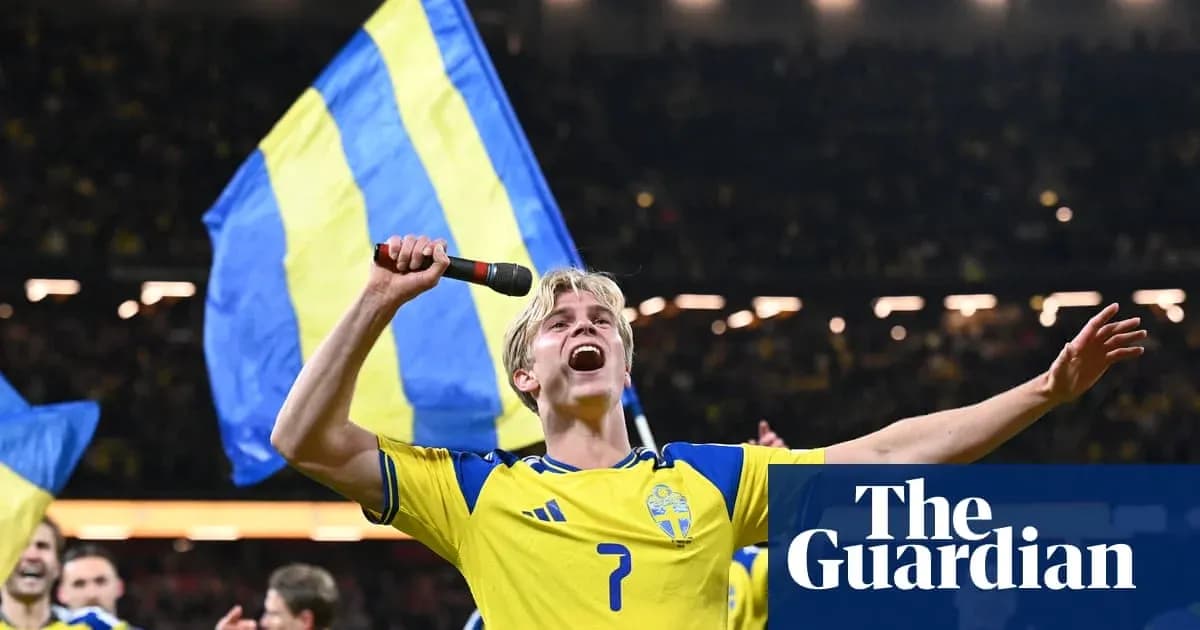
The final against Poland was different. Messier. Nerve-racking. For long spells the Poles looked the better side, probing and pushing, while Sweden clung on. But again Gyökeres refused to let the moment pass. With the game tied at 2-2 and the clock ticking into the 88th minute, he struck the winner in a 3-2 thriller that detonated the Swedish bench and rewrote the story of their campaign.
“It’s hard to explain, hard to describe,” Potter said afterwards, still visibly dazed by the scale of it all. “Just an incredible evening, just so proud to be part of that and obviously proud to experience it. It was just the best night I’ve had in football. Incredible, like I was having some sort of out-of-body experience. I’m looking at the goal and suddenly all our bench is running and you’re thinking: ‘Am I here?’ I’m just grateful to be part of that.”
From two points in six group games to a World Cup ticket via a back door many had written off, Sweden somehow found a way. Now they head to North America to face Tunisia, Netherlands and Japan, armed with a renewed sense of purpose and a coach whose presence alone seems to have lifted the mood. That, in short, is the Potter effect.
Injuries, doubts and a missing captain
The optimism has limits. Dejan Kulusevski, the captain and creative heartbeat, will not be there. His absence cannot be glossed over; this team has leaned heavily on his ability to knit attacks together and drag Sweden up the pitch. They will miss his vision, his drive, his authority.
Alexander Isak, meanwhile, arrives under a cloud. His £125m move from Newcastle to Liverpool made him the most expensive signing in Premier League history, but his first season at Anfield was punishing. Form, fitness, confidence – all have been questioned. He did score after coming off the bench in a 3-1 defeat to Norway on 1 June, but that game raised as many alarms as it soothed. Norway dominated. Sweden looked worryingly passive.
Potter, though, has built enough resilience into this squad to believe they can absorb the blows. The structure is clearer. The roles are sharper. And up front, there is no debate about who leads the line.
Gyökeres, the new face of Blågult
A year ago, you might have framed this World Cup around Isak. Not now. The talisman is Viktor Gyökeres.
The Arsenal forward struggled initially in north London but has timed his resurgence perfectly. Those four goals in the two playoff ties – three against Ukraine, the late winner against Poland – have turned him into a national obsession. His celebration, inspired by Bane from The Dark Knight Rises, has spread across Sweden, with fans posting their own versions from living rooms, pubs and frozen training pitches.
Gyökeres offers something brutally simple: direct running, relentless work, and a nose for decisive moments. In a team that has lost Kulusevski and is still waiting for the best version of Isak, his emergence as the focal point feels like the difference between another early exit and a genuine tilt at the knockouts.
A baron at the back and a rising stock
If Celtic’s Benjamin Nygren brings a touch of flair, the player who may quietly define Sweden’s World Cup story is Gustaf Lagerbielke. The Braga defender was immense in the playoff final against Poland, thundering in a crucial header and then shutting down Robert Lewandowski with a performance of authority and calm.
Lagerbielke is not just another centre-back. He is a baron, 254th in line to the Swedish throne, a detail that has only added to the fascination around him. What matters more to scouts, though, is his timing, his aerial dominance, and his composure under pressure. Talks of a move to one of Europe’s big-five leagues are already under way. A strong tournament in North America could seal that step.
Karlström, the anchor Sweden cannot do without
For all the noise around strikers and star names, Sweden’s hopes may hinge on a player who rarely dominates headlines: Jesper Karlström.
Now captain of Udinese, Karlström’s path has been anything but straightforward. He took time to establish himself at Djurgården and has spoken openly about battling a gambling addiction during his time there, crediting the club and his family with helping him pull through. That struggle has shaped him. On the pitch he now exudes a calm, seasoned authority.
As a deep-lying midfielder he offers exactly what this side needs: strong tackling, positional discipline, the ability to dictate tempo with simple, intelligent passing. In a group that includes a technically slick Netherlands and a ferociously energetic, intricate Japan, Sweden will need someone to slow the storm, win second balls and keep possession under pressure. At 30, Karlström is that anchor, surrounded by younger talents such as Yasin Ayari and Lucas Bergvall who will look to him for balance.
Potter’s perfect fit
Potter’s return to Sweden felt almost inevitable once he spoke to Fotbollskanalen in October 2025. It was less an expression of interest than an open invitation. “I have feelings for Sweden,” he said. “I love the country and I love Swedish football. Coaching the national team would be an incredible opportunity for me, absolutely.”
Days later, he was in the job. Results did not immediately explode – he failed to win either of his first two games – but the Swedish FA had seen enough. In March they handed him a contract extension to 2030, a remarkable show of faith in a coach still carrying the scars of bruising spells at Chelsea and West Ham.
Potter speaks fluent Swedish, understands the domestic game and the cultural nuance, and has embraced the role with the enthusiasm of a man who knows this might be the perfect stage to rebuild his reputation. For Sweden, that blend of tactical clarity and emotional investment is priceless.
The travelling wall of yellow and blue
On the terraces, Sweden rarely travel light. Their supporters have built a reputation for turning tournaments into yellow-and-blue carnivals, loud but welcoming, full of humour and interaction with rival fans.
“Kanna på” will ring out again – the unofficial anthem of the supporters, an ode to beer pitchers that never stop arriving. It includes the line “We are coming with 100,000 men”, a tongue-in-cheek nod to Viking mythology and the scale of their backing. North America is unlikely to witness a literal invasion, but there will be a significant Swedish presence, a moving block of colour and song.
A curious American subplot
The World Cup in the United States also stirs a very specific memory in Sweden. In 2017, Donald Trump stood at a rally and declared: “Look what happened in Sweden last night,” citing the country as an example of problems with immigration and terrorism. There had been no such incident. Confusion and ridicule followed.
Trump later said he had been referring to a Fox News report, which did little to clarify matters. Swedish newspaper Aftonbladet responded by listing what had actually happened that day: veteran singer Owe Thörnqvist had technical problems in rehearsals, a man set himself on fire in central Stockholm, and roads in the north were closed due to harsh weather. That was it.
It was a strange, fleeting collision between Swedish domestic life and US political theatre. Now, as Sweden return to American soil in very different circumstances, the focus will be on something far more straightforward: whether Potter’s rebuilt, battle-scarred side can turn a miraculous qualification into a deep run – or whether this World Cup will be remembered as a glorious detour on a longer road back to the top.