Sweden Survives Group Stage After Thrilling Draw with Japan
Japan and Sweden spent 45 minutes circling each other, a match stuck in neutral, short on rhythm and even shorter on chances. Then the second half blew it wide open.
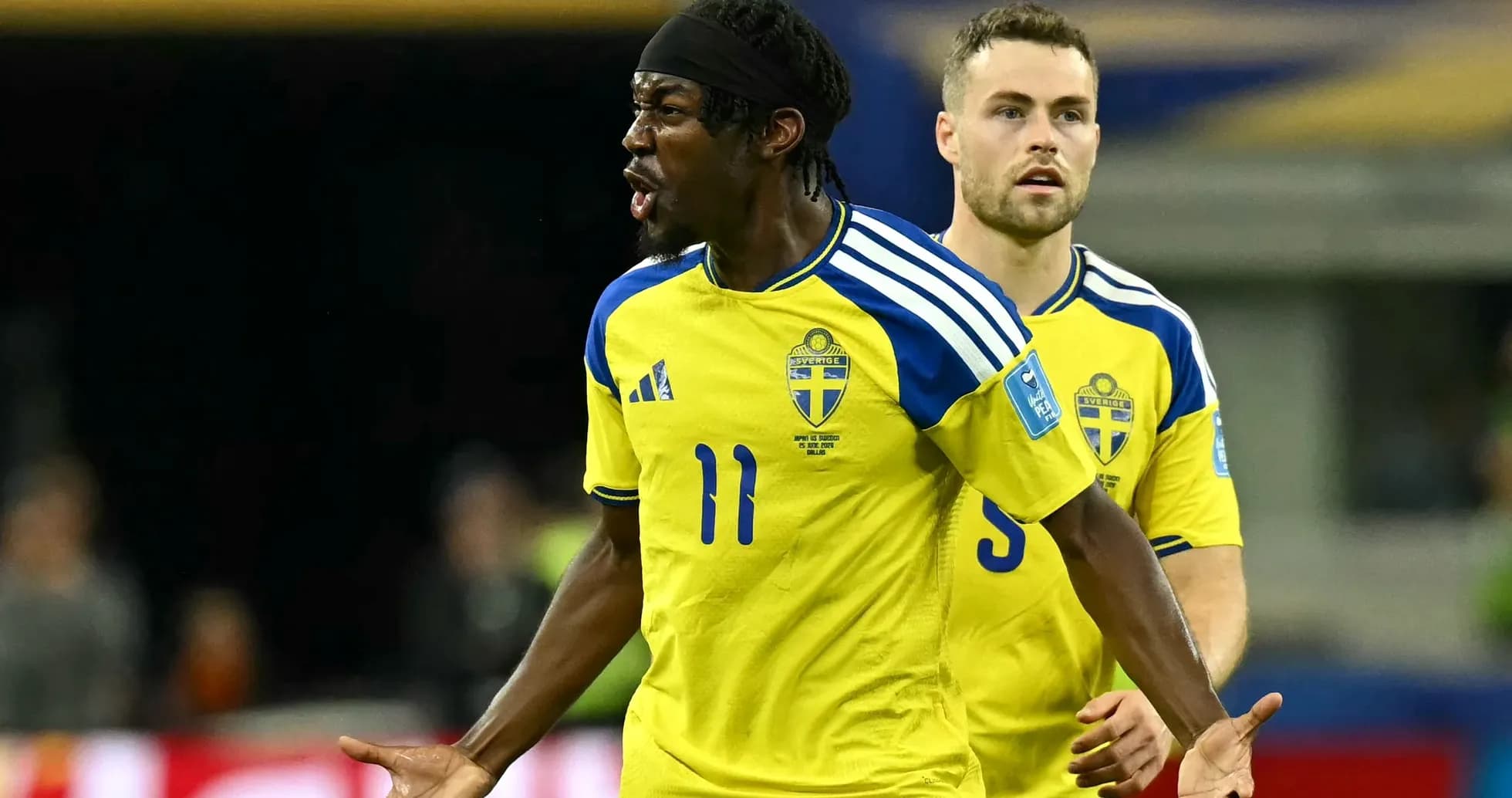
Daizen Maeda struck first on 56 minutes, finishing off a sharp, incisive Japanese move that sliced through yellow shirts and finally gave the game a pulse. Sweden looked rattled for all of a heartbeat. Then Anthony Elanga took over.
The Newcastle United winger, starting this crucial Group F clash after Graham Potter’s reshuffle, picked up the ball on the right, drove inside and whipped a glorious left-footed strike into the far corner. Supposedly his weaker side. It didn’t look like it.
That goal – his second of the tournament – did more than level the match. It banked the point Sweden needed to squeeze through as one of the best third-placed teams. The margins were thin, the tension anything but.
Chaos, calculations and a crossbar away
From there, the game turned frantic. Sweden knew a draw would likely be enough, Japan knew a win would reshape the group, and both benches lived every clearance.
Alexander Isak almost ripped up the script altogether. Late on, the Liverpool forward rose to meet a cross and thundered a header against the crossbar, the ball crashing down and away with half of Sweden already celebrating. Inches from glory, inches from disaster.
On the touchline, staff members clutched tablets and scribbled on notepads, running permutations in real time as other Group F scores filtered through. On the pitch, Elanga had no time – or interest – for any of it.
“I was just screaming: ‘Come on, we can go for more’,” he admitted afterwards. “I’m glad we’re through, I didn’t know that at the end.”
While assistants and veteran coach Sebastian Larsson tried to shout the standings at him, Elanga simply kept running. And running.
“I think they were trying to scream to me,” he said. “I obviously wanted to keep running. I got cramp at the end but didn't want to stop running. I'm happy and the whole team is too.”
Isak, still shaking his head, revealed he had given his teammate “a bit of a telling-off” once he realised Elanga had been oblivious to the situation. “He was a little frustrated towards the end of the match, and you can understand why now,” the striker sighed.
On the sidelines, Potter could only laugh. “That explains a few things. We couldn't have been clearer... Bless him! But I love him,” the manager joked, while captain Victor Lindelof quipped that Elanga “can't have been awake enough” during the pre-match permutations briefing.
Oblivious or not, Elanga had done his job. Sweden were still alive.
Potter’s gamble pays off
Potter had rolled the dice before kick-off. The heavy defeat to the Netherlands demanded a response, and he didn’t shy away from making big calls.
Elanga came into the starting XI. Jacob Widell Zetterstrom was handed the gloves. A clear message: no one’s place was guaranteed, and Sweden’s depth had to deliver.
“We analysed the game against the Netherlands. We had to defend the box and wide areas better today,” Potter said. “We decided to use Jacob's attributes because I think he's a fantastic goalkeeper. His distribution was very impressive. Anthony comes in and offers a counter-attack threat and his pace is destabilising for the opponent.”
This time, Sweden looked harder, more compact, more willing to suffer without the ball. When they were stretched, Zetterstrom’s calm distribution helped them breathe. When they broke, Elanga’s speed panicked Japan’s back line.
They still finished third in Group F, behind the Netherlands and Japan, but the mood around the Blue and Yellow has shifted. From bruised to stubborn. From uncertain to quietly dangerous.
A brutal road, but no fear
Third place brings a small reward: avoiding a direct collision course with Brazil. The South Americans will now face Japan, while Sweden step into a different kind of storm.
Potter’s side are likely to meet the winner of Group I in a last-16 tie pencilled in for June 30, with the outcome of France vs Norway set to decide that path. Germany, winners of Group E, also lurk as a possible opponent.
No easy routes. No soft landings.
Elanga, though, sounded undaunted. “Both are good teams. It will be a challenge. All teams are good, but we are ready for what comes,” he insisted.
Three games. Four points. A level goal difference. It is not the swaggering dominance of a contender, but it looks and feels like a team that has found its balance just as the tournament turns serious.
Sweden have survived the group stage by the width of a crossbar and the swing of Elanga’s left boot. Now the question is simple: is survival just the start, or the peak of this ride?