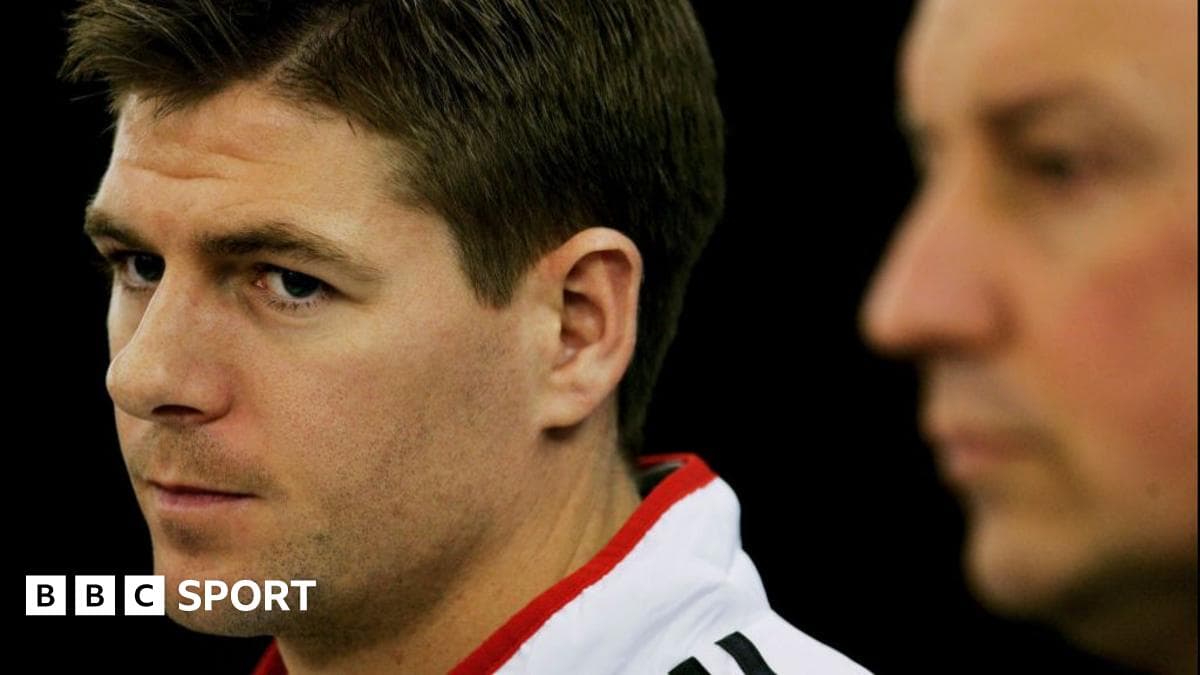
Steven Gerrard's Emotional Struggle at Liverpool: A Tale of Loyalty and Tactics
On a warm May night in Istanbul, Steven Gerrard scaled the peak of his footballing life. The Liverpool captain dragged his team from 3-0 down against AC Milan to a fifth European Cup, a comeback so wild it still feels like myth. He calls it the best night of his life.
Two months later, he told Liverpool he was leaving.
The Netflix documentary revisiting that Champions League triumph peels back the euphoria and finds something darker. Gerrard describes himself as being in a “bad place” mentally, his head “like a box of frogs”. The glory, the parade, the adulation – none of it quietened the noise inside.
At the heart of the turmoil sat a cold, tactical Spaniard: Rafael Benitez.
Glory, then a bombshell
The script seemed obvious in May 2005. Gerrard, the local lad who had just hoisted the European Cup, would surely sign his life away to Liverpool. Real Madrid were circling. Chelsea, the new Premier League powerhouse under Jose Mourinho, were pushing hard. But Istanbul felt like destiny. How could he walk away now?
Six weeks later, he told the club he was going.
“Mourinho was on the phone – the best manager in the world at the time, offering silly contracts, which would naturally turn your head,” Gerrard recalls. “Chelsea were spending fortunes, he was guaranteed success there.”
The temptation was real. The numbers were huge. The trophies looked inevitable.
But this wasn’t a simple money-versus-loyalty story. It was a player who had always defined himself by emotion and connection suddenly feeling stripped of both.
“I can't park my relationship with Liverpool,” he says. “When they came, I didn't know which way to go. Mentally, I was in a bad place. My head was like a box of frogs.”
Benitez and the cold distance
Gerrard’s football had always burned hot – passion, tackles, late runs, the roar of the Kop feeding his game. Benitez operated at a different temperature.
“I felt like he didn't rate me, he didn't trust me, he didn't want me,” Gerrard says. At 45, the words still land with a sting.
He insists his heart was always on Merseyside. “I've always been clear that I want to be a Liverpool player and a Liverpool player only,” he says. But doubts crept in. “With that doubt and with that coldness and being part of a team where you don't believe that you can compete at the top, that's when your head gets turned.”
Jamie Carragher, who lived through the same years and the same dressing room, saw it too.
Gerrard, he believes, “probably needed an arm round his shoulder”. Benitez, he adds, “was never going to do that. He's very unemotional.”
The documentary paints a consistent picture. Former players talk about Benitez’s relentless criticism, his fixation on the tiniest tactical details, his refusal to indulge emotion. For some, it sharpened them. For others, it grated.
Gerrard felt it most keenly.
“My game... was about emotion, passion, desire, commitment, for the badge, for the [Liver] bird, for the family,” he says. “It was in me and I felt like he wanted to really remodel me.
“Nothing would ever satisfy him.”
Two views of the same culture
Benitez, now 66, rejects the idea that he simply tried to drain the life out of Liverpool. He saw a club running almost entirely on feeling – and believed that alone would never be enough.
“When I joined Liverpool, there was a culture based on emotion,” he says. “Football requires more than that. If you're really emotional, you don't find the way to success.”
The clash was obvious: a manager chasing control and structure, a captain powered by chaos and heart. The tension nearly tore Gerrard away from his boyhood club.
Time, though, has softened the edges. With distance, the captain who once thought his manager didn’t want him now offers the highest praise.
“I look back at Rafa and think he's the best coach I have worked with,” Gerrard says.
The relationship that almost drove him to Chelsea ended up defining his tactical education.
Owen, another talent on the brink
Gerrard wasn’t the first Liverpool prodigy to reach breaking point. A year before his own transfer saga, Michael Owen’s future had dominated the headlines.
Owen, like Gerrard, had come through the academy. Like Gerrard, he had grown disillusioned. Gerard Houllier had been sacked in 2004 after Liverpool finished 30 points behind champions Arsenal. The club turned to Benitez, fresh from European success with Valencia, and handed him a simple but daunting brief: keep Gerrard and Owen.
He flew to Portugal to meet the pair, along with Carragher, while they were with England at Euro 2004. This was the moment to charm, to persuade, to reassure his stars that they sat at the centre of his plans.
What they got instead was a tactical inquest.
“He was on me tactically,” Gerrard remembers. “‘I don't want this, I don't want that. You can't play in this team unless we trust you.’ It was intense. And I was thinking to myself, ‘I guarantee you, you'll need me before I need you.’”
Owen, a Ballon d'Or winner in 2001, heard something similar. Carragher recalls Benitez telling the striker he needed to “turn on the ball quicker”.
“That's absolutely what I was probably the best in the world at, at the time,” Owen says. “He certainly didn't go any way to convincing me to stay, put it that way.”
By August 2004, Owen was gone, sold to Real Madrid for £8m.
Benitez, though, remembers that Portugal summit differently.
“You can see when you talk with someone if he's happy with the conversation,” he says. “I think they were quite happy.”
A club pulled between heart and head
The stories of Gerrard and Owen, retold years later with the benefit of hindsight and grey hair, frame a pivotal moment in Liverpool’s modern history. A club built on emotion hired a manager determined to strip it back to logic and detail. Its greatest talents sat right on that fault line.
Gerrard stayed, almost in spite of himself, and went on to lift more trophies under the man he once thought didn’t trust him. Owen walked, unconvinced by a coach who questioned even his greatest strengths.
Between them lies the story of a club wrestling with what it wanted to be – and what it needed to become.