Spain Roars to Victory Over Saudi Arabia in World Cup Clash
Spain did not just respond. They roared.
Four days after a lifeless stalemate with Cape Verde had the knives out and the doubts swirling, La Roja tore into Saudi Arabia 4-0 in Atlanta, a performance that felt less like a group game and more like a declaration. This was the Spain they had promised. Sharp. Relentless. And led by a teenager who, not long ago, was watching World Cups from a classroom.
Yamal lights the fuse
Lamine Yamal returned to the starting XI and instantly changed the temperature of the night. Within seconds he was demanding the ball, whipping in crosses, driving at defenders. Spain, flat and predictable in their opener, suddenly crackled.
On 11 minutes, the breakthrough came. Not a trademark curler or a slaloming solo run, but something more ominous for future opponents: a poacher’s finish. After Spain stitched together 39 passes – the longest sequence before a goal at this tournament – Mikel Oyarzabal drilled a low, fizzing cross to the back post. Yamal arrived, tight angle, one stab of his left boot. First World Cup start, first World Cup goal.
He later told DAZN he had watched the 2022 World Cup from his classroom, dreaming of nights like this, with his mother and family in the stands. Now he is the one schoolkids are watching.
That early strike did more than settle Spain. It set a standard. The tempo lifted, the passing snapped, the press bit. The team that had laboured against Cape Verde suddenly looked like themselves again – only faster, more vertical, more ruthless.
Oyarzabal’s double breaks Saudi resistance
The pressure didn’t ease. It built. Saudi Arabia, pinned back from the opening whistle, could not escape the red tide.
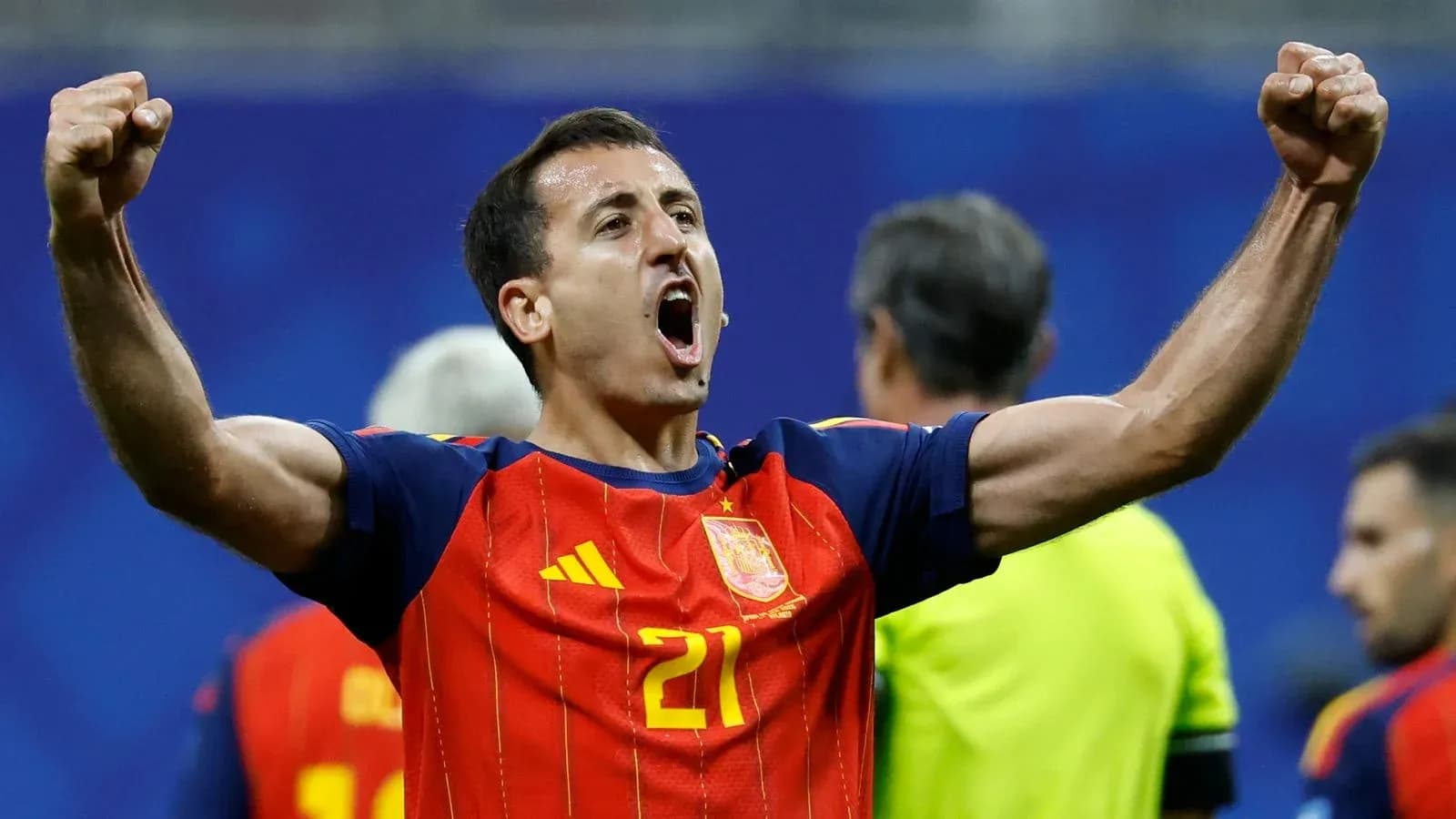
On 21 minutes, the dam burst again. A scramble at the back post, the ball bouncing loose, and Oyarzabal reacted first, stabbing in Spain’s second from close range. Scruffy, yes. Crucial, absolutely. The nervousness of Monday night evaporated.
Two minutes later, Spain hit them again.
This time it was clinical. A low ball into the box, Oyarzabal alive to the chance, one touch to guide it past Mohammed Al Owais from close range. 3-0 inside 23 minutes. Spain became the first team since Germany in 2014 to score three times within the first 25 minutes of a World Cup match. Group H, briefly in doubt, suddenly looked very different.
Oyarzabal hunted his hat-trick with the confidence of a man who knows this stage. When Al Owais misjudged a back pass, the forward pounced, taking on the first-time shot. His effort beat the goalkeeper but not the frame of the goal, clipping the top of the crossbar and bouncing away. The sighs from the Spanish bench told their own story; they knew how close he was to a perfect half.
Yet even without the treble, his job was done. Nursing a minor issue in the build-up, he had still delivered the kind of all-action, penalty-box performance Luis de la Fuente demands.
De la Fuente’s ruthless call
At half-time, with the game effectively over and the scoreline brutal, De la Fuente made the kind of decision a coach with an eye on the long road must take. Yamal and Oyarzabal, the twin architects of the destruction, did not reappear.
On his 65th birthday, the Spain boss gave himself the present every tournament manager wants: the chance to rotate key players without risk. Yamal, who De la Fuente insists is now ready to play full matches, left the field after 45 minutes with a goal, a statement, and, as his coach put it, a hunger for more.
The message to the rest of the squad was clear. No passengers. No easing off. Cape Verde had been dissected in the video room, and the conclusion was unanimous: Spain needed more verticality, more intensity, more shots. Against Saudi Arabia, they delivered exactly that.
From the opening minute, they suffocated the opposition, pressed high, and forced the game into the Saudi box. De la Fuente wanted a reaction; he got an exhibition.
Own goal adds gloss as Spain cruise
The second half lacked the frenzy of the first. It did not need it. Spain controlled the ball, moved Saudi Arabia from side to side, and protected legs with Uruguay looming.
The fourth goal came with a slice of misfortune for Hassan Al Tambakti, part of a grim trend for defenders at this tournament. From a flicked-on corner, Marc Cucurella lashed a shot that Al Owais did well to block. The rebound, though, cannoned off Al Tambakti and trickled into the net. Another own goal in a World Cup already defined by them – the eighth of the competition, with the group stage not even halfway done.
Spain kept probing. Ferran Torres thought he had added a fifth in stoppage time, sliding in to finish Fabian Ruiz’s cross. The celebrations were cut short. A long VAR check ended with the flag upheld and the goal chalked off for offside. No fifth, but no complaints either. The damage had been done long before.
A superstar and a statement
Strip the scoreline away and the story remains the same: this was a different Spain. The sterile domination of old was replaced by something sharper, more direct. Dribbles, crosses, shots from distance – they attacked in waves, not just patterns.
At the heart of it, again, was Yamal. Still a teenager, already the reference point. He demanded the ball, drove at his full-back, and set the tone with his urgency. The artistry is well known. On this night, he added the ruthless edge of a finisher.
Around him, quality pulsed through the team. Oyarzabal, the penalty-box predator. Cucurella, aggressive from full-back. A midfield that, once more, looked like it could run a game at its own pace.
The reward is immediate and tangible. Spain climb to the top of Group H, ahead of Uruguay’s late kick-off against Cape Verde, while Saudi Arabia sink to the bottom. More important, though, is the feeling inside the camp. The draw that “stung”, as Yamal put it, has been turned into fuel.
De la Fuente called this “an important step for what’s to come.” Uruguay await, a tougher, more physical test, the kind of contest that reveals whether a statement win is a one-off or the start of a run.
Spain have finally arrived in this World Cup. The question now is simple: how far can this version of La Roja go with a superstar teenager dragging them towards their highest level?