Southampton Triumphs but Faces Uncertainty After Controversial Play-Off Win
The celebrations at St Mary’s never quite sounded like a team booking a ticket to Wembley.
Southampton’s players applauded their supporters, arms aloft, faces drained but satisfied after a 2-1 extra-time win over Middlesbrough. The away end stared back at their own team, hollow-eyed and stunned. On the scoreboard, the story was simple: Saints through, Boro out. On the grass, it felt like a classic play-off night.
Everywhere else, it felt anything but finished.
Saints win the tie – but not the argument
Shea Charles decided the contest in the dying minutes of extra-time, his cross-shot skidding through bodies and beyond the goalkeeper to tilt a tense, draining semi-final. It should have been the moment that settled everything: Southampton to Wembley on 23 May to face Hull City in the Championship play-off final, the so-called richest game in English football.
Instead, the decisive noise was not the roar at full-time but the low murmur of uncertainty that followed.
This is the 40th season of the play-offs. Forty years of drama decided by goals, nerves and the occasional penalty shootout. Now there is a genuine prospect that this tie could be settled not by players, but by lawyers and an independent disciplinary panel.
The reason sits 250 miles away from St Mary’s, at Rockliffe Park.
The spying charge that hangs over everything
Last Thursday, events at Middlesbrough’s training ground turned a tight, tactical semi-final into something far more combustible. The EFL has charged Southampton with spying, an allegation the club has not denied. The details of who did what, and why, sit at the heart of an internal review Saints have launched into the incident.
Normally, a club has 14 days to respond to such charges. That clock has effectively been ripped off the wall. The EFL has pushed for “a hearing at the earliest opportunity” and asked the independent disciplinary commission to move quickly. Late on Tuesday, a spokesperson confirmed that the commission is working through the legal process, but no one can say when a verdict will land.
The possible punishments range from a fine to a points deduction, even expulsion from the play-offs. Each option carries a different kind of chaos.
So as Southampton’s players trudged off the pitch, physically shattered but victorious, there was no mass pitch invasion, no wild lap of honour. Home fans applauded, then drifted away. The usual electricity of a play-off semi-final win never quite sparked.
They should be knee-deep in preparations for Wembley by now. Instead, there is a nagging doubt running through every conversation: does this result actually stand?
Hellberg’s dream collides with the scandal
For Middlesbrough, the emotional fallout is even more tangled.
The players fly back to Teesside on Wednesday, beaten but not entirely beaten. The season looks over, yet it might not be. Holidays are on hold. So are definitive goodbyes. They walk away from St Mary’s with nothing concrete except fatigue and frustration.
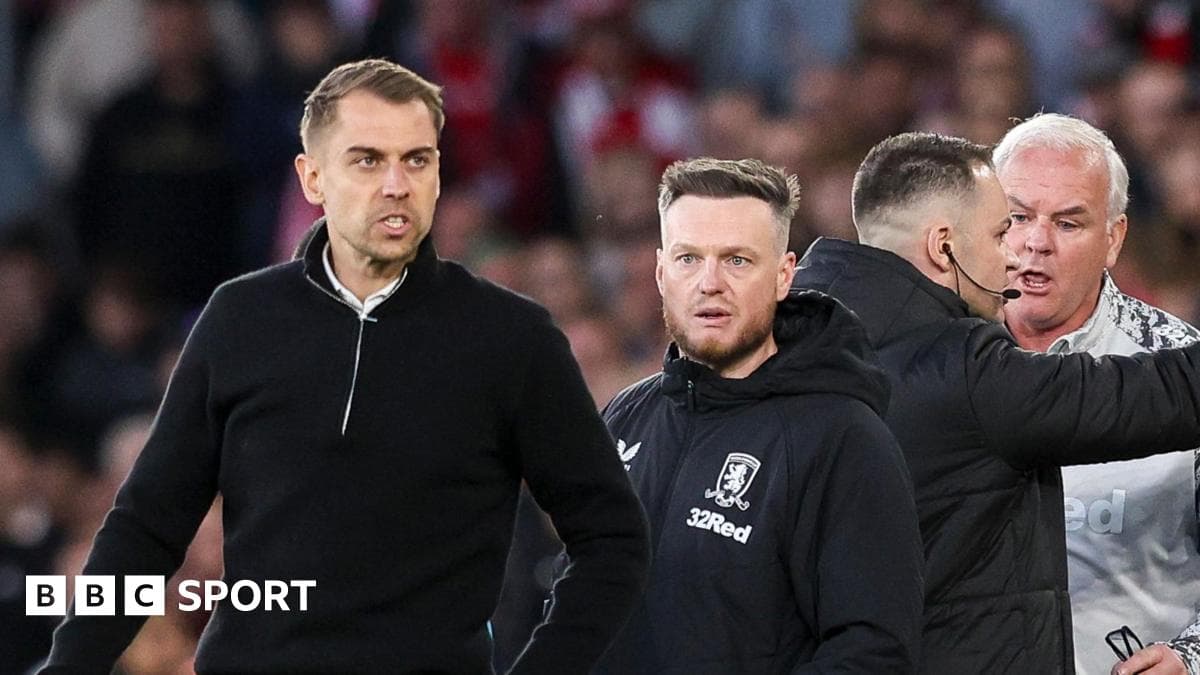
Head coach Kim Hellberg had already made his stance clear after Saturday’s goalless first leg. The Swede, in his first job in English football, did not dress anything up. In his eyes, “there's someone who makes decisions to go and try to cheat.”
The second leg only sharpened that sense of injustice.
Hellberg spoke with real emotion after the defeat. He talked about the 15-year journey that brought him here, the Premier League dream that has pulled him through endless hours of analysis, the price paid by his young family while he sat in dark rooms watching clip after clip of Southampton.
“If we hadn't caught that man that they sent up five hours to drive, you would sit there and say well done in the tactical aspect of the game and I would go home and feel like I've failed,” he said.
That line cut to the core of what this scandal represents for him: not just a breach of rules, but an assault on the very thing a coach believes he can control.
“When that is taken away from you – we're not going to watch every game, we're going to send someone instead and film the sessions and hope they don't get caught – it breaks my heart in terms of all the things I believe in.”
For Hellberg, this is not a marginal gain. It is a betrayal.
A tie decided twice
On the pitch, his team did plenty to justify their manager’s anger.
Middlesbrough struck first. Riley McGree’s early goal gave them the lead on the night and in the tie, reward for another sharp, disciplined first half. They pressed with intelligence, moved the ball with confidence, and for a while looked the more assured side in a febrile stadium.
Then came the turn.
As the half wore on, Southampton began to find their rhythm. Just when Boro needed to reach the interval in front, they faltered. Ross Stewart’s equaliser at the end of the first half flipped the mood, gave Saints oxygen and drained their opponents.
From that moment, the pattern shifted. Boro’s legs grew heavier, their pressing less coordinated. Southampton seized control of territory and tempo, forcing the visitors deeper and deeper. Yet the decisive blow still required a stroke of fortune, Charles’ late effort catching everyone off guard.
For Middlesbrough, it capped a brutal end to a season that had once promised so much. A poor run at precisely the wrong time had already cost them automatic promotion on the final day. Now the play-offs, their second chance, had been ripped away in extra-time.
And, in their eyes, perhaps compromised before a ball was even kicked.
What’s left when the whistle doesn’t end it?
Hellberg admitted he knew what he was walking into when he took the Middlesbrough job. Clubs with bigger resources. Parachute payments. Deeper squads. Stronger benches. The usual Championship hierarchy.
“What you have as a coach is the tactical element of the game and where we can beat the opponent,” he said. “You have to find a way of getting an advantage. That's what you always try to do as we can be better in that element. And when that is taken away from you…”
He did not need to finish the sentence. The silence did the job.
Southampton, for now, are the team that won the semi-final. They are the club planning for Hull City, sketching out training schedules and travel plans while a disciplinary commission weighs up their fate.
Middlesbrough, for now, are the team that lost but cannot fully let go, stuck in limbo between heartbreak and hope.
The play-offs were designed to provide clarity at the end of a long, unforgiving season. This time, they may yet deliver something very different: a final decided in a courtroom, and a lingering question that will not go away.
If an independent panel overturns what happened on the pitch, who will really feel like they earned their place at Wembley?