
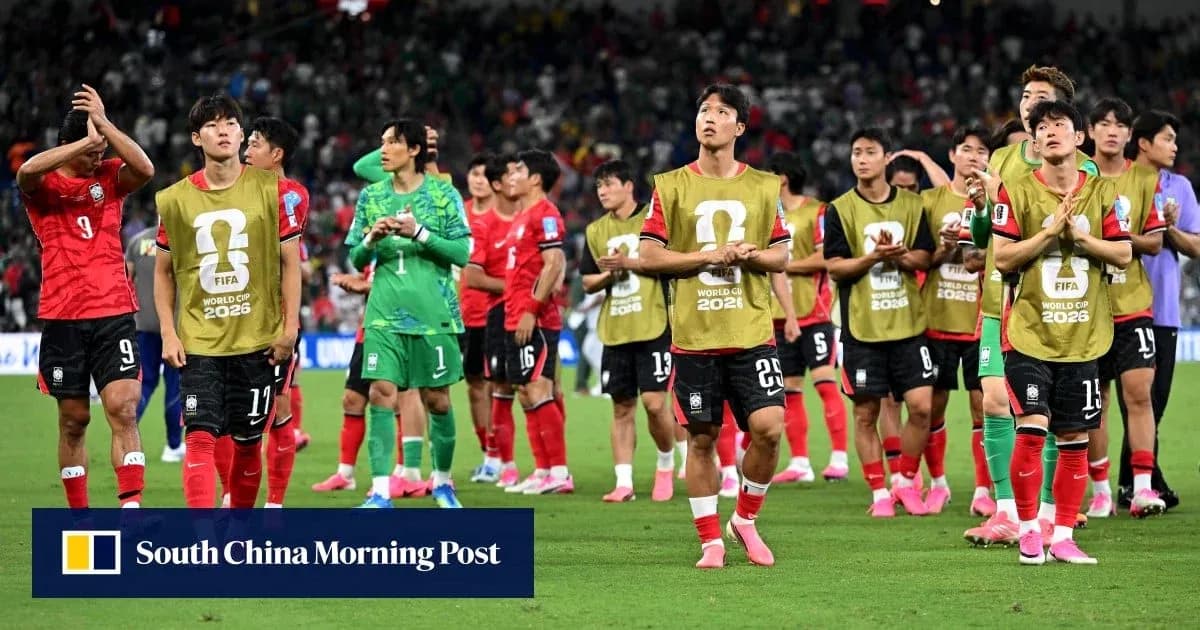
South Korea's World Cup Struggles: A Clash of Emotions
In the bowels of the Monterrey night, the contrast could not have been sharper.
On one side of the mixed zone, South Korean players drifted through in near silence, heads down, voices low, still processing a dispiriting 1-0 defeat by South Africa. On the other, their conquerors swept past in waves of song and laughter, the soundtrack of a team that had just ripped up the script.
The two worlds collided in a flash of anger.
Brushed by a member of the South African staff, Hwang In-beom snapped. The midfielder, usually measured, bristled and barked at the unwitting offender to “show some f****** respect”. For a brief, taut moment, it looked as though the night might descend into something uglier than a tactical inquest. Shoulders squared. Eyes narrowed. Then it passed, swallowed by the corridor’s concrete chill and the hum of post-match logistics.
If only that edge had surfaced where it mattered most.
On the pitch, South Korea never came close to matching that flash of fury. The performance had been flat, the pressing half-hearted, the passing predictable. South Africa, disciplined and fearless, picked their moments and landed the decisive blow. South Korea absorbed it rather than answered it. The fight arrived too late and in the wrong place.
The wait for their captain told its own story. Selected for doping control, Son Heung-min did not emerge to face the Korean media until more than two hours after the final whistle. By then, the South African celebrations had long since moved on, the songs fading down the tunnel and out into the Monterrey night.
Son, as ever, stood in front of the cameras and microphones and tried to steady the narrative.
“There’s no problem with the vibe in our dressing room,” he said, insisting that the defeat had not fractured the squad. “I can honestly tell you that we’ve had zero issues with our team atmosphere.”
His words were calm, deliberate. They needed to be. When tempers flare in the corridor and the football on the grass looks listless, questions about unity are inevitable. Son pushed back against that storyline, framing the loss as a football failure, not a fracture of character.
Yet the numbers on the table are unforgiving. Three group matches. Three points. A negative goal difference. And still, somehow, South Korea stand on the brink of the knockout stages.
It is a stark reflection of this swollen World Cup format that such a modest return can still keep a team alive. In another era, a campaign built on a solitary win and a -1 goal difference would have meant an early flight home and a harsh post-mortem. Now, the margins are looser, the safety nets wider. Survival can be scraped rather than seized.
That is the indictment lurking beneath the surface of this story. A side that has stumbled and stuttered through its group could yet find itself in the last 16, carried there by an expanded structure rather than irresistible form.
For South Korea, the question is blunt. If the tournament offers them one more chance, will they finally bring the same raw defiance Hwang showed in that cramped corridor to the one place it truly counts?





